
Last Updated: January 22, 2026
Mullet Bike Conversion Summary
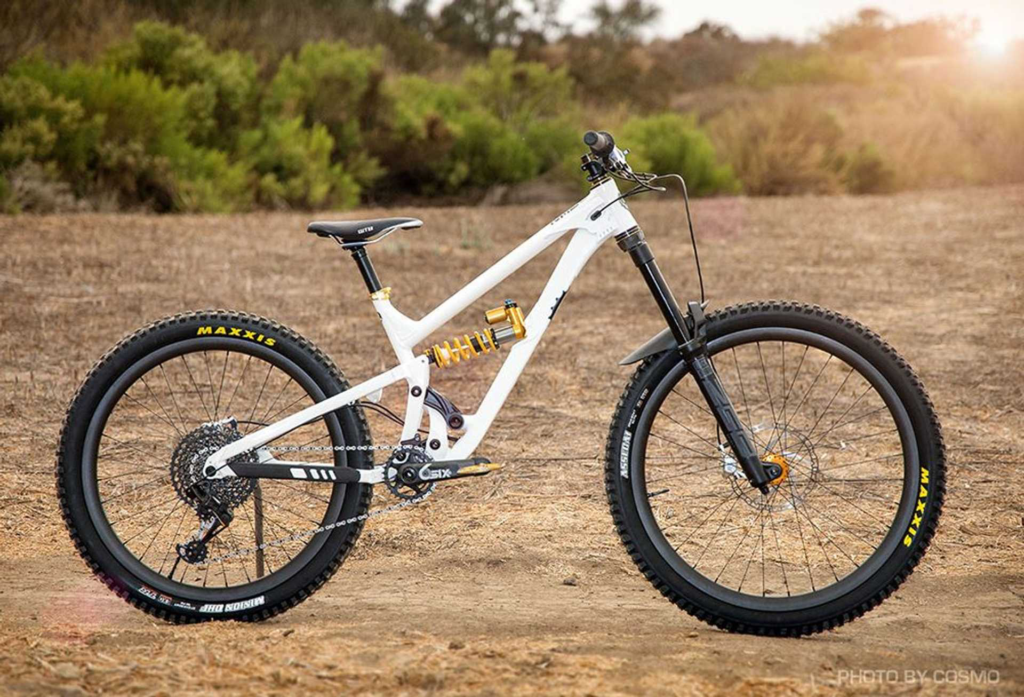
The emergence of the mixed-wheel “Mullet” mountain bike—featuring a 29-inch front wheel paired with a 27.5-inch rear wheel—represents one of the most significant shifts in modern mountain bike geometry and kinematics. Initially dismissed as a garage experiment or a throwback to the mismatched “69ers” of the mid-2000s, the mullet configuration has been validated at the highest levels of the sport, dominating UCI Downhill World Cup podiums and increasingly infiltrating the Enduro World Series.1 This paradigm shift is driven by a desire to synthesize the rollover capability and traction of the larger 29-inch wheel with the agility, acceleration, and clearance of the smaller 27.5-inch platform.1
However, for the owner of a standard 29er, converting to a mullet setup is not merely a matter of swapping a wheel. It is a complex geometric intervention that fundamentally alters the bicycle’s handling characteristics, suspension kinematics, and rider biomechanics. The uncompensated substitution of a smaller rear wheel lowers the bottom bracket, slackens the head and seat tube angles, and reduces the reach, potentially compromising the bike’s climbing efficiency and pedal clearance.4 This comprehensive guide provides an exhaustive technical analysis of the conversion process, exploring the physics of mixed-wheel dynamics, the geometric consequences of conversion, mechanical solutions for geometry correction, and a detailed assessment of compatible airframes. It is designed to be the definitive resource for the technical rider seeking to optimize their machine for mixed-wheel performance.
1. The Physics and Philosophy of the Mixed-Wheel Platform
1.1 Historical Context and the UCI Rule Change
The concept of mixing wheel sizes is not novel. In the early days of mountain biking, pioneers experimented with various diameters, leading to the brief popularity of the “69er” (29 front / 26 rear) and the Specialized Big Hit (26 front / 24 rear).6 These early attempts were often hampered by tire availability and primitive geometry. The modern resurgence was catalyzed by the Union Cycliste Internationale (UCI) relaxing its rules in 2019 to allow mixed wheel sizes in competition.3 This regulatory shift unleashed a wave of experimentation in the downhill racing circuit. Teams discovered that while the 29-inch front wheel provided superior speed and stability through rough sections, the 29-inch rear wheel often inhibited rider movement on steep gradients and felt cumbersome in tight, technical sections. The mullet setup emerged as the optimal compromise, quickly becoming the standard in gravity racing.2
1.2 Gyroscopic Stability and Angular Momentum
To understand why a mullet bike handles differently, one must examine the physics of rotating mass. A bicycle wheel acts as a gyroscope; as it spins, it creates angular momentum that resists changes in its axis of rotation. This resistance is known as gyroscopic stability.
- The 29-inch Front Wheel: The larger diameter and typically higher mass of the 29-inch wheel generate significant gyroscopic stability. This is advantageous for the front wheel, as it helps keep the steering neutral and resists deflection when striking obstacles at speed. It encourages the bike to hold a line through “chunder” (loose, rocky terrain).8
- The 27.5-inch Rear Wheel: The rear wheel, however, does not steer; it follows. By reducing the diameter to 27.5 inches, the rider reduces the wheel’s moment of inertia. Even if the weight difference is only 100-200 grams, the distribution of that mass closer to the hub (due to the smaller radius) means less energy is required to change the bike’s lean angle.10 This differential in gyroscopic stability creates a unique handling signature: a planted, stable front end that tracks confidently, paired with a rear end that is eager to change direction, “snap” into corners, and break traction when prompted. This characteristic is often described as “business in the front, party in the back”.2
1.3 Rollover Physics vs. Attack Angle
The primary argument for the 29er platform has always been its superior rollover capability. The larger wheel strikes obstacles at a shallower angle (the angle of attack), allowing it to roll over square-edged hits with less momentum loss and less upward deflection of the chassis.11
- The Front Wheel Priority: In mountain biking, the front wheel encounters obstacles first and is responsible for the majority of braking traction and directional control. Retaining the 29-inch wheel at the front preserves these critical rollover benefits.12
- The Rear Wheel Trade-off: The smaller rear wheel has a steeper angle of attack. Consequently, it creates more feedback when hitting square-edged bumps and can feel like it is “hanging up” in holes that a 29er would bridge smoothly.6 This is a tangible trade-off: the rider gains agility but loses some of the momentum-carrying capacity on rough, flat terrain.
1.4 Acceleration Mechanics
The smaller rear wheel offers a mechanical advantage in acceleration. For a given gear ratio and torque input at the hub, the smaller radius of the 27.5-inch wheel results in a greater propulsive force at the contact patch ($Force = Torque / Radius$). Furthermore, the reduced rotational inertia means the wheel “spins up” faster. This makes the mullet setup feel snappier out of slow corners and more responsive to pedal inputs for quick bursts of speed, a trait highly valued in enduro racing and technical trail riding.12
2. Geometric Analysis: The Consequences of Conversion
Converting a symmetrical 29er frame to a mullet setup without compensatory measures is an exercise in geometric compromise. It is imperative to understand exactly how the chassis responds to the lowering of the rear axle.
2.1 The Trigonometry of Axle Height
When replacing a 29-inch wheel with a 27.5-inch wheel, the reduction in axle height is determined by the difference in the wheel’s outer radius.
- 29-inch Diameter: Approximately 740mm (varies by tire volume).
- 27.5-inch Diameter: Approximately 700mm.
- Radius Difference: $(740 – 700) / 2 = 20mm$.
Therefore, the rear axle drops by approximately 19-20mm. However, the bottom bracket (BB) is located between the front and rear axles, not at the rear dropout. The BB height drop is proportional to its position along the wheelbase.
$$BB_{drop} \approx RearAxle_{drop} \times \frac{FrontCenter}{Wheelbase}$$
For a typical modern mountain bike, this results in a BB height reduction of 10mm to 12.5mm.4 While 12mm may seem insignificant in isolation, in the context of mountain bike geometry where manufacturers agonize over millimeters, it is drastic. A bike designed with a 340mm BB height will drop to ~328mm, dangerously close to the ground for technical pedaling.
2.2 Head Tube Angle (HTA) Slackening
Lowering the rear axle rotates the entire frame backward around the front axle pivot point. This rotation slackens the Head Tube Angle.
- Magnitude of Change: Generally, a 20mm drop at the rear axle results in a slackening of the HTA by 0.5 to 1.0 degrees.15
- Handling Implication: A slacker head angle increases the “trail” figure of the front steering geometry. This enhances straight-line stability and confidence on steep descents but can make the steering feel floppier at slow speeds. For many riders seeking aggressive geometry, this is a positive side effect, aligning with the “Long, Low, Slack” trend.1
2.3 Seat Tube Angle (STA) Degradation
The rearward rotation of the frame affects the Seat Tube Angle identically to the HTA, but with negative consequences.
- The Slackening Effect: A modern enduro bike might feature a steep 77° STA to position the rider over the bottom bracket for efficient climbing. Converting to mullet slackens this to ~76° or less.2
- The Climbing Penalty: As the saddle moves rearward relative to the bottom bracket, the rider’s center of mass shifts backward. On steep climbs, this causes the front wheel to unweight and wander, requiring the rider to fight the bike to maintain a line. It also places the rider’s hips behind the pedal spindle, reducing biomechanical efficiency.16
2.4 Reach and Stack Alterations
- Reach Reduction: Reach is the horizontal distance from the BB center to the head tube center. As the frame rotates backward, the head tube moves upward and rearward relative to the BB. This reduces the reach by approximately 5-10mm.15 This can make the cockpit feel cramped for taller riders.
- Stack Increase: The vertical distance (Stack) increases slightly relative to the BB, creating a higher handlebar position relative to the feet. Combined with the lower BB, the rider experiences a deeper “in the bike” sensation.4
2.5 Summary of Geometry Changes (Uncompensated)
| Geometric Metric | Direction of Change | Approximate Value | Practical Consequence |
| Rear Axle Height | Lower | -19mm to -20mm | Changes roll axis; lowers center of gravity. |
| Bottom Bracket Height | Lower | -10mm to -12.5mm | Critical Risk: Increased pedal strikes; improved cornering stability. |
| Head Tube Angle | Slacken | -0.5° to -1.0° | Increased descending stability; slower steering response. |
| Seat Tube Angle | Slacken | -0.5° to -1.0° | Reduced climbing efficiency; front wheel wander on ascents. |
| Reach | Shorten | -5mm to -10mm | Cramped cockpit; shifts weight bias rearward. |
| Wheelbase | Minimal | +/- 2mm | Negligible change (slack angle extends front, rotation pulls rear forward). |
| Trail | Increase | +5mm to +10mm | Increased self-centering force; more stable at speed. |
3. The Benefits: Why Riders Convert
Despite the geometric compromises, the mullet conversion remains popular because the dynamic benefits often outweigh the static downsides for specific riding styles.
3.1 Unlocked Agility and Cornering
The defining characteristic of the mullet is its cornering prowess. The smaller rear wheel allows the bike to pivot more easily around the bottom bracket. In tight switchbacks or consecutive berms, the mullet setup requires less input at the handlebars to initiate a turn. The difference in track radii between the front and rear wheels creates a sensation where the rear wheel “cuts” the turn tighter than the front, allowing for aggressive “Scandi flicks” and squaring off corners.1Furthermore, the lower center of gravity (due to the BB drop) enhances cornering stability, provided the pedals do not strike the ground. The rider feels planted and secure, enabling higher corner entry speeds.4
3.2 Maximum Rear Clearance (“Butt Buzz”)
On steep, near-vertical descents, riders must shift their weight as far back as possible to prevent going over the handlebars. On long-travel 29ers, the large rear wheel often contacts the rider’s glutes or shorts—a phenomenon known as “butt buzz.” This contact can be alarming and can physically eject a rider forward. The 27.5-inch wheel provides an additional ~19mm of static radial clearance. In dynamic situations deep in the suspension travel, this clearance is critical. It allows riders—especially those of shorter stature—to move more freely over the bike without fear of tire contact.1
3.3 Wheel Strength and Stiffness
Physics dictates that for a given hub and rim extrusion, a smaller diameter wheel is stiffer and stronger. The shorter spokes of a 27.5-inch build form a more robust triangle, making the wheel less prone to lateral flex and buckling under side loads. Since the rear wheel endures the harshest impacts and highest lateral forces in corners, this added durability is a significant advantage for aggressive riders and bike park laps.4
3.4 The “Jib” Factor
“Jibbing” refers to a playful riding style that emphasizes jumping, popping off trail features, and manualing. The mullet setup facilitates this by shortening the rear center (effectively, if not statically) and reducing the rotational mass. The bike feels easier to pull into a manual and more willing to rotate in the air. For riders who view the trail as a playground rather than a race course, the mullet offers a more engaging and fun experience.3
4. The Downsides: Risks and Limitations
4.1 The Pedal Strike Hazard
The most pervasive issue with mullet conversions is the drastic reduction in bottom bracket height. Modern enduro bikes typically feature BB heights between 338mm and 348mm. A conversion can drop this to 325mm or lower. When the suspension compresses (sags) under the rider’s weight, the dynamic BB height is even lower. This leaves very little margin for error when pedaling through rock gardens or rutted trails. “Pedal strikes”—where the pedal catches a root or rock—can be catastrophic, leading to crashes or drivetrain damage. Riders must adapt their technique, utilizing “ratchet” pedaling and being hyper-aware of crank position.4
4.2 Climbing Performance Degradation
The combination of a slacker seat tube angle (shifting weight back) and a smaller rear wheel (increasing angle of attack on obstacles) makes the mullet significantly worse at technical climbing than a pure 29er. The light front end tends to lift on steep grades, forcing the rider to slide onto the nose of the saddle, which is uncomfortable and inefficient. If a rider’s local trails require long, technical climbs to access the descents, the mullet conversion may prove frustrating.2
4.3 Loss of Momentum on Flats
While the mullet accelerates quickly, it carries less momentum over rough, flat ground. The smaller rear wheel falls deeper into holes that a 29er would bridge. This creates a “chattery” sensation at the rear end and requires more rider energy to maintain speed on flat, rocky traverses. The sensation is often described as the rear wheel getting “hung up”.6
5. Candidate Assessment: Analyzing Frame Compatibility
Not all 29ers are suitable candidates for a mullet conversion. The viability depends heavily on the frame’s initial geometry and adjustability features.
5.1 The “Green Light” Candidates
- Flip-Chip Equipped Frames: Bikes with adjustable geometry chips (High/Low settings) are the best candidates.
- Strategy: By setting the chip to the High position before installing the 27.5 rear wheel, the rider can offset some of the BB drop. The conversion will typically result in a geometry that mimics the “Low” setting of the original 29er configuration, keeping the BB height within a safe range.21
- High Bottom Bracket Geometry: Older 29ers (circa 2014-2018) often featured higher bottom brackets (345mm+) and steeper head angles (66-67°) than current standards. Mulleting these frames can actually modernize their geometry, bringing the BB down to a contemporary ~335mm and slackening the head angle to a desirable ~65°.4
- Modular Dropout Systems: Frames with interchangeable dropouts (e.g., Banshee, some Santa Cruz models) sometimes offer specific dropouts to adjust chainstay length and axle height for different wheel sizes.
5.2 The “Red Light” Candidates
- Low BB 29ers without Adjustment: Modern aggressive trail bikes often push the limits of low BB heights (sub-338mm) from the factory. Converting such a bike without a flip chip will result in a BB height of ~325mm or less, which is generally considered unrideable for technical terrain due to constant pedal strikes.19
- Short Chainstay Bikes: If a 29er already has very short chainstays, reducing the wheel size might make the bike feel too loop-out prone and unbalanced, shifting too much weight to the rear axle.
5.3 Bike-Specific Case Studies
Specialized Stumpjumper EVO (2021-Present)
- Verdict: Excellent.
- Method: Specialized produces an aftermarket “MulletLink” shock extension.
- Kinematics: The official link corrects the geometry (BB height and angles) almost perfectly. However, suspension analysis indicates that the OEM MulletLink makes the leverage ratio more linear, reducing bottom-out resistance.
- Pro Tip: Aftermarket manufacturers like Williams Racing Products (WRP) and Cascade Components produce distinct links that allow for the mullet setup while increasing progressivity, solving the linearity issue of the OEM part.25
Santa Cruz Hightower & Megatower
- Verdict: Variable.
- V1 Hightower: The high BB makes it a prime candidate for a straight wheel swap, effectively modernizing the chassis.27
- V2/V3 Models: These have lower static BBs. While they feature flip chips, the resulting BB height in a mullet configuration can be perilously low. Santa Cruz now offers specific “MX” (mixed wheel) versions of bikes like the Bronson and Nomad, which are optimized for this setup. Converting a standard 29er Hightower V2 is possible but requires careful management of crank length and pedal selection.4
Evil Offering / Wreckoning
- Verdict: Good (with caveats).
- Method: These bikes feature the “Delta System” linkage with “Low” and “X-Low” geometry settings.
- Strategy: Riders must run the bike in the Low setting (or High if available via aftermarket headsets) to accommodate the smaller wheel. Running in X-Low with a mullet setup is widely regarded as too low for practical trail riding.28
Trek Fuel EX & Slash
- Verdict: Viable.
- Method: Trek’s “Mino Link” provides ~10mm of BB adjustment.
- Strategy: Setting the Mino Link to High is mandatory. Even then, pedal strikes are a common complaint, and riders often supplement the conversion with shorter cranks (165mm) to regain clearance.30
Forbidden Druid / Dreadnought
- Verdict: Gold Standard.
- Method: Forbidden offers the “Ziggy Link”, a dedicated aftermarket linkage designed specifically to convert their 29er frames to mixed wheels.
- Result: The Ziggy Link corrects the BB height and angles to be identical to the stock 29er geometry. This represents the ideal execution of a mullet conversion, as it preserves the designer’s intended kinematics.31
Transition Patrol / Sentinel / Spire
- Verdict: Supported.
- Patrol: The latest generation is designed as a dedicated mixed-wheel bike.
- Sentinel/Spire: Transition officially supports mulleting these 29ers but advises that it will lower the BB significantly. The “GiddyUp” suspension system is generally progressive enough to handle the shift, but pedal awareness is key.4
6. Technical Solutions for Geometry Correction
If your bike lacks a flip chip or a dedicated mullet link, you must employ other mechanical solutions to mitigate the geometry penalties.
6.1 Crank Length Optimization (The 155mm Revolution)
The most effective way to combat pedal strikes is to raise the pedal at the bottom of the stroke.
- Standard Cranks: Most mountain bikes come with 170mm or 175mm cranks.
- The Fix: Switching to 165mm, 160mm, or even 155mm cranks creates a massive clearance advantage.
- The Math: If a mullet conversion drops the BB by 12mm, switching from 175mm to 160mm cranks raises the pedal by 15mm. Net Result: +3mm of pedal clearance compared to stock.
- Biomechanics: Research indicates that shorter cranks do not significantly reduce power output for the vast majority of riders. In fact, they can open up the hip angle at the top of the pedal stroke, reducing hip impingement and allowing for a more aggressive aerodynamic position. This makes short cranks a “win-win” for mullet converters.34
6.2 Offset Bushings
Shock mounting hardware can be replaced with “offset bushings” that have an off-center hole for the shock bolt.
- Reverse Application: Typically, these are used to shorten the shock and slacken the bike. For a mullet conversion, one can attempt to use them to lengthen the effective eye-to-eye of the shock, which raises the BB.
- Limitation: This is often limited by frame clearance; extending the shock may cause the linkage to collide with the seat tube or other frame members. Verify clearance at full extension before riding.5
6.3 Fork Travel and Angle Sets
- Increasing Fork Travel: Installing a longer air shaft (e.g., 160mm to 170mm) raises the front end, which lifts the BB slightly.
- Trade-off: This slackens the seat tube angle even further, exacerbating the climbing position issues.
- Angle Headsets: An angle set can be used to steepen the head tube angle. Steeper angles raise the BB height. While counter-intuitive (as most riders want slacker bikes), steepening the HTA by 1° can help recover some BB height lost to the rear wheel swap.4
6.4 Tire Volume Strategy (The “Plus” Hack)
Tire diameter is not fixed; it depends on width and casing volume.
- Standard 29er (2.4″): ~740mm diameter.
- Standard 27.5 (2.4″): ~710mm diameter.
- 27.5+ (2.8″): ~725-730mm diameter. Strategy: Running a “Plus” size tire (2.6″ or 2.8″) on the rear wheel significantly increases the effective diameter, reducing the BB drop by nearly half compared to a standard 2.4″ tire.14
- Trade-off: Plus tires can feel vague in hard corners due to sidewall roll and are often less durable (thinner casings) than aggressive enduro tires. They effectively add undamped suspension bounce, which some riders dislike.
7. Suspension Kinematics: Anti-Squat and Leverage
Changing the rear axle position and wheel size has subtle but real effects on suspension kinematics.
7.1 Anti-Squat
Anti-squat is the mechanical resistance of the suspension to compression under pedaling forces. It is heavily influenced by the relative positions of the rear axle, the instant center of the linkage, and the chain line.
- The Shift: Lowering the rear axle relative to the main pivot generally reduces anti-squat.
- The Result: The bike may exhibit more “pedal bob” (suspension movement while pedaling). Riders may find they need to use the shock’s lockout lever (climb switch) more frequently or increase low-speed compression damping to maintain a stable pedaling platform.39
7.2 Leverage Ratio
The leverage ratio is the ratio of wheel travel to shock stroke. While the linkage curve itself is defined by the frame pivots, installing a smaller wheel puts the bike into a different position in its travel for a given ground height.
- Progression: As noted with the Specialized MulletLink, modifying the linkage to correct geometry can inadvertently alter the leverage curve. A common side effect of uncompensated mullet setups is a bike that sits deeper in its travel (due to the rearward weight bias), effectively operating in a firmer part of the spring curve (for air shocks) or a different leverage zone. Tuning volume spacers in the rear shock is often necessary to prevent harsh bottom-outs or excessive wallowing.25
8. Riding Dynamics: How to Pilot a Mullet
Riding a mullet bike requires an adjustment in technique compared to a balanced 29er.
8.1 Cornering Technique
On a 29er, riders often stay centered, steering with their hips. On a mullet, the rear wheel breaks traction sooner and turns tighter. Riders must learn to weight the front wheel more aggressively. Because the front axle is higher and the head angle is slacker, the front wheel is further ahead. To maintain traction, the rider must actively bias their weight forward, driving the front tire into the dirt while letting the rear wheel drift or follow.1
8.2 Jumping
Mullet bikes typically jump better than 29ers. The reduced gyroscopic force at the rear makes it easier to “whip” the bike in the air. Furthermore, the rear wheel is less likely to buzz the rider’s backside on steep takeoffs or landings. Riders will find they can pull the front end up with less effort, making manualing and bunny hopping more intuitive.3
8.3 Climbing Adjustments
To counteract the slack seat tube angle, riders must slide their saddle forward on the rails. When climbing steep technical sections, the rider must exaggerate the “nose of the saddle” position, crouching over the handlebars to keep the front wheel tracking straight. It is a more active, physically demanding style of climbing compared to the “sit and spin” nature of a steep-seat-angle 29er.2
9. Frame Sizing and Rider Height Implications
9.1 The Short Rider Advantage
For riders under 5’8″ (175cm), the 29er rear wheel can often feel overwhelming, limiting the range of motion. The mullet setup is widely considered a superior configuration for smaller riders, offering the rollover of the big wheel without the clearance penalty. It allows smaller riders to run frames with longer reach numbers without feeling “stuck” between the wheels.12
9.2 The Tall Rider Caution
For riders over 6’2″ (188cm), the mullet setup can exacerbate the feeling of being “off the back.” Tall riders already have a high center of gravity; slackening the seat angle further pushes their weight dangerously far over the rear axle on climbs. Tall riders considering a mullet conversion should be particularly wary of the seat tube angle penalty and may need to seek out frames with exceptionally steep stock seat angles (78°+) to make the conversion viable.12
10. FAQ: Common Questions and Myths
10.1 Can I put a 29-inch wheel on the front of my 27.5 bike (Reverse Mullet)?
Yes, this is known as a “79er” conversion.
- Effect: This raises the BB and slackens the angles. It is generally safer regarding pedal strikes than mulleting a 29er.
- Requirement: You MUST use a 29-inch fork. Using a 27.5 fork with a 29 wheel is dangerous; the tire can hit the fork crown at bottom-out, causing an instant stoppie/crash. You generally need to reduce fork travel (e.g., 160mm to 140mm) to keep the stack height manageable.4
10.2 Will I void my warranty?
Likely, yes. Unless the manufacturer explicitly supports mixed wheels (like Santa Cruz on specific models, or Transition), altering the wheel size puts stress on the frame in ways not originally tested. Check your owner’s manual or contact the manufacturer directly.31
10.3 Is a mullet bike faster?
It depends on the track.
- Fast, Open, Straight: A full 29er is generally faster due to aerodynamics and momentum conservation.
- Steep, Technical, Tight: A mullet is often faster due to the ability to brake later, turn sharper, and accelerate quicker out of turns.
- Fun Factor: For non-racers, the mullet is often described as “more fun” because it encourages a dynamic, playful riding style.1
10.4 Do I need to change my gearing?
A smaller rear wheel reduces the circumference, which effectively lowers your gear ratio (makes it easier to pedal). It also reduces top speed. If you find yourself spinning out on descents, you may want to increase your chainring size (e.g., from 30T to 32T) to regain top-end speed.2
11. Conclusion
The mullet conversion is not a magic bullet, but rather a tool for tuning a bike’s handling character. It trades static stability and climbing efficiency for dynamic agility and descending clearance. For the rider who views the mountain as a playground—seeking to square off berms, boost jumps, and navigate steep technical chutes—the mixed-wheel setup offers a compelling performance advantage.
However, the geometric penalties are real. The uncompensated drop in bottom bracket height is a serious risk factor that demands mechanical mitigation through flip chips, specialized links, or shorter cranks. By carefully selecting the right candidate frame and employing the technical solutions outlined in this guide, riders can successfully unlock the “business in the front, party in the back” performance without compromising the rideability of their machine. Proceed with a tape measure in hand, and enjoy the ride.