Research write-up from Garmin and Waze’s November 10, 2026 announcements and the early coverage around them. I have switched the feature on in Garmin Connect, but I haven’t ridden with it yet. This is not a road test.
You know the sound. A car is coming up behind you on a two-lane road, there is a blind curve ahead, and you are doing the math on whether the driver has seen you or is looking at a phone. Every road rider has a version of that moment. Most of us have a few we still think about.
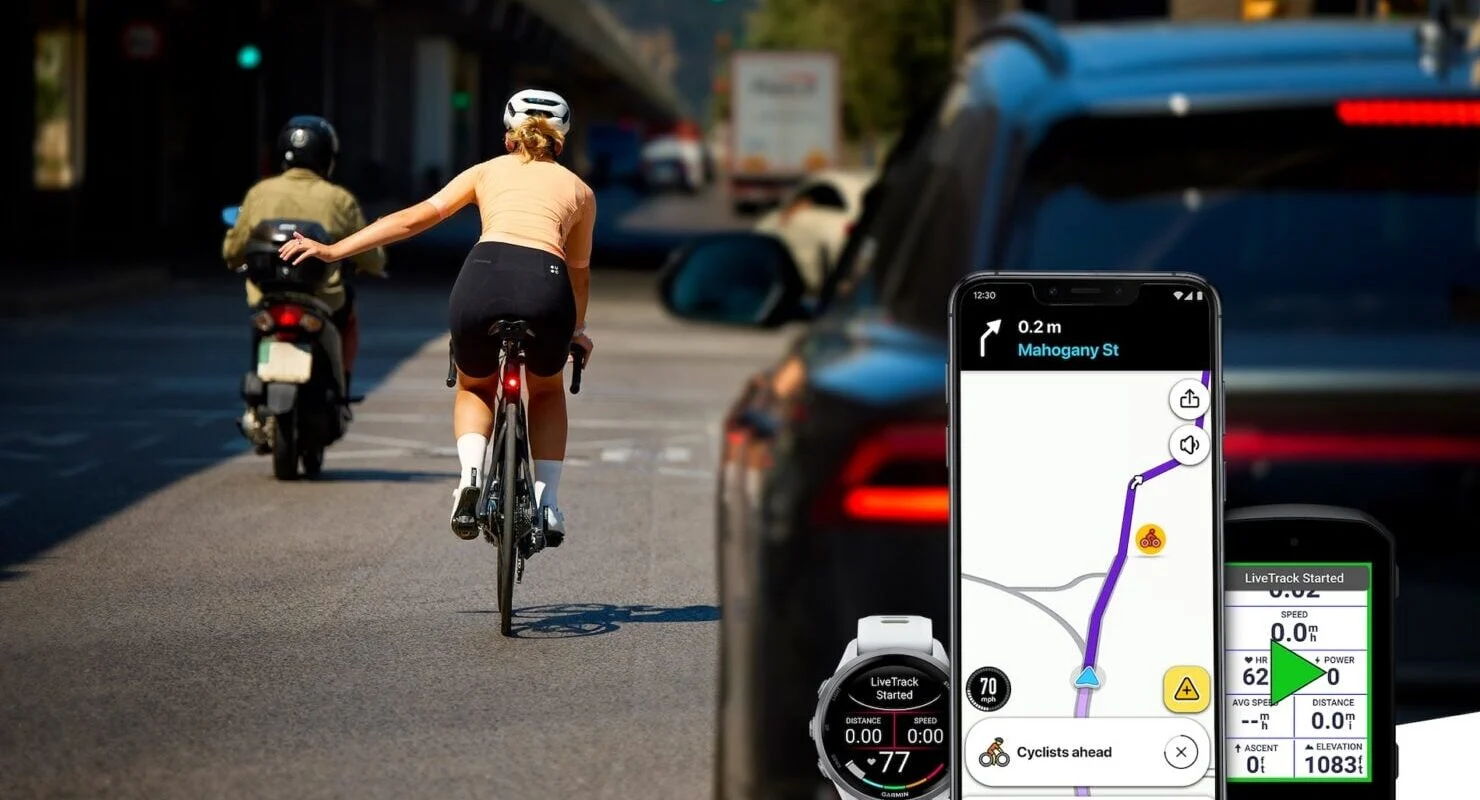
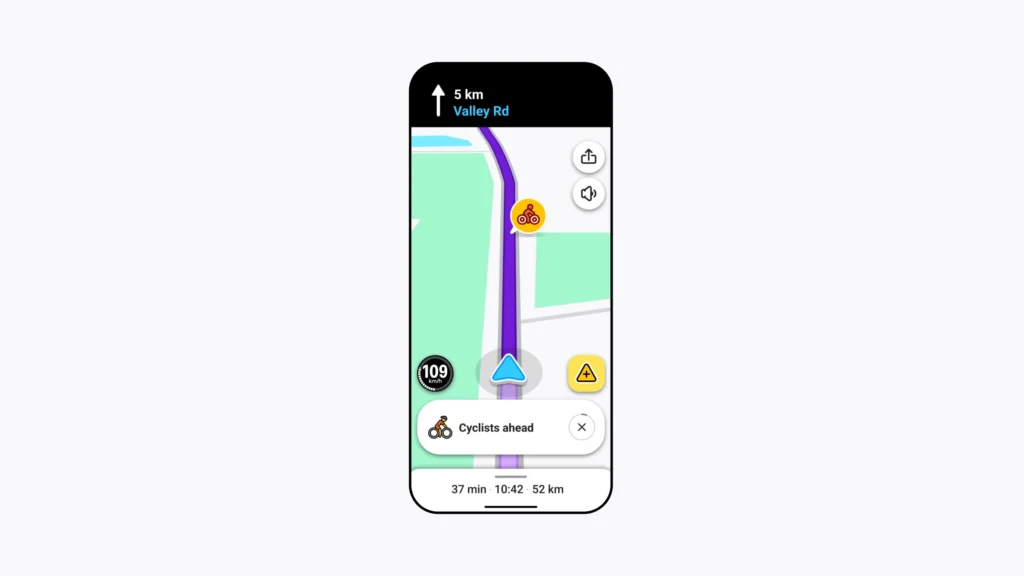
Garmin and Waze just went after that exact problem from a direction nobody had tried. As of November 10, 2026, Waze can show drivers a “Cyclists ahead” alert and a moving bike icon when a Garmin rider is on the road in front of them. The rider’s Garmin feeds the location. The driver’s Waze app does the warning.
I think this is one of the more useful road cycling safety ideas in years, and the reason is simple. It uses two things a huge number of people already own and already have running.
The short version
- What it is: Live Cycling Alerts in Waze, fed by Garmin LiveTrack.
- What drivers see: a moving cyclist icon on the map and a “Cyclists ahead” alert.
- What riders need: a LiveTrack-capable Garmin Edge or Garmin watch, the Garmin Connect app, and a paired phone.
- What drivers need: Waze on iOS or Android. Nothing from Garmin.
- Cost: free. No Garmin Connect+ subscription.
- Privacy: opt in only, anonymous, and it stops when you end the ride.
- Availability: rolling out globally now.
What Garmin and Waze announced
Garmin’s press release calls it a first for the industry. Riders on a compatible Edge bike computer or Garmin smartwatch can share their LiveTrack position during an outdoor cycling activity, and that position shows up as a real time alert for drivers in the Waze mobile app. Garmin puts the Waze audience at 200 million drivers worldwide.
Waze published its own post the same day and said the rollout covers both Android and iOS globally. Waze VP and GM Gai Berkovich described the alert as “a helpful heads-up” for drivers, meant to get them to slow down and share the road.
If this sounds familiar, it leaked first. Gadgets & Wearables found references to “Share Location with Waze” buried in Garmin Connect 5.31 on November 4, six days before either company said a word.
How Waze cyclist alerts work
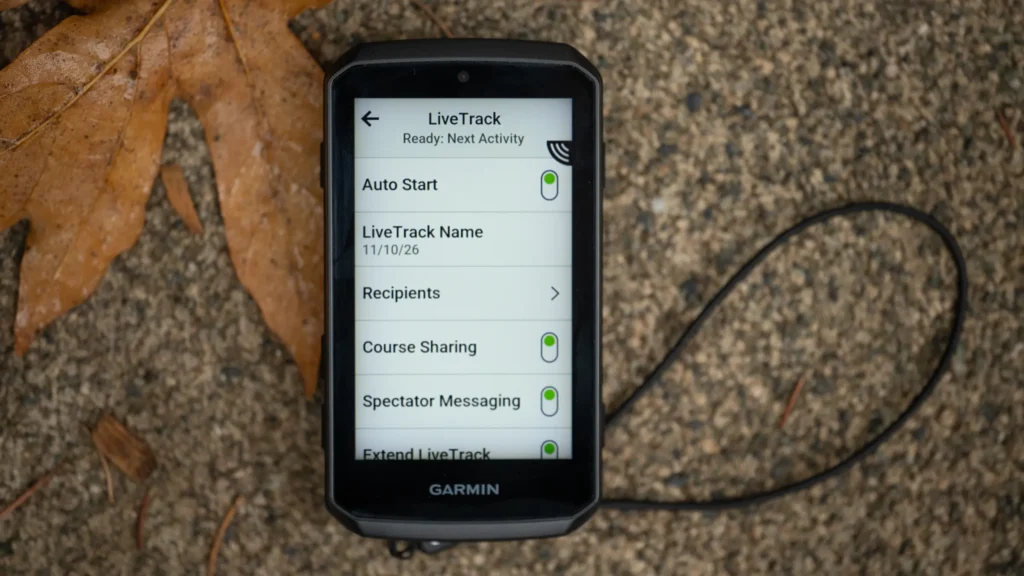
LiveTrack has been on Garmin devices for years. You start a ride, your phone sends your position up through Garmin Connect, and anyone you have invited can follow along on a map.
The Waze piece takes that same position feed and sends it somewhere new. Until now, a person had to receive your tracking link and choose to watch it. With the Waze option on, drivers who have no connection to you at all get the benefit, and they don’t have to do anything.
On the bike
You opt in once through Garmin Connect. After that, you start an outdoor ride with LiveTrack running and your phone connected, and your position goes to Waze for the length of that activity. Garmin describes the sharing as temporary and tied to the session. When you hit stop and save, you disappear from the map.
 From the Bike198 shopIs My Bike Ok?$26Shop
In the car
A driver running Waze sees a cyclist icon moving along the road ahead, and a “Cyclists ahead” alert pops up the same way a pothole or a stalled car warning does. Nothing about who you are comes with it. Drivers never get your name, your profile, or the route you are riding. They get a bike on the map.
How to turn on Waze sharing in Garmin Connect
- Update Garmin Connect on your phone. The feature first appeared in version 5.31.
- Find the Waze location sharing option in the app’s LiveTrack settings and opt in. You will get a consent screen explaining that Waze drivers can see your location while you ride.
- Make sure LiveTrack itself is set up and that your Edge or watch is paired to your phone.
- Start an outdoor cycling activity. Keep your phone with you, because an Edge needs it for the data connection.
- End the ride on your device when you are done. Sharing shuts off on its own.
The rollout is staged, so if you don’t see the option yet, give it a few days. Garmin also notes the alerts may not be available in every region.
Which Garmin devices work?
Garmin hasn’t published a model list, which is annoying. What the company has said, per Garmin Rumors, is that any Garmin device that supports LiveTrack can share with Waze. That covers a lot of hardware. Heise points out that it reaches well down the price range, including budget models like the Forerunner 70 and Edge Explore 3 alongside the Fenix 9 and Edge 1060.
In practice, if you have used LiveTrack before on your current device, you are almost certainly fine. That includes the units we have covered here, like the Garmin Edge 1050 and the Edge 540.
I go back and forth between an Edge and a Garmin watch depending on the ride. A few years ago I wrote about ditching my cycling computers for a watch, and I have since landed somewhere in the middle. The nice part here is that it doesn’t matter which one I grab. Both run LiveTrack, so both put me on Waze.
If you don’t have a LiveTrack-capable Garmin yet, here is where to check current pricing:
- Garmin Edge bike computer: Amazon | Competitive Cyclist
- Garmin watch: Amazon | Competitive Cyclist
Why this is a big deal for road cyclists
Safety tech for cyclists usually fails on adoption. Somebody builds a clever beacon or a connected helmet, and it only works if riders buy a new gadget and car makers or drivers buy into the other half. That never happens at scale.
This one skips the adoption problem on both ends.
Garmin is already on the handlebars
Look at any group ride. Strava’s 2024 trend data had the Garmin Edge 530 as the most used cycling computer on the platform, with the Edge 830 right behind it. Add the Fenix and Forerunner watches on every other wrist, and Garmin is as close to a default as road cycling has. Nobody has to buy anything. The hardware is already out there, already paired to phones, and LiveTrack is already free.
Waze is already on the dashboard
Waze has a habit that Apple Maps and Google Maps don’t have to the same degree. People run it on roads they already know.
I am one of them. Waze is open on my commute every day, on roads I could drive half asleep, and I am not using it for directions. I want to know about the speed trap, the wreck around the bend, the ladder sitting in the left lane. Waze markets itself that way too. Its App Store listing pitches the hazard alerts to drivers who already know the way.
That habit is what makes this work. A cyclist alert that only fired for people actively navigating to a new address would miss most local traffic. The drivers passing you on your regular loop are mostly locals on their daily drive, and a good chunk of them have Waze up for exactly the kind of warning this is. A cyclist ahead is now in the same bucket as a pothole or a car on the shoulder, and Waze users are already trained to react to those.
The warning comes early
Your tail light and your bright jersey only work once a driver has line of sight. On a twisty road, or over a rise, or at dusk, that can be very late. At 45 mph a car covers 66 feet every second. A heads up that arrives before the curve gives a driver real time to come off the gas.
The stakes are not small. NHTSA counted 1,103 cyclists killed in U.S. traffic crashes in 2024, with an estimated 52,887 injured. That was down 6 percent from 2023, which is the right direction and still far too many.
Varia watches behind you. Waze warns the driver.
If you ride with a Garmin Varia radar, you already know how much calmer a road ride gets when your computer tells you a car is coming. Varia tells the rider about the car. The Waze alerts tell the car about the rider. Same problem, opposite ends.
They are not substitutes. Varia picks up every vehicle behind you, no matter what app the driver is or isn’t running. Waze alerts only reach Waze users. Run both if you can. If you are shopping for a radar, here is current Varia pricing on Amazon.
What it won’t do
I like this feature a lot. I also don’t want anyone riding differently because of it, so here is where it stops.
- It only covers Garmin riders who opt in. The kid on a hybrid, the commuter with no computer, and your buddy on a Wahoo are all invisible to it.
- It only reaches drivers with Waze open. A driver using Google Maps, Apple Maps, or nothing gets no alert.
- It depends on your phone having signal. Dead zones on rural roads are where I would want it most, and where LiveTrack is weakest.
- Waze may hold the alerts back in places where bikes are always on the road, according to Garmin Rumors. That makes sense. A dense city core would turn into a wall of icons.
- Neither company has said how it behaves on CarPlay or Android Auto. The announcements only mention the Waze mobile app.
The critics have fair points too. Terry McKall at Canadian Cycling Magazine argued that the better fix is drivers watching the road instead of a screen, and he worries about alert fatigue once icons get common. He also raised a concern worth thinking about: a road rage driver who buzzed you once could, in theory, see a cyclist icon still moving up the road. The top comment on the MacRumors story called it one more distraction for drivers.
I get it. But drivers are already looking at that screen. I would rather be on it than not.
What about privacy?
Garmin and Waze both lean hard on this. The feature is off until you turn it on, drivers never see identity or route, and the sharing dies with the ride. You are an anonymous dot.
The open question is on the back end. Front Pack Sports noted that Garmin’s release doesn’t say what Waze keeps, how long it keeps it, or whether the data gets used for anything past the alert. Waze is a Google company, so that is worth a clear answer. If you already start and end rides at your house with LiveTrack links going out, this doesn’t change your exposure much. If you are careful about location data, wait for the fine print.
Should you turn it on?
Yes, with your eyes open.
It costs nothing, it takes a minute, and the downside for most riders is close to zero. It will not make a distracted driver attentive and it does not replace lights, a radar, or riding like nobody sees you. What it does is add one more chance for a driver to know you are there before they can see you.
I have already turned it on in Garmin Connect. Road miles are next, and I will update this post once I have some, including what it looks like from the driver’s seat with Waze running.
If you still think of your Garmin as a Strava feeder, this is a good reason to look at it differently. We made a similar argument in our piece on riding for fun instead of segments. Getting home matters more than any number on that screen.
Waze and Garmin cyclist alerts FAQ
Is the Waze cyclist alert feature free?
Yes. LiveTrack is a free Garmin feature and the Waze sharing does not require Garmin Connect+. Waze is free for drivers.
Do drivers need a Garmin device?
No. Drivers only need the Waze app on iOS or Android.
Can Waze drivers see who I am or where I am going?
No. Drivers see a temporary alert and a moving cyclist icon. Your name, identity, and route are not shown.
Does it work with Wahoo, Hammerhead, Strava, or Apple Watch?
No. The launch covers Garmin devices with LiveTrack only. Neither company has announced support for other brands.
Do I need my phone on the ride?
With an Edge, yes. LiveTrack sends your position through the Garmin Connect app on your paired phone. Some Garmin watches with built in LTE can run LiveTrack without one.
When do the alerts stop?
The moment you end the activity on your Garmin device.
Does it work on mountain bike rides?
Garmin says it applies to outdoor cycling activities. There are no Waze drivers on singletrack, but it could help on the road stretches to and from the trailhead.
Does Google Maps show cyclist alerts too?
Not at this point. The feature is in Waze only.
Sources
- Garmin press release, November 10, 2026
- Waze announcement on the Google blog
- MacRumors
- Garmin Rumors
- Gadgets & Wearables
- Bikerumor
- Heise
- Canadian Cycling Magazine
- Front Pack Sports
- NHTSA Traffic Safety Facts: Bicyclists and Other Cyclists, 2024 data
- Cycling Weekly on Strava’s device data

I founded Bike198 back in 2008 and started riding bikes seriously in 1994. A lot has changed since that time and one of the greatest releases is still getting out on the bike and shredding trail or tearing up the road.