
If you have been riding mountain bikes long enough, you eventually learn a hard truth about physics: trees do not move.
I learned this lesson the hard way years ago. It wasn’t a glorious high-speed crash on an EWS course; it was a stupid, low-speed washout that sent my face directly into a tree. The result? A lot of splinters, a few stitches, and a newfound appreciation for chin bars. Since that day, I have been on an eternal quest for a helmet that offers the protection of a downhill lid but breathes like a half-shell. For years, that was a “pick two” scenario: Light, Safe, Ventilated. You could never have all three.
Then came the original Fox Proframe. It changed the game. But it wasn’t perfect. The fit was polarizing, and the fixed visor was a dealbreaker for many.
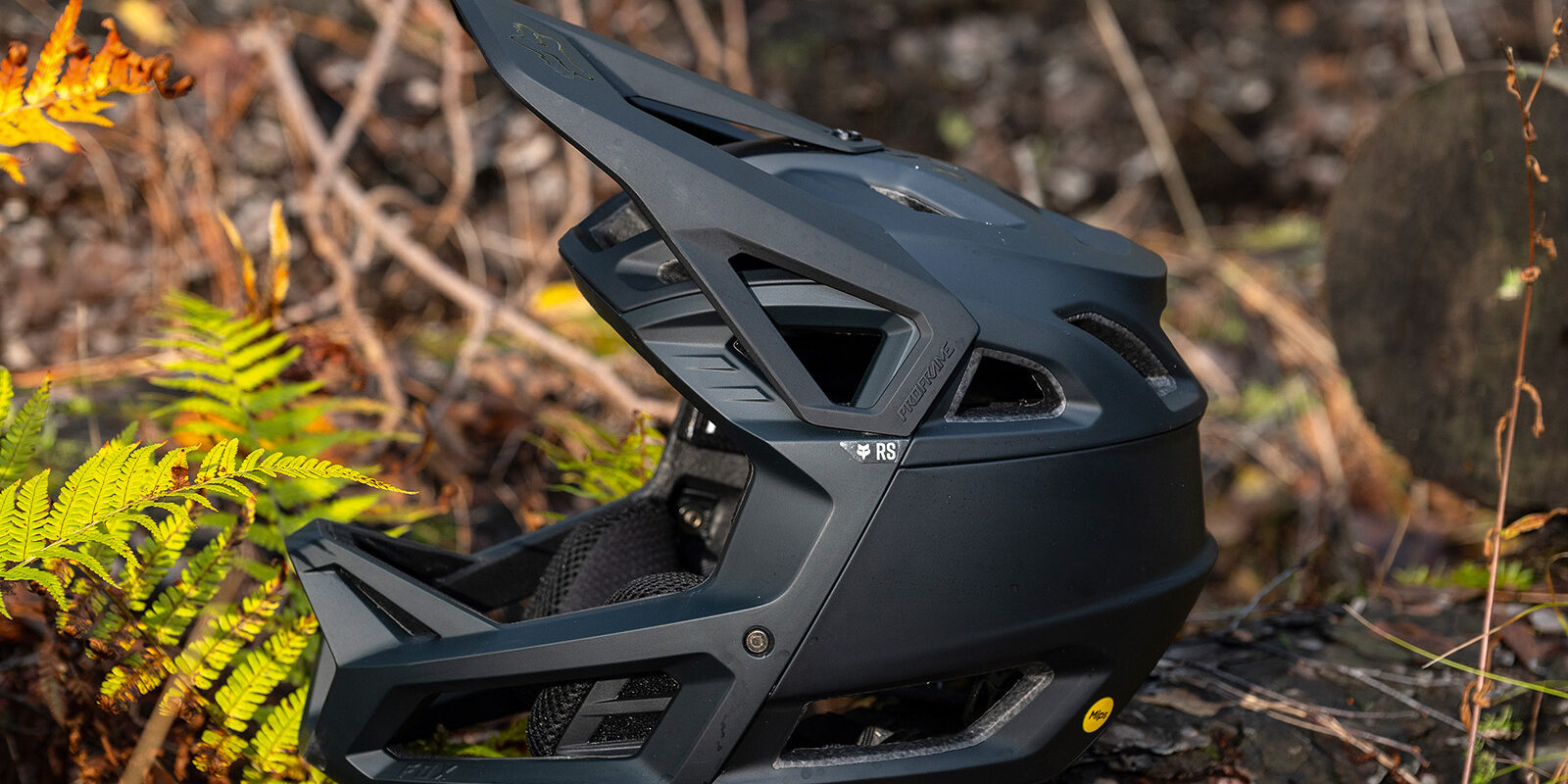
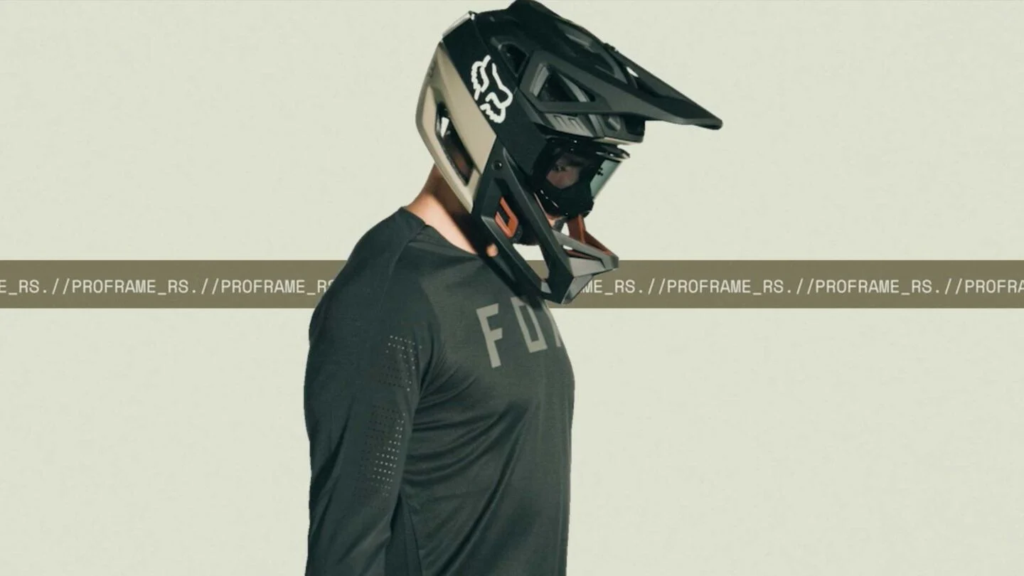
Enter the Fox Racing Proframe RS. Fox didn’t just update the old Proframe; they completely re-engineered it with the BOA® Fit System and the proprietary MIPS™ Integra Split protection. They claim it is the “most ventilated enduro full-face” on the market. But does it justify the hefty price tag? And is it safe enough for a rider who has a magnetic attraction to timber?
I’ve put the Proframe RS through the wringer—sweaty Georgia climbs, jagged rock gardens, and high-speed bike park laps—to find out. Here is the most comprehensive review of the Fox Proframe RS on the internet.
Quick Specs
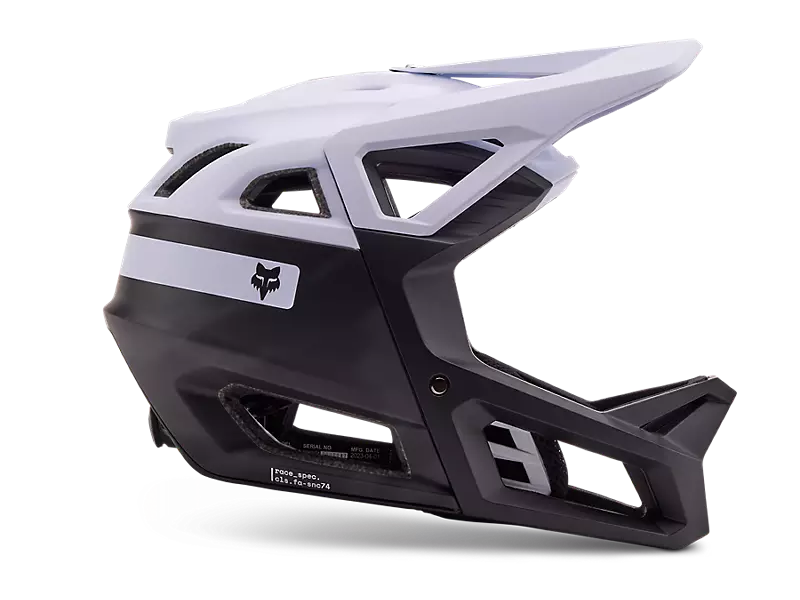
- Price: $359.95 – $399.95 MSRP
- Weight: ~820g (Size Medium)
- Certifications: ASTM F1952 (DH Certified), ASTM F2032, EN 1078, CPSC 1203, AS/NZ 2063
- Rotational Impact Protection: MIPS™ Integra Split
- Fit System: BOA® Fit System
- Buckle: Fidlock® SNAP magnetic buckle
- Vents: 22 big bore vents
- Visor: 3-position adjustable (Goggle compatible)
- Buy It Here: Competitive Cyclist – Fox Proframe RS
The Technology: More Than Just Foam
Before we talk about how it rides, we need to talk about what is under the hood. Fox threw the kitchen sink at the RS, and two technologies stand out: MIPS Integra Split and the BOA Fit System.
MIPS Integra Split: The Safety Split
Standard MIPS liners are yellow plastic sheets that sit between your head and the helmet. They work, but they often block airflow and creak.
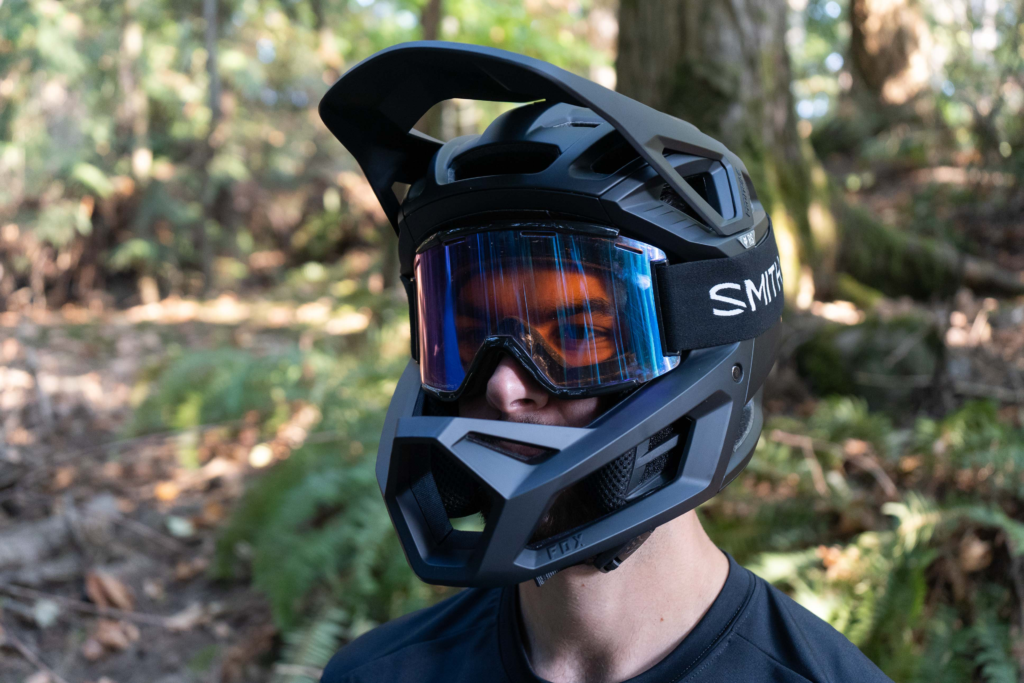
For the Proframe RS, Fox and MIPS developed the Integra Split. Instead of a single liner, the helmet’s foam is actually split into two layers:
- Outer Layer: A harder EPS foam for high-speed impacts.
- Inner Layer: A softer EPP foam for low-speed impacts (the kind that often cause concussions).
Between these two layers are “woofers”—little elastomer pucks that allow the two foam layers to slide against each other. This manages rotational energy during a crash without a plastic sheet touching your scalp. This design is crucial for ventilation because it opens up the airflow channels significantly.
The BOA Fit System: A Full-Face Game Changer
This is the feature that separates the RS from almost every other full-face on the market. Most full-face helmets rely on squishing your cheeks with thick pads to stay in place. If you have a weirdly shaped head (like me), you often end up with a helmet that is tight on the jaw but loose on the crown.
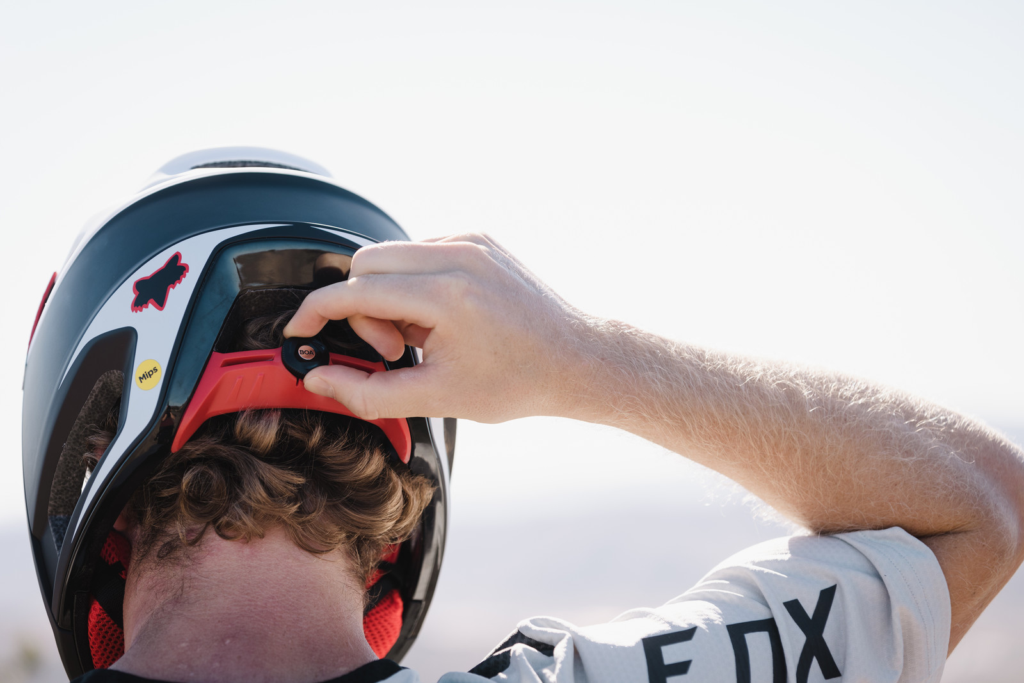
The Proframe RS uses a BOA dial at the rear, similar to what you find on high-end road or half-shell trail helmets. This cradle wraps 360 degrees around your head.
- Why this matters: It isolates the “fit” from the “hold.” You can run thinner cheek pads for better breathing and still have the helmet locked securely to your skull. It eliminates the dreaded “bobblehead” feeling where the helmet rotates forward over your eyes in rough terrain.
Fit and Comfort
Putting on the Proframe RS feels different than a traditional DH lid. Because of the BOA cradle, you need to loosen the dial fully, pull the rear retention system back, and then slide it on. Once it’s on, you dial it in.
The Sizing: The sizing runs slightly large compared to Troy Lee Designs or Smith. I am typically a “Medium” across the board (57-58cm head), and the Medium RS fits perfectly with the BOA tightened. If you are on the borderline between sizes, the BOA system gives you more leeway to size up, but I would recommend sticking to the chart.
Cheek Pads: Fox includes two sets of cheek pads (Thin and Thick). Because the BOA handles the retention, the cheek pads are there mostly for stability and comfort rather than holding the helmet on. This is a massive win for long-distance rides. I ran the thinner pads, and the helmet felt almost like a trail helmet—zero jaw fatigue, which is rare for a full-face.
The Contact Points: The Ionic+ antimicrobial liner is plush but minimal. It doesn’t soak up sweat like a sponge; it wicks it away. However, some riders with shaved heads have noted that the MIPS Integra “woofers” can sometimes be felt if the liner shifts. I have hair, so I didn’t notice this, but it’s worth noting.
Ventilation: The “Air Conditioning” Effect
If you buy this helmet, you are buying it for one reason: Airflow.
The Fox Proframe RS is, without a doubt, the airiest full-face helmet I have ever strapped to my head. The chin bar is completely open—no mesh, no foam, just massive holes. When you are gasping for air at the top of a tech climb, there is zero resistance. You can spit, drink from a bottle, or yell at your buddies without obstruction.
The “Stack Effect”: The MIPS Integra Split design allows for massive intake ports above the brow. As you move, you can physically feel the air being pulled over the top of your head and exhausted out the rear.
- Ride Report: I wore this on a 90°F (32°C) day in the humid Southeast. Usually, I would strap my full-face to my pack for the climb. With the RS, I left it on. Was it as cool as a half-shell? No. But it was 85% of the way there. I never felt the need to take it off, which is the highest compliment I can give a convertible-class helmet.
Ride Impressions
The Climb
As mentioned, the ventilation is superb. But the weight is also a factor. At 820g, it is heavier than the Specialized Gambit (640g) and the TLD Stage (690g). You do feel that extra 100-150g on long, grinding fire road climbs. However, the weight is well-balanced. It doesn’t pull your head down.
One minor annoyance: The Creak. The MIPS Integra Split system involves moving parts. On my test unit, I noticed a slight “creak” or “squeak” sound when mashing over technical climbs where my head was bobbing significantly. It wasn’t loud, but it was there. This is a common trait in MIPS spherical/split helmets, but it fades into the background once you drop in.
The Descent
This is where the extra weight pays off. The Proframe RS feels substantial. Lightweight enduro helmets often feel like “toys” compared to a real DH lid. The Specialized Gambit, for example, feels scary thin. The Proframe RS feels like a piece of armor.
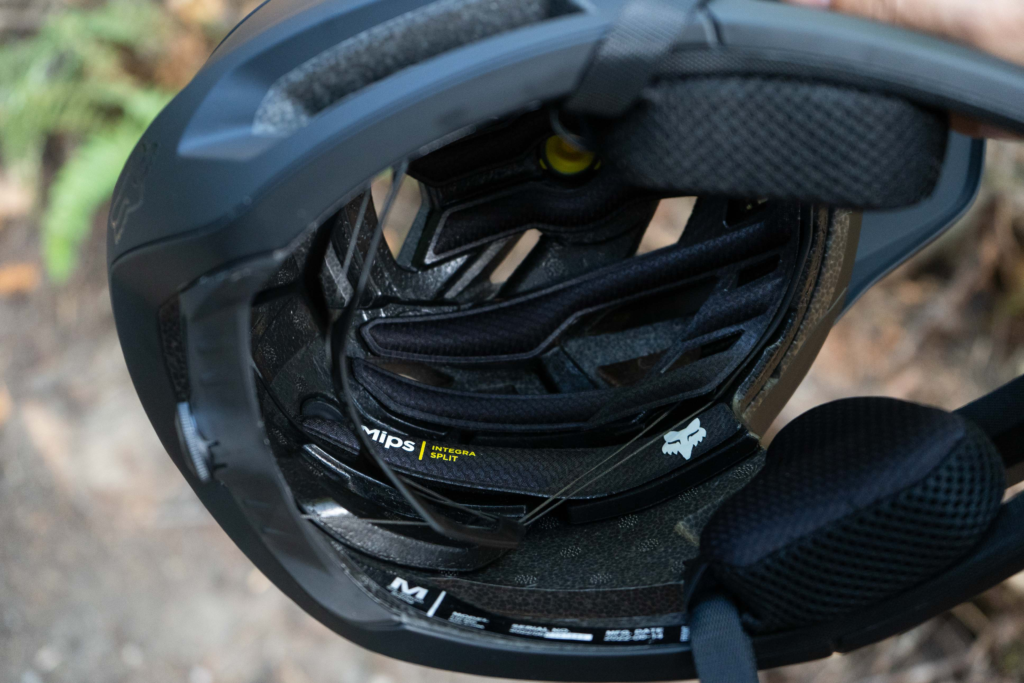
- Vision: The eye port is massive. It accommodates large goggles (I tested with Smith Squad XLs and 100% Armegas) with zero interference. Peripheral vision is excellent; I never saw the chin bar in my lower field of view.
- Stability: This is the BOA system shining. In rock gardens that usually shake a helmet loose, the RS stayed glued to my forehead. No slipping, no rotation.
- Noise: It is louder than a heavily padded DH helmet (like a Fox Rampage or TLD D4) because of the massive vents. Wind noise is noticeable at high speeds, but that’s the trade-off for ventilation.
Safety & The “Tree Test”
I didn’t volunteer to headbutt a tree for this review, but knowing the helmet is ASTM F1952 Downhill Certified provides peace of mind. Many “lightweight” full-faces skip this certification to save weight. Fox did not. If you have ever broken your face, you know that the chin bar strength matters. The RS chin bar feels rigid and robust, unlike some convertible helmets where the chin bar flexes significantly under hand pressure.
Competitor Comparison
To be thorough, we have to look at how the Proframe RS stacks up against the “Big Three” alternatives.
1. Fox Proframe RS vs. Smith Mainline
- Comfort: The Smith Mainline is more comfortable. Its padding is thicker and feels more like a pillow. However, it is significantly hotter.
- Fit: Smith uses a D-Ring buckle (fiddly with gloves) vs. Fox’s Fidlock (easy). Fox has the BOA; Smith relies on varying pad thickness.
- Verdict: If you have a “Smith head” shape and prioritize pillow-soft comfort over ventilation, go Smith. If you want airflow and a customizable fit, go Fox.
2. Fox Proframe RS vs. Troy Lee Designs (TLD) Stage
- Weight: TLD Stage is lighter (~690g vs 820g). You feel this difference.
- Ventilation: Fox wins. The Stage breathes well, but the RS ports are larger and the flow-through is better.
- Fit: TLD sizing is notoriously tricky (narrow). If the Stage fits you, it fits great. If it doesn’t, you’re out of luck. The Fox BOA makes the RS adaptable to more head shapes.
- Verdict: The Stage is getting old (launched 2018). The Proframe RS feels like a more modern, protective piece of kit, even with the weight penalty.
3. Fox Proframe RS vs. Specialized Gambit
- Purpose: The Gambit is an ultralight “race run” helmet. It is ridiculously light (640g) but feels fragile. It lacks the “burly” sensation of the RS.
- Verdict: Use the Gambit for XC/Trail riders who want some face protection. Use the Proframe RS for Enduro/Park riders who want real protection.
Pros and Cons
Pros:
- Best-in-Class Ventilation: Genuine airflow that rivals half-shells.
- BOA Fit System: Locks the helmet in place; accommodates varying head shapes; isolates fit from cheek squish.
- DH Certified: ASTM F1952 rating provides legitimate bike park confidence.
- Fidlock Buckle: Once you use magnetic buckles, you can never go back to D-rings.
- Adjustable Visor: Finally! The 3-position visor allows for goggle storage (stowage) on climbs.
- GoPro Mount: Includes a removable under-visor mount that breaks away in a crash.
Cons:
- Price: At nearly $400, it is an investment.
- Sizing/Volume: It looks physically large on the head (the “Dark Helmet” effect).
- Weight: Heavier than the TLD Stage and Specialized Gambit.
- MIPS Creak: Slight noise from the liner layers rubbing during slow movements.
- Exposed Foam: The bottom edge of the helmet has exposed foam which can get dinged up if you treat your gear poorly in the parking lot.
Who is this helmet for?
- The Enduro Racer: You need to sprint uphill in a stage but need DH protection for the descent.
- The “Trauma” Rider: Riders like me who have had facial injuries and are now terrified of riding without a chin bar, even on trail rides.
- The Hot Head: Riders in humid climates (Southeast, East Coast) where airflow is the limiting factor for wearing a full-face.
- The Park Rat: It is certified for DH, so it’s perfectly capable of handling bike park laps, provided you aren’t doing Red Bull Rampage lines.
Who is this helmet NOT for?
- The Pure Downhill Racer: If you are shuttling only and hitting World Cup tracks, get a dedicated DH helmet like the Fox Rampage Pro Carbon or TLD D4. They offer more coverage and impact dampening for massive crashes.
- The Weight Weenie: If 150g bothers you, look at the Specialized Gambit.
- The Budget Rider: There are cheaper helmets (like the standard Proframe or Leatt Gravity 4.0) that offer 90% of the performance for 60% of the price.
The Verdict
The Fox Racing Proframe RS is currently the benchmark for the modern enduro helmet.
It solves the two biggest complaints of the original Proframe: the lack of an adjustable visor and the finicky fit. The addition of the BOA system is a masterstroke—it turns a helmet that had to fit your head shape perfectly into a helmet that can be made to fit almost anyone.
Is it expensive? Yes. But let’s go back to the beginning: I’ve paid the hospital bills for a broken face. They were a lot more than $359.95.
For the rider who wants one helmet to do it all—trail riding, enduro racing, and bike park weekends—the Proframe RS is the current king of the hill. It breathes well enough to pedal all day and protects well enough to save your smile when the trees decide to fight back.
Highly Recommended.
Grab yours here and support BIKE198: Buy the Fox Proframe RS at Competitive Cyclist