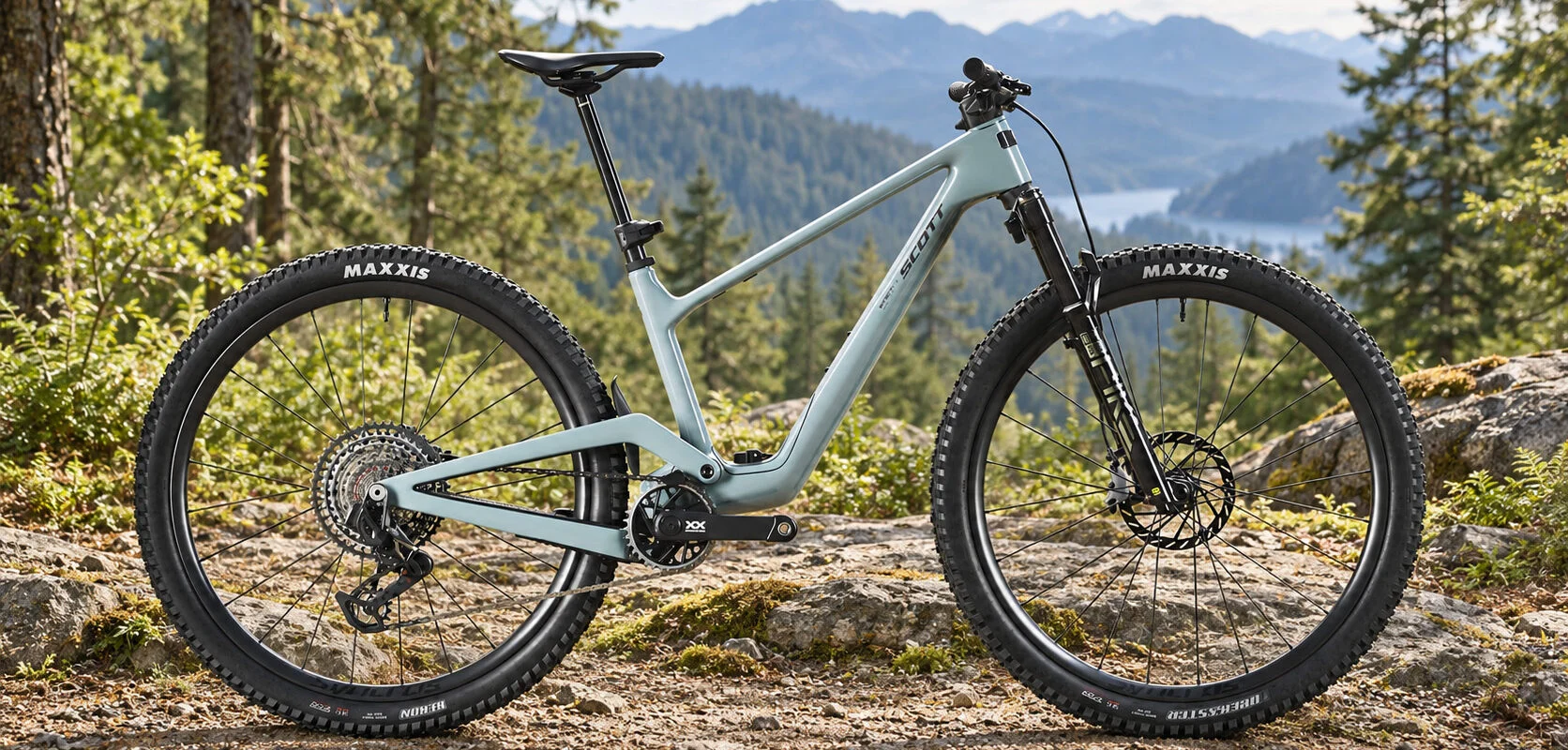
The Scott Spark DC is not a downcountry bike, and calling it one undersells what Scott actually built. At 138mm rear travel and 140mm up front, with claimed weights starting at 11.5kg for the Factory build, this bike blows past the numbers that used to define the category [1][2]. Trek’s Top Fuel Gen 4, one of the benchmarks people point to when they say “downcountry,” runs 130mm front and 120mm rear. The Spark DC isn’t playing that game anymore.
Scott’s own language backs this up. Launch coverage keeps circling back to “lightweight trail bike,” not “XC with a bit more cushion” [1]. That’s not a marketing accident. It’s a category redefinition happening in real time, and it puts Bike198 readers in a strange spot: do you buy into the new label, or do you judge the bike on what it actually does on your local trail?
What Downcountry Used to Mean
For years, downcountry meant a cross-country race chassis with a little extra squish bolted on. Think 120mm rear, maybe 120-130mm front, steep-ish geometry, and a weight number under 11kg that made XC riders feel okay about running a dropper post. It was a compromise bike built for people who wanted speed but didn’t want to admit they also wanted fun.
The Trek Top Fuel Gen 4 still represents that formula well: 130mm front, 120mm rear, a bike tuned for efficiency first and capability second. That’s the yardstick most of the outlets covering the Spark DC launch are measuring against, and by that yardstick, the Spark DC doesn’t fit.
You can’t fault the old formula. It served a real purpose for racers and fast XC riders who wanted a little forgiveness without giving up climbing speed. But the market moved, and the Spark DC is proof.
Check out all of the Scott Spark DC models and pricing.
The Numbers That Actually Matter
Weight gets the headlines. An 11.5kg claimed weight at 140mm of front travel is genuinely rare air, and it’s the number every outlet leads with [1]. But weight isn’t the story here. Geometry is.
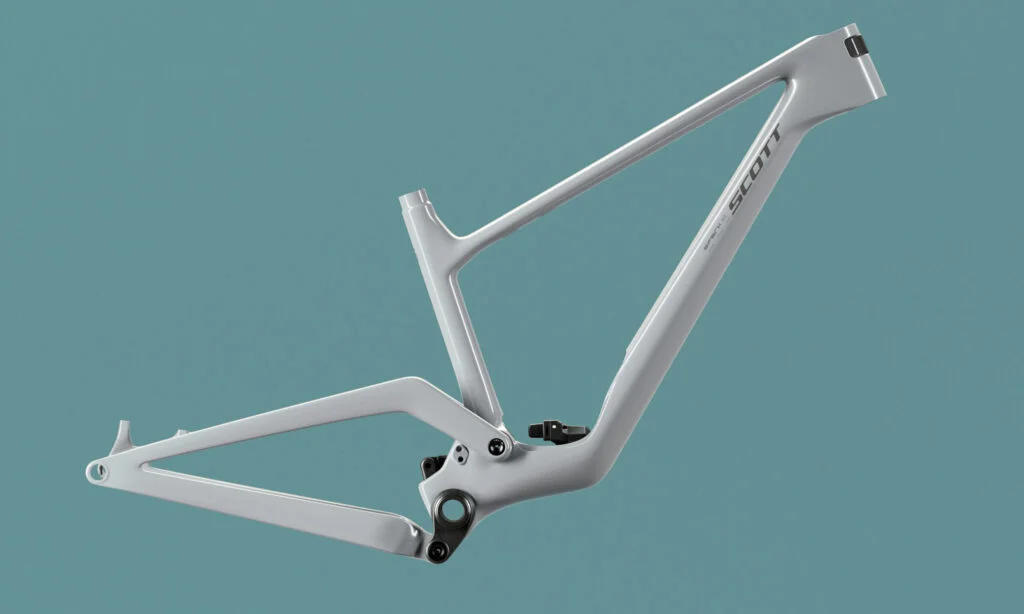
Scott slackened the head angle to 65 degrees, adjustable by half a degree, paired it with a 76.2-degree effective seat angle, a 490mm reach, and 440mm chainstays on a size large. Those numbers aren’t XC numbers. They’re not even traditional downcountry numbers, which tend to sit closer to 66-67 degrees up front. They’re trail bike numbers, full stop.
That geometry shift changes how the bike behaves when the trail gets rowdy, in a way that grams saved on the frame never could. A slacker head angle buys you stability at speed and confidence on steeper pitches. A longer reach gives you room to move your weight around without feeling cramped. This is the real headline, and most of the launch coverage buried it under the weight number.
Here’s the lineup spread, which tells you Scott built this as a platform, not a single bike:
- Spark DC Factory: 11.5kg claimed, top of the range
- Spark DC 10: 12.3kg claimed, 13.12kg measured with pedals
- Spark DC 20: 12.7kg claimed
- Spark DC 30: 13.0kg claimed
- Spark DC 40: 13.8kg claimed, entry point
That’s a nearly 2.3kg spread across five models, all sharing the same 138mm/140mm travel and the same aggressive geometry [1]. You’re not choosing between different bikes here. You’re choosing how much you want to pay for lighter parts on the same fundamental machine.
 From the Bike198 shopN+1 = The Amount of Bikes You Need$24.99Shop
 What the First Rides Are Actually Saying
The early reviews split in an interesting way, and that split is exactly why this bike deserves more than a category label. BikeRadar’s first-ride verdict called it “without doubt, an incredibly fast bike” that “successfully mixes XC race-bike speed and agility with on-trail manners that enable you to push the bike comfortably towards warp speed” [3]. Same review, though, includes a real caveat: “it’s not a bike built for the chunkiest terrain” [3].
Compare that to the Italian outlet MTBMagazine, which went further in the other direction, calling the Spark DC “hands down, the definitive bike for the enthusiast” for riders who don’t race every weekend and just want to ride a thousand different trails. French outlet Vojomag split the difference, framing the bike as “mini all-mountain or maxi XC” and noting Scott was right to make the DC meaningfully different from its XC race sibling, the Spark RC [4].
Men’s Journal’s review leaned positive too, praising the bike as “remarkably light for its capability” and “far more confident downhill than an XC bike,” while still flagging it as a bike that could “dip a toe into cross-country racing at the local level” [5]. Bikeboard went furthest, suggesting the Spark DC has “enormous potential to become a bike for people who want, or can afford, to own only one.”
None of these reviewers are wrong. They’re describing the same bike from different angles, and that’s exactly the tension worth paying attention to. A bike that draws both “definitive bike for the enthusiast” and “not built for the chunkiest terrain” in the same launch cycle isn’t a downcountry bike playing it safe. It’s a trail bike with an identity crisis that Scott clearly intended.
The Pricing Spread Tells Its Own Story
Money matters here too, and Scott built a genuinely wide range into this platform. Pricing spans €3,699 for the DC 40 up to €12,199 for the Factory build, roughly $4,400 to $13,000 in rough USD terms [1]. That’s not a narrow niche product. That’s a full spectrum from budget-conscious trail rider to halo-spec buyer, all riding the same fundamental geometry and travel numbers.
At the very top sits something almost absurd: the DC LTD frameset, including shock, weighs 1.8kg and costs €7,999 for the frame alone. That’s not a bike most people need. It’s a statement about how far Scott was willing to push weight optimization once they’d settled on the geometry.
Context matters here too. Cross-country remains the largest single segment of the mountain bike market, valued at roughly $2.67 billion of a $13.27 billion global market in the most recent figures from 2024. That commercial reality explains why Scott, and competitors like Yeti with its ASR Lunch Ride, are stretching XC platforms upward into trail territory instead of building something new from scratch. Capturing trail-curious XC buyers without cannibalizing a full enduro line is smart business, whatever you think of the marketing language wrapped around it.
Check out all of the Scott Spark DC models and pricing.
So What Should You Actually Buy
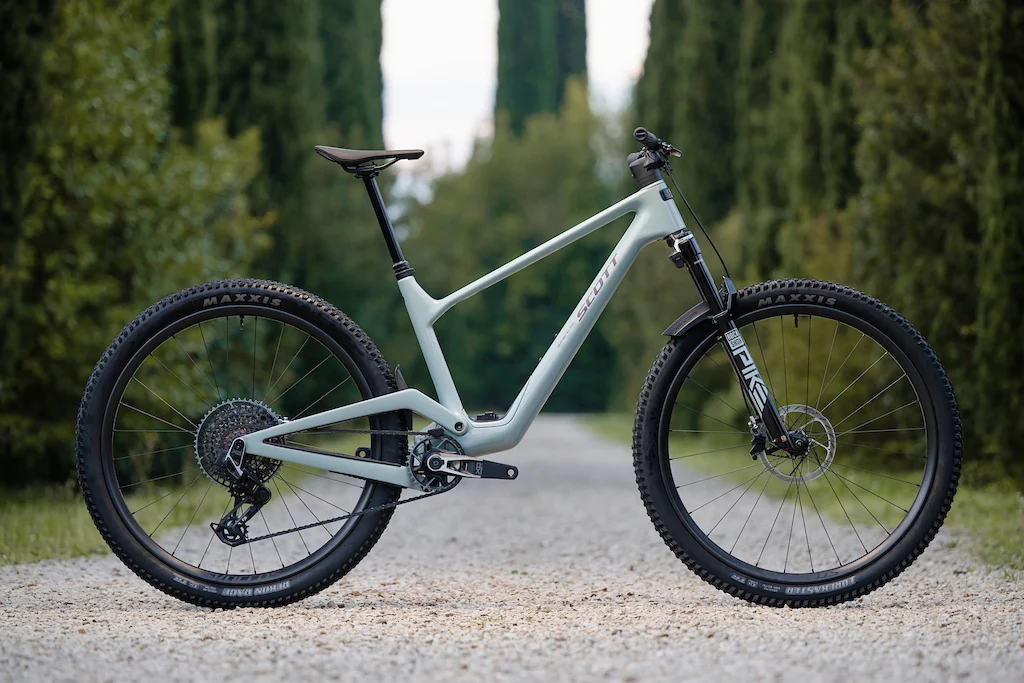
Here’s my take, and it’s an opinion, not a spec sheet regurgitation: the geometry matters more than the weight number, and anyone shopping this bike, or anything like it, should ignore the downcountry label entirely and ask what they actually ride.
If your trails are mellow and fast, with the occasional rock garden thrown in, the lighter builds toward the Factory end of the range will reward you every single pedal stroke. If you ride varied terrain and want one bike that won’t leave you white-knuckled on the way down, the mid-tier DC 20 or DC 30 builds probably deliver 90 percent of the experience for a fraction of the halo price tag. The frame geometry doesn’t change across the range. Your wallet decides how light the parts hanging off it get.
One more thing worth saying plainly: a contrarian argument floating around consumer bike circles claims most riders are better off “slightly overbiked,” covering roughly 80 percent of their riding with a bike that has a little margin to spare rather than one perfectly tuned to their average trail day. The Spark DC, with its trail-forward geometry wrapped in an XC-light weight, is arguably the first bike that lets you have both without much of a tradeoff. That’s rare, and it’s worth taking seriously if you’ve been stuck choosing between a race bike and a trail bike for years.
Frequently Asked Questions
Is the Scott Spark DC a good climber?
Yes. Reviewers consistently praise its climbing efficiency, with BikeRadar and Men’s Journal both noting it retains XC race-bike speed and agility uphill despite the added travel and slacker geometry [3][5].
How much does the Scott Spark DC weigh?
Claimed weights range from 11.5kg on the top-spec Factory build to 13.8kg on the entry-level DC 40, with the mid-range DC 10 measured at 13.12kg with pedals installed [1].
What’s the difference between the Spark DC and the Spark RC?
The RC is Scott’s dedicated cross-country race bike, while the DC gets more travel, slacker geometry, and a longer reach built for varied trail riding rather than pure race speed [4].
Is the Spark DC too much bike or not enough for aggressive trails?
It depends on your terrain. BikeRadar’s review notes it’s not built for the chunkiest terrain, but multiple other testers call it confident enough for genuine trail and light all-mountain riding [3][4].
Ride It Before You Label It
Spec sheets and category labels only tell you so much. If a Spark DC dealer demo is anywhere near you, put in real trail time on the geometry and weight combination before deciding whether “downcountry” even applies. Your local terrain will tell you more in twenty minutes than any launch review, including this one.
Check out all of the Scott Spark DC models and pricing.
Sources
- Scott Spark DC 2027: A lightweight trail bike with a well-thought-out … (bike-magazin.de)
- Scott redefines the word ‘downcountry’ with long-travel … (singletracks.com)
- Scott Spark DC 10 first-ride review: new Spark proves … (bikeradar.com)
- Test nouveauté | Scott Spark DC 2027 : mini all-mountain ou … (vojomag.com)
- I Never Thought I Needed a Downcountry Bike. Scott Changed My Mind(mensjournal.com)
Researched from 18 vetted sources · average source authority DR 67
Independently verified
The statistics above were independently corroborated against these sources:
- en.brujulabike.com (DR 48)

I founded Bike198 back in 2008 and started riding bikes seriously in 1994. A lot has changed since that time and one of the greatest releases is still getting out on the bike and shredding trail or tearing up the road.