Some links below are affiliate links. If you buy through them, Bike198 may earn a commission at no extra cost to you. Here is how that works.
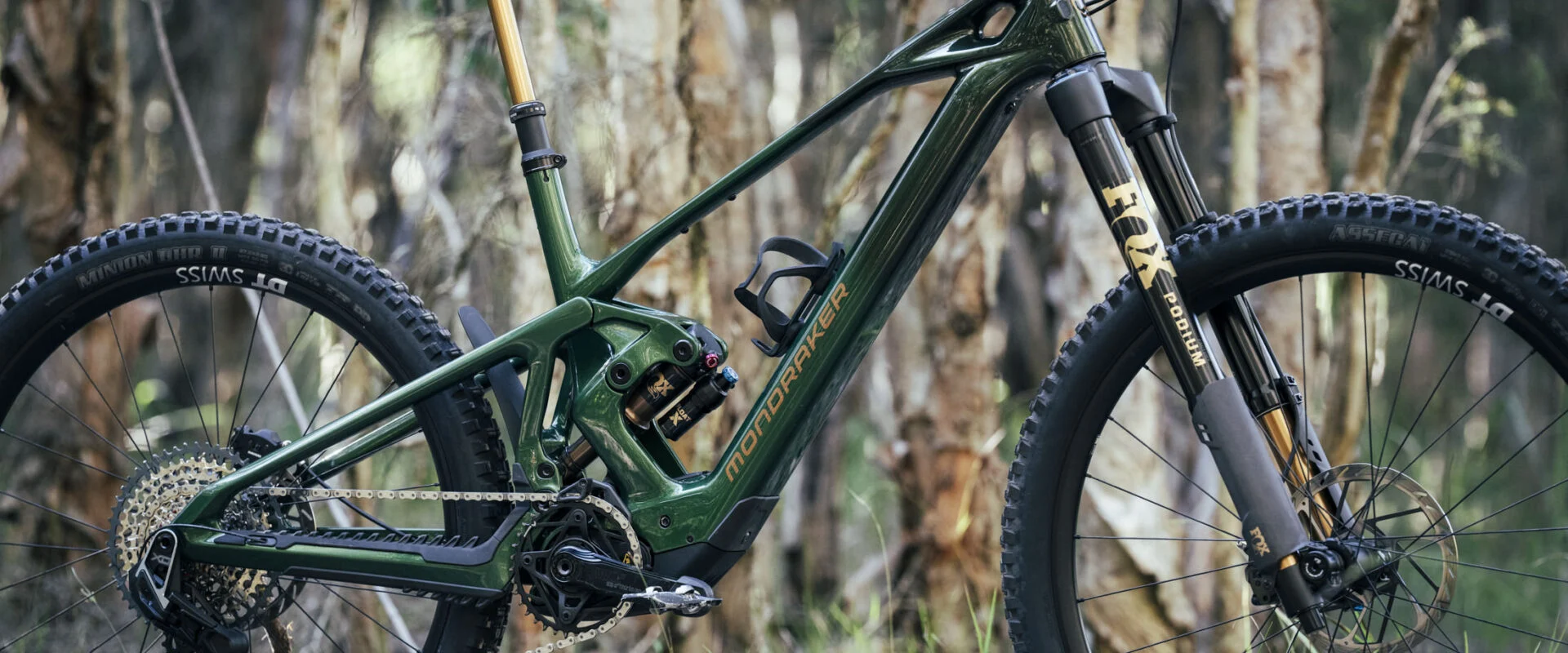
Plenty of riders assume the strongest motor on paper is always the best motor on the trail. The eMTB world is about to test that assumption hard. DJI’s Avinox M2S has pushed torque and wattage numbers to places no mainstream motor has gone before, and it just landed in a $4,999 complete bike from Ari, undercutting rivals that carry similar or lesser specs at much higher prices. So does the motor with the biggest numbers actually win? Not so fast.
The Numbers Behind the eMTB Motor Power Race
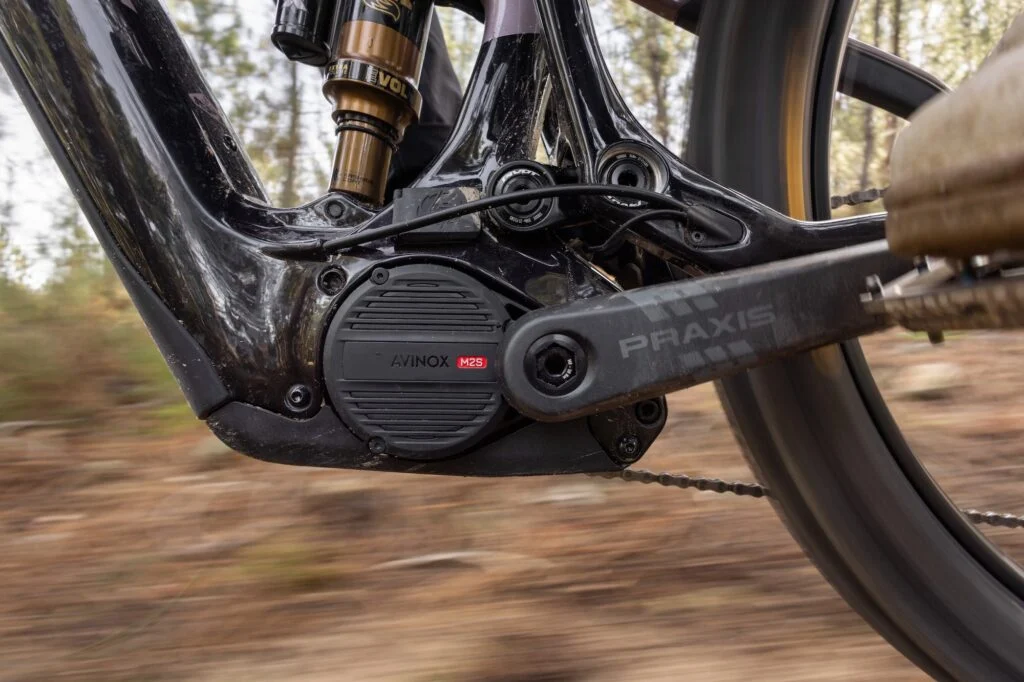
Let’s start with what’s actually on the spec sheet. The Avinox M2S puts out 130 Nm of continuous torque, with a Boost mode that spikes to 150 Nm for up to 60 seconds [1]. Peak power tops out at 1,500 W when paired with the right battery, though Ari’s own configuration is tuned to 1,300 W using 600 or 800 Wh packs [2]. Either number dwarfs what Shimano and Bosch offer today.
Shimano’s EP801 sits at 85 Nm of torque and somewhere around 500 to 600 W of peak power, packed into a motor that weighs about 2.7 kg. Bosch’s Performance Line CX tops out at 120 Nm and roughly 750 W. Put side by side, the Avinox M2S beats Shimano’s peak output by close to three times and out-torques Bosch by 30 Nm at its Boost ceiling. On paper, it’s not close.
Weight tells a more interesting story. The M2S weighs around 2.59 to 2.65 kg, putting it on par with or lighter than Shimano’s much less powerful EP801. That’s the part that should catch your attention: more output without more bulk strapped to your down tube.
How Ari’s Wire Peak 3.0 Changed the Conversation
Ari Bikes didn’t just adopt the Avinox M2S. It built an entire lineup around making that motor affordable. The Wire Peak 3.0 starts at $4,999 for a complete alloy build, with a frameset alone priced at $4,199 and the top-tier build reaching $7,999. Every tier shares the same alloy frame, the same M2S motor, and the same 800 Wh battery.
Ari founder Chris Washburn framed the move directly: “The all-new Wire Peak brings flagship-level performance to a bike starting under $5,000, helping us fulfill our mission of making high-performance bikes more accessible so more riders can live better now”. That’s a bold claim, and the pricing backs it up. Bikes that once required a €7,000 to €10,000 carbon build to get this kind of torque and wattage are now showing up under $5,000 in alloy.
CUBE tells a similar story from a different angle. Its carbon Avinox M2S bike starts at €4,799, tracking closely with Ari’s US pricing despite different markets and currencies. When two separate brands land near the same number with the same motor, that’s not a coincidence. That’s a price floor forming in real time.
 From the Bike198 shopEVOLUTION$24.99Shop
 Why Bosch and Shimano Aren’t Chasing the Numbers
Here’s where the story gets more interesting than a simple spec-sheet comparison. Bosch and Shimano aren’t racing to match Avinox’s peak numbers, and that looks deliberate rather than a shortfall.
Orbea’s Wild LT uses the same Avinox M2S motor as Ari, but the brand caps everyday assistance at 750 W and 130 Nm, holding the full 1,300 W and 150 Nm in reserve for a separate 60-second peak mode. That’s a company with access to the biggest numbers in the category choosing to dial things back for daily riding. Orbea’s entry carbon build runs around €6,999, a meaningfully higher price than Ari’s alloy platform despite sharing a motor.
Shimano’s restraint runs even deeper. At 85 Nm and 500 to 600 W, the EP801 delivers roughly half the torque and a third the peak wattage of the Avinox M2S. Riders who’ve spent real hours on both motors tend to describe the Shimano feel as smoother and more predictable at the pedal, which lines up with a design built around natural assist rather than raw output.
- Avinox M2S: 130 Nm continuous, 150 Nm Boost (60 seconds max), up to 1,500 W peak [1]
- Bosch Performance Line CX: 120 Nm max torque, roughly 750 W peak
- Shimano EP801: 85 Nm torque, 500-600 W peak, 2.7 kg motor weight
None of these numbers tell you how a bike climbs a loose switchback or handles a punchy technical move. They tell you what’s possible on a dyno. That gap matters more than most spec-sheet comparisons let on.
The “Power Wars” Warning Worth Taking Seriously
Bike Mag has already called this moment what it is, framing the current run of motor announcements as a “power wars” phase and warning that the industry is entering “a tricky phase for practical benefit versus spec-sheet bragging rights” [3]. That’s a fair read of where things stand.
NSMB raised a related concern, pointing out that Avinox’s headline figures of 1,300 W and 130 Nm continuous, with 1,500 W and 150 Nm for 30 seconds, open real questions about heat, reliability, and whether riders actually need that much power on the trails they actually ride. NSMB also noted that Avinox’s early OEM partners skew toward smaller and mid-sized brands, with bigger names like Canyon still expected to join later, suggesting the platform is still proving itself rather than sitting fully validated [4].
There’s a real-world caveat that gets buried under spec-sheet marketing too. Range on eMTBs commonly lands at 50% to 70% of the claimed maximum once you factor in aggressive Boost mode use, elevation gain, and rider weight. Push a 150 Nm Boost mode hard on a long climb, and you’ll burn through that 800 Wh battery faster than the marketing copy implies. Big power numbers and big range numbers don’t usually show up on the same ride.
Storck’s Weight Experiment Adds a Wrinkle
One more data point complicates the simple “more power means more compromise” narrative. Storck built an Avinox M2S bike, the Edrenalin3, claimed at 19.9 kg with an 800 Wh battery onboard [5]. That’s a genuinely light number for a bike carrying this much motor and this much battery.
It suggests the power race isn’t purely about torque and wattage bragging rights. Some brands are using the M2S platform to chase a different kind of edge: strong output paired with a lighter overall package than older high-torque systems required. Whether that translates to better trail manners than a heavier, lower-powered Shimano or Bosch build is exactly the kind of thing that needs saddle time to answer, not a spec sheet.
What This Means for Your Next Bike Purchase
If you’re shopping in the next year, the Avinox M2S platform is worth paying attention to for one simple reason: it’s spreading fast. The motor has already expanded to more than 60 OEM bicycle partners, including Ari, Orbea, CUBE, MMR, Whistle, Propain, and Storck. That kind of adoption curve doesn’t happen with a gimmick.
Adoption speed and trail performance are two different questions, though. The mountain e-bike market is projected to grow from $8.08 billion in 2024 to $13.89 billion by 2030, a 9.4% CAGR that’s pulling every major motor brand into a genuine arms race. That growth is exactly why you’re seeing bigger numbers on every new spec sheet, and exactly why you should be skeptical of numbers alone.
Before you let a torque figure decide your next purchase, ask what mode you’ll actually ride in day to day. Orbea’s decision to cap everyday output well below its own motor’s ceiling is a hint that even the brands building around Avinox don’t think max power should be your default setting [6].
Frequently Asked Questions
Is the Avinox M2S motor better than Bosch or Shimano?
On raw torque and peak wattage, yes, the M2S beats both by a wide margin [7][8]. Whether that translates to a better trail experience depends on how a specific bike tunes the motor and how much of that power you actually need for your riding style.
Why is the Ari Wire Peak 3.0 so much cheaper than other Avinox bikes?
Ari built its entire lineup around one alloy frame, one motor, and one 800 Wh battery, then priced the base model at $4,999 to make flagship-level performance accessible rather than premium-only.
Does more torque mean shorter battery range?
Using higher-output Boost modes aggressively will drain a battery faster, and real-world range on eMTBs typically lands at 50% to 70% of the claimed maximum. A bigger motor doesn’t automatically mean less range, but riding it hard will cost you range every time.
Are Bosch and Shimano falling behind in the power race?
Not necessarily. Both brands appear to be prioritizing smoother, more natural power delivery over chasing peak numbers, with Shimano’s EP801 running at roughly half the Avinox M2S’s torque by design [8][4].
Ride Before You Buy
Spec sheets don’t climb switchbacks and they don’t tell you how a motor feels at minute 45 of a hard ride. If the Avinox M2S, Bosch CX, or Shimano EP801 is on your shortlist, get seat time on all three before you commit, and pay attention to how each one delivers power rather than how much it claims to deliver. Bike198 will keep testing these motors on real trails and reporting back with the unsponsored take you won’t get from the brands themselves.
Sources
- Trekking bikes with DJI-Avinox: e-bikes with 150 Nm put to … (bike-magazin.de)
- 150 Nm w rowerze za 5000 dolarów. Avinox zaczyna schodzić z rowerowego Olimpu(chip.pl)
- Ranting About the eMTB Power Wars – Bike Mag (bikemag.com)
- The DJI Avinox Situation: A Little Perspective (nsmb.com)
- e:drenalin.3 mit M2S: Storck zeigt Avinox-E-MTB mit Rekordgewicht (bike-magazin.de)
- Orbea Wild LT: VTTAE gravity avec moteur Avinox M2S – Cleanrider (cleanrider.com)
- Avinox or Bosch? What we learned after testing their best e-MTB motors(en.brujulabike.com)
- E-Bike Motoren Vergleich 2026: Bosch, Shimano, Avinox – M-way (m-way.ch)
Researched from 31 vetted sources · average source authority DR 67
Independently verified
The statistics above were independently corroborated against these sources:
- pinkbike.com (DR 78)
- mtbr.com (DR 71)
For a broader comparison, see Best eMTB Motors 2026: The Ultimate Class 1 Comparison Guide.

I founded Bike198 back in 2008 and started riding bikes seriously in 1994. A lot has changed since that time and one of the greatest releases is still getting out on the bike and shredding trail or tearing up the road.