If the story of 2021 was “buy whatever is in stock,” the story of 2026 is the exact opposite. We are currently living through the biggest industry correction in decades—a “superbike hangover” that has fundamentally changed how riders search for, buy, and ride mountain bikes.
While the marketing machines are still pushing five-figure halo bikes with flight-attendant suspension and transmission drivetrains, the real action is happening at the other end of the spectrum. What brands are stocking, discounting, and promoting in 2026 makes one thing clear: “Budget” and “Value” bikes are no longer just for beginners—they are the new battleground for the soul of mountain biking.
Here is the deep dive on the economic pivot of 2026, the rise of the value-hunter, and the best bikes you can buy right now without financing a small sedan.
3. The Economic Pivot: The Surge of “Budget” and “Value” Searches
3.1 The Post-Inflationary Consumer
The Covid-boom era of buying bikes at any price is officially dead. It has been replaced by a value-hunting behavior pattern driven by lingering inflation, higher interest rates, and a permanently higher cost of living.
In 2026, the bulk of buyer intent is no longer focused on the latest S-Works or Factory-level builds—it’s focused on maximum utility per dollar.
Price-capped searches like “best mountain bike under $1,000” and “best full suspension under $2,000” have become the primary entry points for new riders. But this isn’t just a beginner phenomenon. Experienced riders are increasingly recognizing that the law of diminishing returns hits hard after roughly the $3,000 mark.
As a result, the traditional mid-market ($4,000–$6,000) is hollowing out. Riders are either going all-in on ultra-premium bikes—or, more often, dropping down into the high-value budget tier where performance remains high but financial risk is low.
3.2 The Winners of the Value War
This shift has reshuffled the brand hierarchy. The brands winning in 2026 are those that have mastered the art of trickle-down technology.
Polygon Bikes
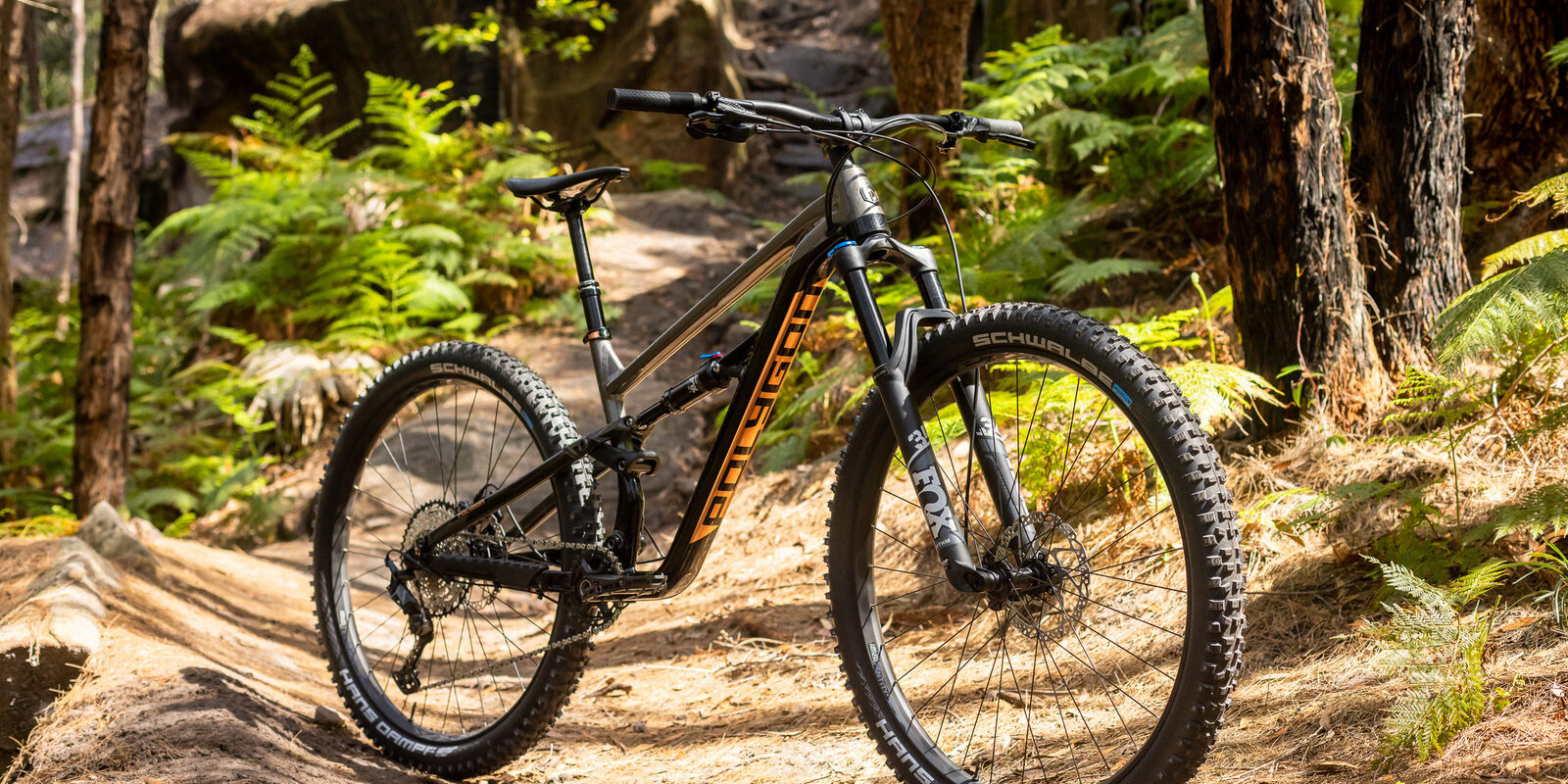
The undisputed heavyweights of the value conversation. The Polygon Siskiu lineup—particularly the D and T models—has become synonymous with budget full suspension. By pairing modern geometry with proven linkage designs and credible components, Polygon consistently undercuts traditional brands while delivering real trail performance.
See Polygon Bikes by Clicking Here
Vitus (The Comeback Kid)
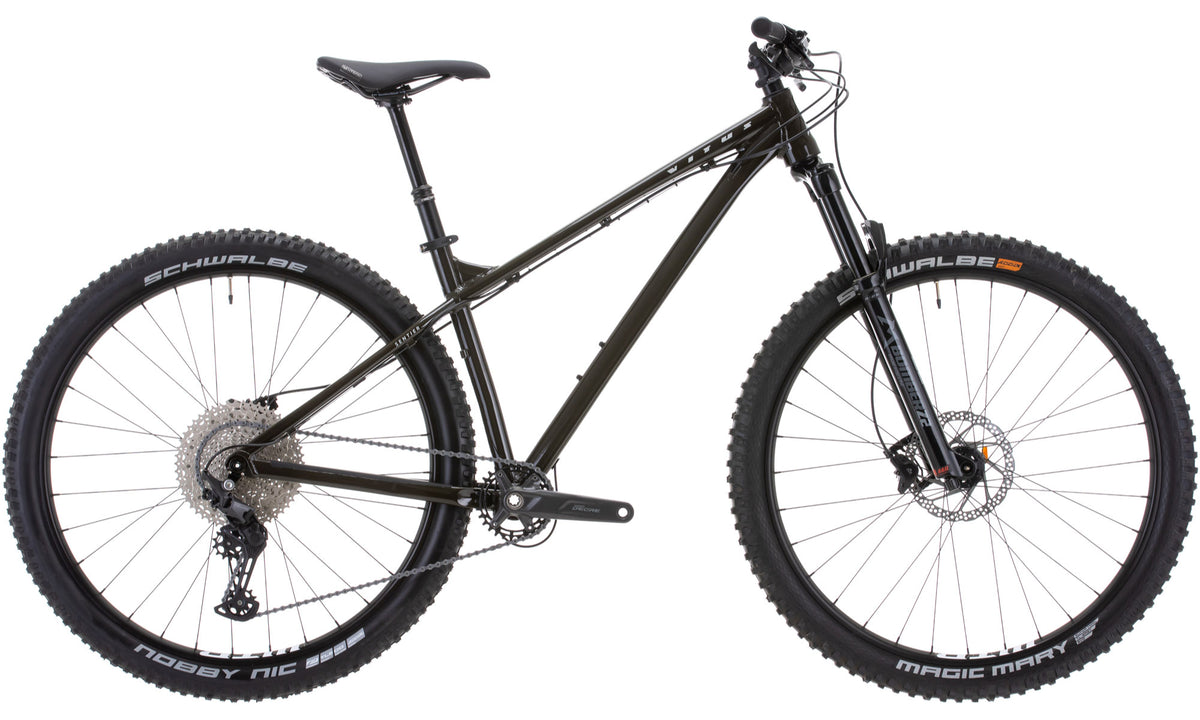
After the industry turmoil of 2024–2025, Vitus has re-emerged with refreshed 2026 models like the Sentier. The brand has reclaimed its reputation as a hardtail benchmark in both UK and US markets, offering clean frame design and sensible builds that prioritize ride quality over flash.
Marin & Canyon
These brands dominate the “enthusiast budget” space. Bikes like the Marin San Quentin and Canyon Stoic consistently surface as the answer to “aggressive hardtail” searches, bridging the gap between entry-level pricing and legitimate bike-park capability.
Decathlon (Rockrider)
Once dismissed as a big-box curiosity, Rockrider is now taken seriously. The AM-series hardtails and trail bikes have earned strong reviews based on weight, geometry, and component choices—proof that big-box bikes can compete when the spec sheet is honest.
3.3 The “Overstock” Opportunity
One defining trend of 2025–2026 is the hunt for unsold inventory. Following years of over-forecasting and a post-pandemic demand drop, warehouses are still full—and consumers know it.
Searches like “previous-year mountain bike deals,” “warehouse sale MTB,” and “2025 model clearance” reflect a market actively exploiting industry weakness.
This is the Overstock Opportunity: buying a 2024 or 2025 model—often at 20–40% off—gets you modern geometry, current standards, and proven components for dramatically less than a new-release 2026 bike.
How to Buy Smart in 2026: The Budget MTB Checklist
Not all “budget” mountain bikes are created equal. In 2026, the difference between a smart buy and a frustrating one comes down to a handful of non-negotiables.
Frame & Standards (Future-Proofing Matters)
Look for Boost spacing (110mm front / 148mm rear), thru-axles, internal dropper routing, and a tapered head tube. These standards ensure better wheel strength, easier upgrades, and long-term compatibility.
Components That Actually Matter
Hydraulic disc brakes are mandatory. An air-sprung fork is strongly preferred. Name-brand tires matter more than drivetrain tiers, and tubeless-ready wheels dramatically improve ride quality and puncture resistance.
Red Flags to Avoid
Mechanical disc brakes, no-name suspension forks, rear freewheels instead of cassettes, and quick-release rear axles on bikes marketed as “trail-ready.”
The “Budget” Bike Evolution: How Much Better Are They?
If you haven’t ridden a sub-$1,500 mountain bike in five years, you’re in for a shock. The gap between budget and prohas never been narrower.
Geometry Is Free
It costs the same to weld a frame with a 65° head angle as it does a 69° one. In 2026, even budget bikes benefit from long, low, slack geometry.
The Dropper Post Is Now Standard
Once a luxury upgrade, dropper posts are now common on bikes under $1,200.
1x Drivetrains Are the Baseline
Reliable 1×10 and 1×11 systems like Shimano CUES and microSHIFT Advent X now deliver simplicity and durability once reserved for premium builds.
Air Suspension Replaces Coil Forks
Heavy, non-adjustable coil forks are disappearing in favor of tunable air forks that can be set up properly for rider weight.
Why Budget Bikes Ride So Much Better Than They Used To
Budget bikes didn’t improve by accident.
CAD-driven frame design flattened geometry differences. Global manufacturing scale reduced cost penalties. Mid-tier drivetrains and brakes became dramatically more reliable. Wheel and tire technology matured faster than drivetrains, benefiting every price point.
In short: today’s budget bikes inherit yesterday’s R&D without paying yesterday’s premium.
Defining “Budget” in 2026
- Entry-Level Hardtail: $600–$1,000
The “real mountain bike” threshold - Core Hardtail: $1,000–$1,500
Air forks, dropper posts, thru-axles - Budget Full-Suspension: $1,500–$2,300
The most competitive segment - Budget E-MTB: $3,500-$4,000
The fastest-growing category
1. Polygon Siskiu T8 (or D7 for tighter budgets)
Why it’s a great budget buy in 2026
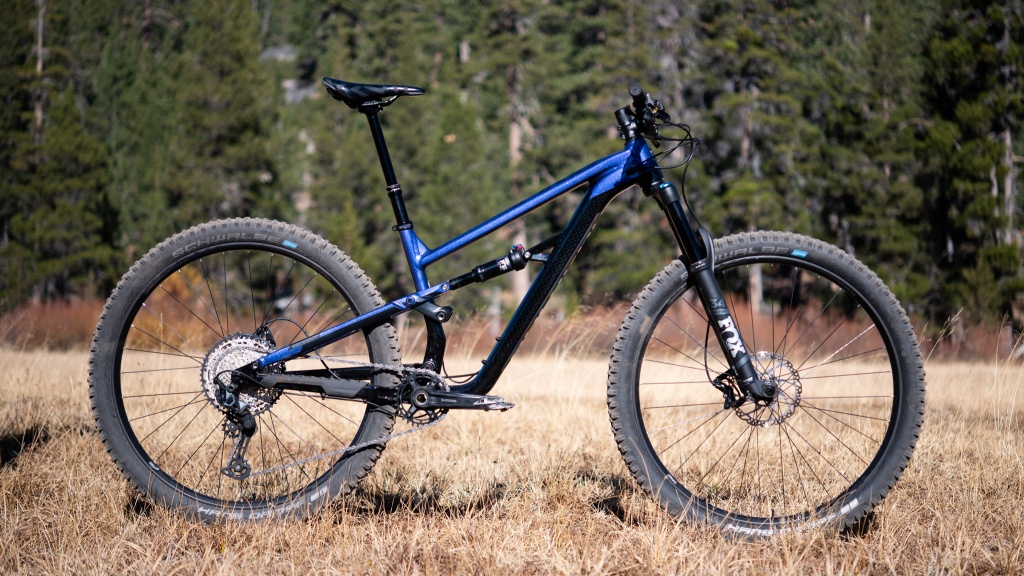
The Siskiu T8 has become the reference point for what “budget full suspension” actually means. Polygon’s advantage is structural: vertically integrated manufacturing and a direct-to-consumer sales model that strips out layers of margin without cutting ride quality.
The frame uses modern trail geometry—long reach, slack head angle, and a linkage-driven suspension layout that delivers predictable mid-stroke support. This isn’t a compromised “XC-plus” bike pretending to be a trail bike; it’s a legitimate all-mountain platform that can handle aggressive terrain.
Where the T8 really separates itself is component allocation. Instead of flashy drivetrains, Polygon spends money where it matters most for ride feel: suspension, brakes, and tires. The result is a bike that feels composed on descents and efficient enough on climbs—something that used to require a much higher price tag.
The D7 exists for riders who want the same geometry and suspension concept at a lower entry point. It sacrifices some component refinement but preserves the core riding experience, which is the hardest part to get right.
Why it beats the alternatives
- Real suspension design, not a simplified compromise
- Modern geometry that hasn’t been watered down for cost
- Frequently discounted due to DTC inventory cycles
- Easy upgrade path over time
Best For
Riders who want a true do-everything trail bike and care more about performance than brand cachet.
2. Marin San Quentin 2
Why it’s a great budget buy in 2026
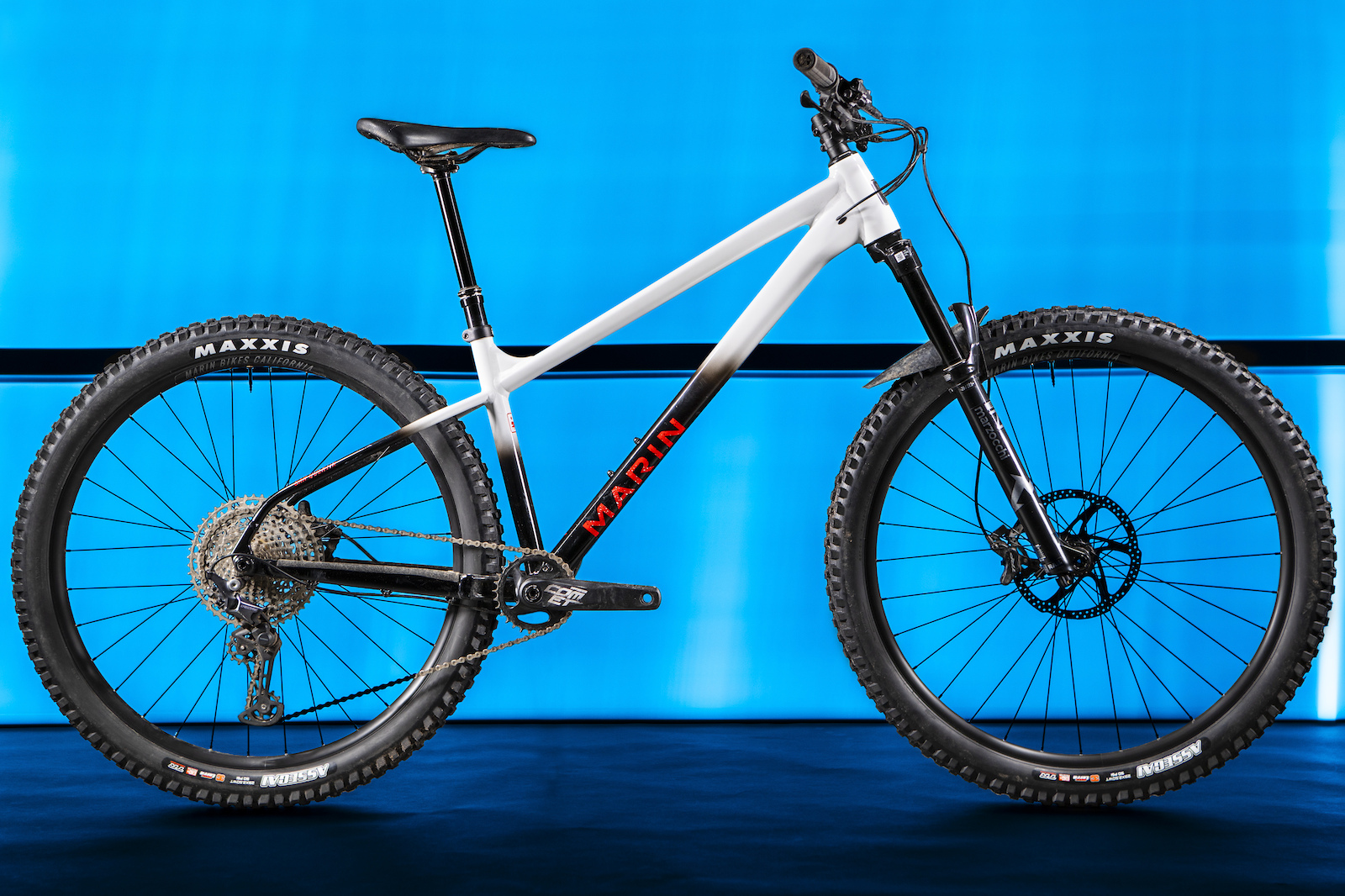
The San Quentin 2 exists for riders who don’t want their bike to feel fragile. Marin built this bike with dirt-jump DNA and trail geometry, creating a hardtail that encourages aggression rather than caution.
The frame is intentionally overbuilt, the geometry is slack for a hardtail, and the reach numbers are generous enough to support modern riding techniques. This is a bike that invites manuals, jumps, and hard cornering without feeling nervous or twitchy.
Where the San Quentin shines as a budget buy is durability. Hardtails already reduce maintenance costs, and Marin’s frame construction makes this one particularly resistant to abuse. For riders who push bikes hard—or for parents buying a bike that needs to survive teenage energy—this matters.
Why it beats the alternatives
- One of the most aggressive hardtail geometries in its price range
- Exceptionally durable frame
- Simple, reliable components that can take abuse
- Encourages skill development instead of masking mistakes
Best For
Riders who prioritize fun, jumps, and progression over outright speed or efficiency.
Buy the Marin San Quentin Here
3. Vitus Sentier 29 VR (2026 Model)
Why it’s a great budget buy in 2026
The Sentier has always been about restraint—and that’s exactly why it works. Vitus doesn’t chase trends or spec-sheet hype; it focuses on fundamentals. The 2026 Sentier continues that philosophy with clean frame design, balanced geometry, and components chosen for reliability rather than marketing appeal.
This is one of the rare hardtails that feels equally comfortable on mellow trail rides and aggressive terrain. The geometry strikes a careful balance: slack enough to inspire confidence on descents, but not so extreme that it becomes a chore on long rides.
As a budget option, the Sentier succeeds because it avoids false economies. Nothing on the bike feels like filler. Tires, brakes, and fork quality are prioritized over drivetrain flash, resulting in a bike that rides well from day one without demanding immediate upgrades.
Why it beats the alternatives
- Balanced geometry that works for a wide range of riders
- Sensible component choices with few weak links
- Clean, modern frame standards
- Excellent ride quality relative to price
Best For
Riders who want one bike that can handle almost everything without specializing too hard in any one direction.
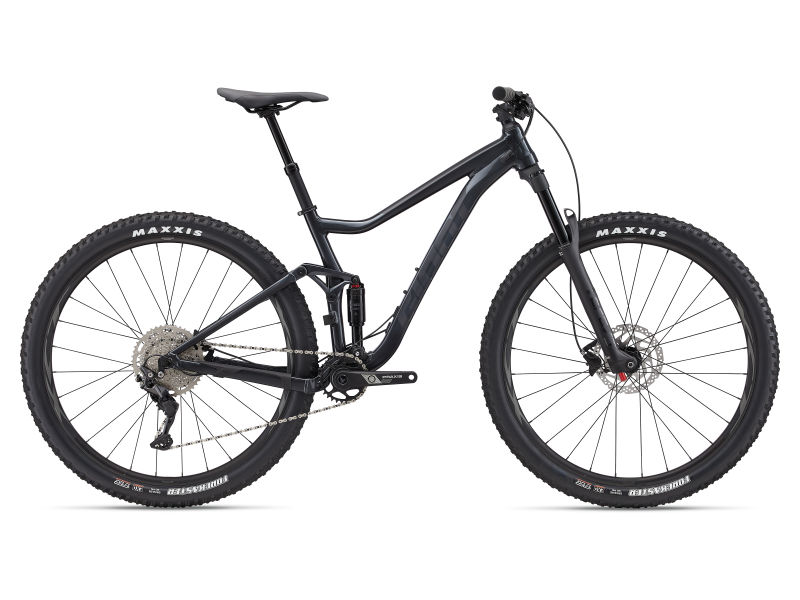
4. Giant Stance 29
Why it’s a great budget buy in 2026
The Giant Stance is the proof that dealer-supported bikes still matter in a DTC world. While it doesn’t win spec-sheet battles, it wins where many budget buyers actually struggle: ownership experience.
Giant’s flex-stay single-pivot suspension design keeps manufacturing complexity and maintenance costs low while delivering predictable, neutral trail behavior. It’s not a high-performance race suspension, but it’s consistent, durable, and easy to live with—exactly what many riders need.
The real value proposition, however, is support. Sizing help, professional assembly, warranty coverage, and service access are built into the purchase. For riders who don’t want to troubleshoot suspension pivots or ship bikes back and forth, this has real value.
Why it beats the alternatives
- Local shop support and warranty coverage
- Simple, reliable suspension design
- Broad availability and predictable quality control
- Lower ownership risk for newer riders
Best For
Riders who want full suspension with minimal hassle and strong long-term support.
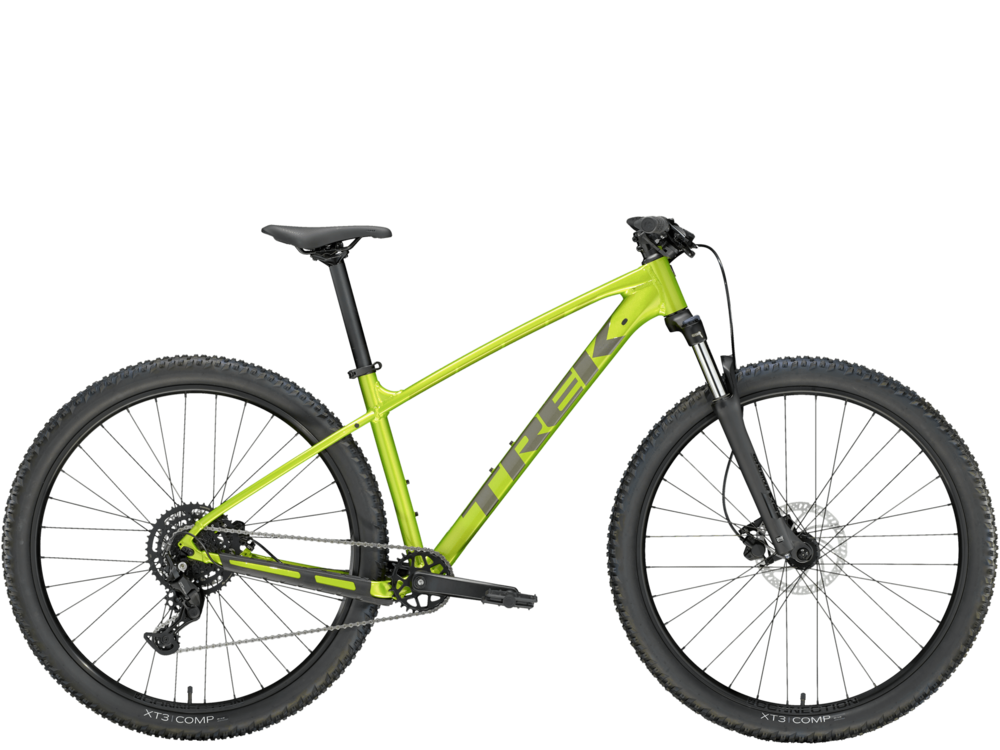
5. Trek Marlin Gen 3
Why it’s a great budget buy in 2026
The Marlin Gen 3 is significant because Trek finally stopped treating entry-level riders as disposable customers. The geometry update brings this bike closer to real trail territory, making it safer, more stable, and more confidence-inspiring than previous generations.
This is not a high-performance trail weapon, but it is a legitimate mountain bike—something that couldn’t always be said about entry-level models in the past. The riding position is more modern, tire clearance is improved, and the frame is built with upgrade paths in mind.
As a budget buy, the Marlin excels in accessibility. It’s widely available, well-supported, and easy to test ride. For many riders, especially beginners, that matters more than squeezing every last bit of performance per dollar.
Why it beats the alternatives
- Updated geometry that dramatically improves trail safety
- Excellent availability and dealer support
- Proven reliability
- Easy entry point into real singletrack riding
Best For
True beginners who want a safe, dependable first mountain bike that won’t hold them back as skills improve.Best For: True beginners entering singletrack.
New vs Used in 2026: Which Makes Sense?
Buy New If:
You want warranty support, predictable ownership, or are purchasing an e-MTB.
Buy Used If:
You know your size, understand wear items, and want maximum component value.
Watch Outs:
Cracked carbon, neglected suspension, and unknown e-bike battery health.
Top Budget E-MTBs Under $4,000 (2026 Picks)
Why “budget” still means “expensive” in eMTBs
In the analog MTB world, “budget” can mean $1,500–$2,500. In eMTBs, that definition breaks. A legit trail eMTB needs a mid-drive motor, a large integrated battery, an e-rated frame, stronger wheels/brakes, and suspension that can cope with higher weight and higher average speeds. Those costs don’t disappear.
So in 2026, under $4,000 is the actual entry level for real, trail-capable eMTBs—and the best values typically come from DTC pricing and industry overstock/closeouts rather than “miracle cheap” bikes.
Trail access note: Always verify local rules. Most MTB-legal areas require Class 1 (pedal-assist only).
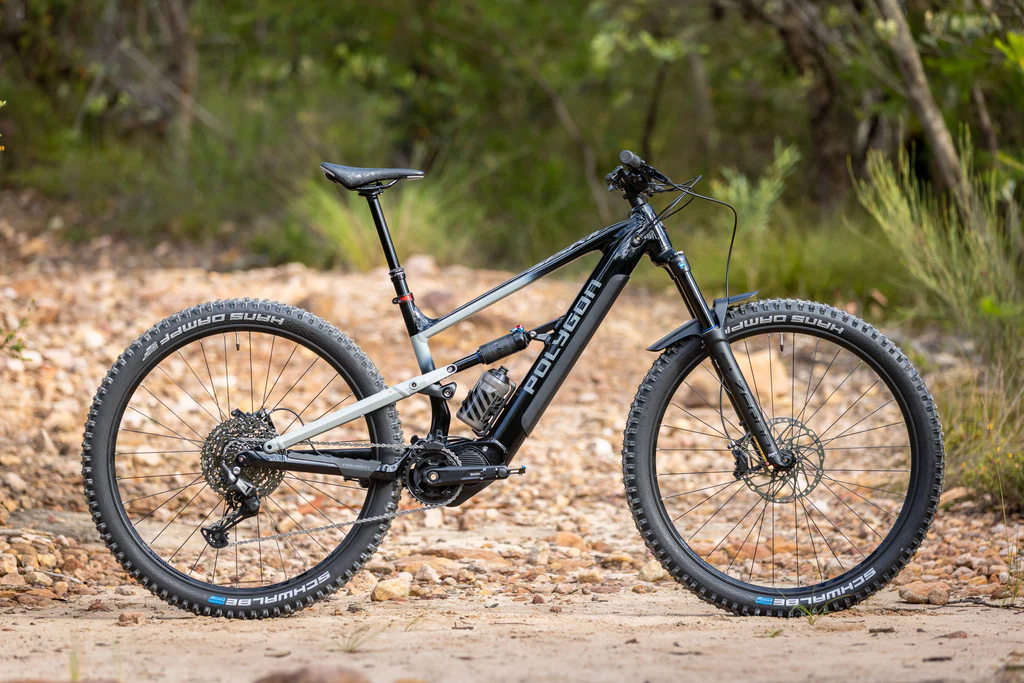
1) Polygon Siskiu T6E — the benchmark “entry-level real eMTB”
The Verdict: This is the clearest example of what you mean by “budget but real.” It’s a true full-suspension trail chassis (150/140mm) paired with a reputable mid-drive ecosystem at an entry price that undercuts bike-shop equivalents. If someone asks, “What’s the cheapest eMTB that’s still a real mountain bike?” this is one of the most defensible answers.
Why it’s a smart budget buy
- Legit trail travel: 150mm fork / 140mm rear — not a path bike with a sticker kit.
- Real mid-drive platform: Shimano EP6 with a 504Wh battery — proven ecosystem and good trail manners.
- E-MTB-appropriate braking: 4-piston brakes stock (important on heavier bikes).
- Price reality: Often sold as a discounted “inventory correction” bike — exactly the kind of market advantage your article is talking about.
Best For: Riders who want a real full-suspension trail eMTB at the lowest sane entry price.
2) Polygon Siskiu T7E — the “buy once, keep it” upgrade
The Verdict: The T7E is what happens when you keep the same legitimate trail platform but add the two things that matter long term: more battery and a higher-tier drive unit. If the T6E is the floor, the T7E is the one that keeps feeling “enough” as your rides get longer and your trails get steeper.
Why it’s a smart budget buy
- Bigger battery: 630Wh (material difference on real trail days).
- Higher tier drive unit: Shimano EP801 — stronger platform than EP6.
- Same legit travel: 150/140mm remains true trail territory.
- Value logic: You’re not just buying more power — you’re buying more usable days before you feel the need to upgrade.
Best For: Riders who want a sub-$4k full-suspension eMTB that won’t feel “entry-level” after one season.
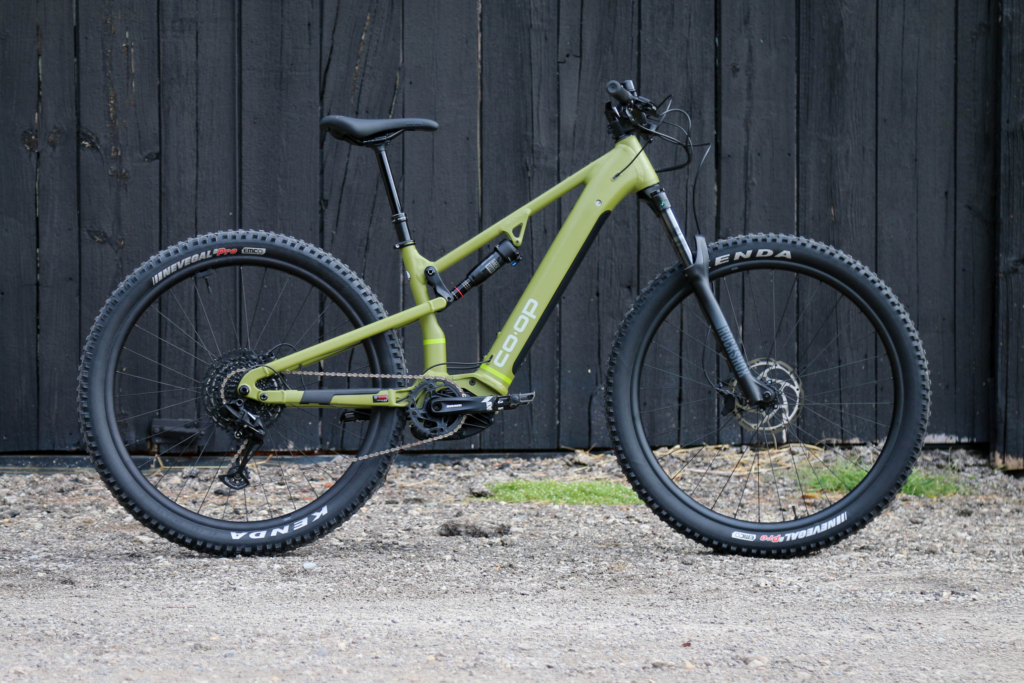
3) REI Co-op Cycles DRT e3.1 — the overstock/closeout cheat code (full suspension)
The Verdict: This is a “budget” eMTB only because of the market correction. At full MSRP it sits higher, but it has shown up at deep discounts (and in certified-used channels) that bring it into your under-$4k definition while still being a true full-suspension, mid-drive trail bike.
Why it’s a smart budget buy
- Real mid-drive system: Bosch Performance Line CX (Smart System) — not bargain-bin power.
- Discount proof: REI has listed it at major markdowns (availability varies; it has been discontinued).
- Legit trail ride character: Reviewers describe it as stable and fun, with enough range for real technical rides.
- Budget advantage: If you can find it at closeout or certified-used pricing, it becomes one of the strongest “real FS eMTB” values in the market.
Best For: Riders who want full suspension with a top-tier mid-drive system and are willing to shop deals/availability.
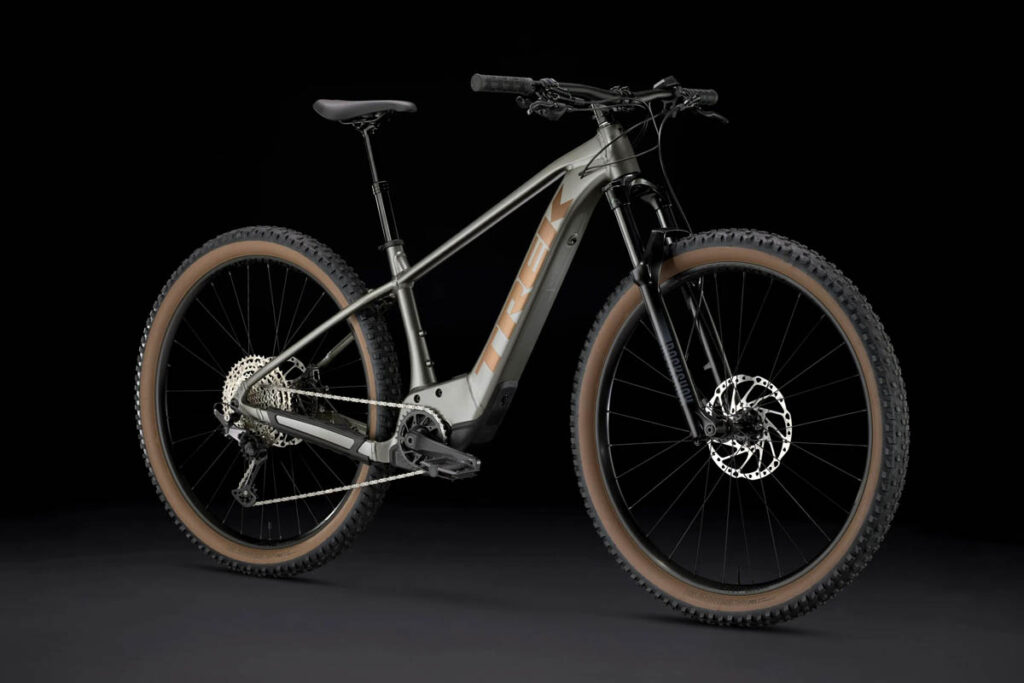
4) Trek Marlin+ 8 — the “real MTB hardtail eMTB” from a major brand
The Verdict: If you want a hardtail option that’s actually MTB-first (not commuter-first), this is a strong pick: a real mountain bike chassis, modern standards, and big-brand support — all while staying under $4k.
Why it’s a smart budget buy
- Under $4k pricing: Commonly listed at $3,999.99.
- Hardtail simplicity = budget win: Lower maintenance, fewer pivots, less long-term cost — especially important in eMTBs.
- Trail-ready basics: Dropper post included, hydraulic brakes, and an air fork (key for real trail setup).
- Ownership advantage: Trek’s dealer network is still a real value proposition when motors/batteries enter the equation.
Best For: Riders who want a legit MTB experience, lower maintenance, and local-shop support—without paying full-suspension eMTB prices.
5) Specialized Turbo Tero X 4.0 — Specialized under $4k (positioned honestly)
The Verdict: This is the Specialized option that fits your price ceiling, and it’s best described as an “SUV” e-bike with genuine off-road capability — not a pure singletrack weapon. It’s still a valid budget pick if your mountain biking is mixed terrain (fire roads, flow trails, connectors, light-to-moderate singletrack) and you want Specialized’s ecosystem and support.
Why it’s a smart budget buy
- Price verified under $4k: Listed around $3,499.99.
- Real-world support ecosystem: Specialized dealer network, parts pipeline, and software integration are hard to replicate via DTC.
- Correct buyer fit: Excellent for mixed-terrain riders who still want MTB posture and capability without going “full e-enduro.”
Best For: Riders who want a Specialized-backed e-bike for dirt-heavy riding but don’t need (or don’t want to pay for) a full-suspension trail eMTB.jects”. They’re legitimate trail machines in their own niches, and in 2026 that’s exactly what the budget segment needed.
The Smart Upgrade Path: Spend Here First
If you want to improve a budget MTB:
- Tires
- Larger brake rotors
- Tubeless conversion
- Dropper post length
Skip high-end drivetrains. Ride quality comes from contact points and control.
The Honest Trade-Offs: What Budget Bikes Still Don’t Do
Budget bikes are heavier, less refined, and use more basic bearings and wheelsets. What they don’t lack is capability. For most riders, these tradeoffs disappear once the ride starts.
Who This Article Is (and Isn’t) For
This article is for:
New riders, value-focused veterans, parents, and riders navigating higher costs.
This article is not for:
Weight weenies, podium chasers, or riders who equate price with identity.
Final Thoughts: The Market Finally Spoke
For the better part of a decade, the mountain bike industry chased the top of the pyramid. Prices climbed. Spec sheets bloated. Flagship bikes became rolling technology showcases designed as much to signal status as to ride trails.
Then reality intervened.
Rising costs, economic pressure, and simple rider fatigue with diminishing returns forced a recalibration. In 2026, riders aren’t asking for more complexity—they’re asking for value, durability, and access.
They’re asking:
“What do I actually need to ride more?”
The answer turned out to be refreshingly simple.
Modern geometry doesn’t cost more to manufacture. Proven suspension designs don’t need to be exotic. Reliable drivetrains and brakes are better than they’ve ever been. And thanks to inventory corrections and competitive pressure, bikes that would have been $3,000–$4,000 just a few years ago now live squarely in the budget tier.
The result is a rare moment where performance, accessibility, and affordability overlap.
In 2026, a $1,000–$2,000 mountain bike isn’t a compromise—it’s a rational choice. It’s good enough to progress on, durable enough to trust, and capable enough to ride real trails without apology.
The industry wanted to sell $12,000 superbikes.
The market responded by asking:
“What do you have for $1,500?”
In 2026, the answer is a whole lot—and for most riders, it’s more than enough.