Affiliate disclosure: Amazon links on this page are affiliate links. We may earn a commission at no extra cost to you.
Research review: this rewrite is built from Park Tool’s published specs, the Amazon listing (checked 2026-09-23), and our existing BIKE198 stand reviews. I have not had hands-on shop time with a PRS-25 for this update.
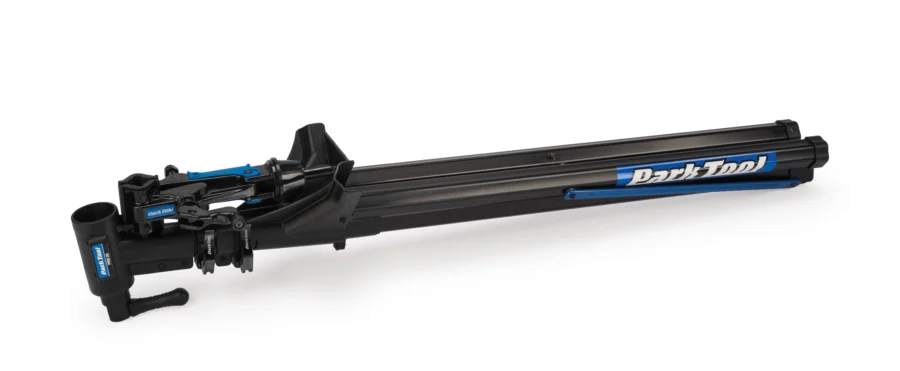
Short answer: the Park Tool PRS-15 is discontinued. Park Tool’s own product page says it plainly: “The PRS-15 has been discontinued and replaced by the PRS-25.” If you came here shopping for a PRS-15, the stand to buy now is the PRS-25 Team Issue. It is roughly 9 lb lighter than the old PRS-15 on paper (13 lb vs. 22 lb), uses Park’s 100-25D Micro-Adjust clamp, is rated for 100 lb with the weight centered, and lists at $472.95. It makes the most sense for riders who want a shop-grade clamp in a stand that folds and travels. If the stand never leaves your garage, the cheaper PCS-10.3 is probably the smarter buy.
Check the Park Tool PRS-25 Team Issue on Amazon
What happened to the Park Tool PRS-15?
This URL has hosted a PRS-15 review since 2009. That original piece was a guest review from a shop mechanic, and it did its job for years. The problem is the stand itself. Park Tool now lists the PRS-15 as discontinued, and its official PRS-15 page (checked 2026-09-23) points straight to the PRS-25 as the replacement.
You’ll still find PRS-15 replacement parts floating around, and plenty of used ones in garages. What you won’t find is a new PRS-15 from Park. So rather than keep a review of a stand you can’t buy, this page now covers the one that replaced it, and it tells you when a different stand makes more sense.
For context, here’s what the PRS-15 was, per Park Tool’s archived spec list: 22 lb, clamp height 40″ to 60″, folded length 44″, a five-point leg system, and the 100-15X Extreme Range clamp with adjustable clamping pressure. It was stable and versatile but heavy for a “race” stand. The PRS-25 exists to fix the weight problem.
Park Tool PRS-25 Team Issue: the specs that matter
All of these numbers come from Park Tool’s PRS-25 product page, checked 2026-09-23.
| Spec | PRS-25 Team Issue (current) | PRS-15 (discontinued) |
|---|---|---|
| Weight | 13 lb (6 kg) | 22 lb |
| Max capacity | 100 lb (45 kg), weight centered below clamp and between legs | — |
| Clamp | 100-25D Micro-Adjust | 100-15X Extreme Range |
| Clamp range | Round and aero tubes, about 7/8″ to 3″ | 7/8″ to 3″ |
| Clamp height | 47″ to 60″ | 40″ to 60″ |
| Folded size | 46.25″ × 8.75″ × 8.5″ | 44″ long |
| Upright | Hexatude hex-shaped aluminum | Elliptical aluminum |
| MSRP | $472.95 | No longer sold new |
One trade-off gets missed. The PRS-25’s lowest clamp height is 47″, versus 40″ on the old PRS-15. If you’re short, or you like to sit while you work on drivetrains, check that range against your own setup before you order.
 From the Bike198 shopHate Bike Love Bike$24.99Shop
The 100-25D Micro-Adjust clamp
This is the main reason the PRS-25 costs what it does. The 100-25D uses a cam lever for quick entry and exit, plus a micro-adjust screw so you set how hard the jaws close instead of just cranking a fixed clamp shut. Park specs narrow jaws that fit tight areas and short seatposts, and says the clamp handles aero tubes and dropper posts. On a modern bike with a stubby exposed seatpost and a dropper taking up the rest, that matters more than it did in 2009.
Hexatude upright and the fold
Park builds the upright from hex-shaped aluminum tubing it calls Hexatude. According to Park, the shape keeps flex low and stops the tube from rotating while you work. Aluminum leg straps lock the base open, and the stand folds to about 46″ long and under 9″ square. At 13 lb, that’s a package you can carry to a race pit or throw behind the seat of a truck without planning your day around it. The base opens to a 36″ × 36″ × 45″ triangle, so it takes up roughly the same floor space as most shop-style tripods.
PRS-25 vs. PCS-10.3: which Park stand fits you?
This is the fork most people actually face. The PCS-10.3 is Park’s home-mechanic default, and we’ve already covered it in our Park Tool PCS-10.3 review. Spec for spec from Park’s pages:
My take from the spec sheets: if the stand lives in one corner of your garage and you work on normal-weight bikes, the PCS-10.3 gets you most of the way for about $190 less. The PRS-25 earns its price when you actually move it (races, trailheads, trips) or when you need its 100 lb rated capacity for heavier bikes. The PCS-10.3 also goes lower (39″), which is worth knowing if you work seated.
PRS-25 vs. Feedback Sports Pro Mechanic HD
If your shortlist includes a Feedback stand, read our full Feedback Sports Pro Mechanic HD review first. I’m not going to repeat it here. The short version of how I’d split them:
- Pick the PRS-25 if you want Park’s micro-adjust seatpost clamp, a light folding tripod, and Park’s parts support (jaw covers, clamp rebuild parts, accessories).
- Pick the Feedback Pro Mechanic HD if you’re working on heavy eMTBs and want a stand built specifically for that job. The details and caveats are in our HD review.
Public pricing on the HD has generally landed around $500 to $525. Check the current Feedback Pro Mechanic HD listing on Amazon before you decide, because it moves.
What about the PRS-26?
Park also sells the PRS-26 Team Issue, a newer sibling at the same $472.95 MSRP. It isn’t the PRS-15’s replacement (Park names the PRS-25 for that), but it belongs in the conversation. Per Park’s specs, the PRS-26 is a tripod design at 12.6 lb with the same 100-25D clamp, and it folds to a more compact 38.5″. The catch is capacity: 80 lb versus the PRS-25’s 100 lb.
If packed size matters most (small car, airline travel) and your bikes are well under 80 lb, the PRS-26 is worth a look. If you’re working on heavier trail bikes or eMTBs, the PRS-25’s extra capacity is the reason to buy it. Park’s repair stand comparison guide lays out the full current lineup side by side.
Clamp pressure, carbon, and capacity: read this before you clamp
A micro-adjust clamp lowers the risk of crushing something, but it does not remove the risk. Over-clamping can still crack a carbon seatpost or dent a thin alloy or aero tube. The micro-adjust feature helps you set pressure correctly. It won’t stop you from setting it too tight.
- Clamp the seatpost, not the frame, unless your bike’s manufacturer says a frame tube is safe to clamp. Follow the frame and seatpost maker’s guidance on carbon.
- Use only enough pressure to hold the bike, and check it with the bike’s weight hanging on the clamp before you start wrenching.
- Keep the jaw covers in good shape. Park sells replacements (part #1960 for the PRS-25). Worn or torn covers concentrate pressure.
- Respect the capacity note. Park’s 100 lb rating assumes the weight is centered below the clamp and between the legs. A heavy eMTB hanging way off to one side is not what that number describes, and a tipped stand can drop a bike or pinch fingers.
Who should skip the PRS-25
- Budget home mechanics. If the stand stays in the garage, the PCS-10.3 costs far less. Park’s PCS-9.3 sits a rung lower still if you need to go cheaper.
- Heavy eMTB owners who want a purpose-built stand. Start with our Feedback Pro Mechanic HD review.
- Anyone who works seated. The 47″ minimum clamp height may be too tall.
- PRS-15 owners whose stand still works. See the clamp upgrade question below before you replace the whole stand.
Where to buy the PRS-25
Amazon had the PRS-25 listed at $472.95, matching Park’s MSRP, when the listing was checked on 2026-09-23. Prices and stock move, so confirm at checkout. You can also buy direct from Park Tool. Specialty bike retailers carry it too, though availability varies. Some showed the PRS-26 in stock but not the PRS-25 when we checked.
Check PRS-25 price and availability on Amazon
Building out the rest of the shop? Our 2026 home bike workshop guide covers where a stand fits in the layout, and our must-have bike tools list covers what goes next to it.
FAQ
Is the Park Tool PRS-15 still sold?
Not new from Park Tool. Park lists it as discontinued and replaced by the PRS-25. Used stands and some replacement parts still turn up.
Can I put the newer clamp on my PRS-15?
Park lists the 100-25D Micro-Adjust clamp as a PRS-15 part, used with the #1951-15 adapter stud. Park notes that the fold behavior changes with that setup, so read Park’s adapter installation instructions before you buy. If the rest of your PRS-15 is solid, a clamp upgrade may make more sense than a new stand.
PRS-25 vs. PRS-26: what’s the difference?
Same MSRP and same 100-25D clamp. The PRS-26 is 12.6 lb, folds to 38.5″, and is rated for 80 lb. The PRS-25 is 13 lb, folds to 46.25″, and is rated for 100 lb (weight centered). Pick the PRS-26 if packed size matters most, and the PRS-25 if you need capacity.
Is the PRS-25 worth it over the PCS-10.3?
Only if you’ll use what you’re paying for: lighter weight, a travel-friendly fold, and a 100 lb rated capacity. For a stand that never leaves the garage, the PCS-10.3 is the better value on paper.
Bottom line
The PRS-15 had a long run, but it’s done. The PRS-25 Team Issue is Park’s named replacement: lighter, with a better clamp for modern seatposts and a higher rated capacity. It also costs real money. Buy it if your stand travels or you need the capacity. Buy a PCS-10.3 if it doesn’t. And if heavy eMTBs are your main job, start with the Feedback HD review. Whichever you choose, set the clamp pressure carefully on carbon.
See the Park Tool PRS-25 Team Issue on Amazon

I founded Bike198 back in 2008 and started riding bikes seriously in 1994. A lot has changed since that time and one of the greatest releases is still getting out on the bike and shredding trail or tearing up the road.