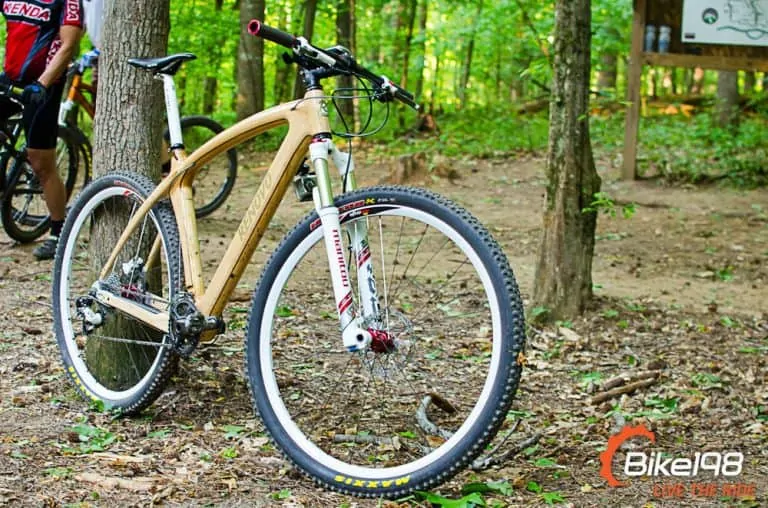
The Renovo Badash 29er wooden bike. Arguably the only wooden bike we have seen at Bike198 that actually looks like it can shred trail and Renovo sent one over for us to throw a leg over. These past few weeks…that is what I have done, so we need to take a look at how this unique bike performs on the trail. Does it ride as good as it looks?

Renovo is pretty unique. While other bike companies have gone the bamboo route, Renovo uses a series of hardwoods to build their bikes which include everything from time trial rigs to this 29er HT. This particular Badash 29er came out of the Red Stag series of frames made of New Zealand Radiata pine and hickory.
The craftsmanship is nothing short of amazing. The amount of work that goes into making sure this frame is as much of a work of art as it is a mountain bike is mind blowing. As soon as I took it out of the box, I knew it was something special. With a 5.5 pound frame weight and a $2,550 price tag, you would expect this to be a high end, boutique piece, but it over produces on the wow factor. From the way the wood is constructed and joined together to the internal cable routing, every inch of this frame is thought out and executed to perfection.
Honestly…it is almost annoying at times. You would think I pulled up to the trail in a bright orange Lamborghini Aventador the way other riders have to come up and see the bike. If you are going to ride one of these at the trail, get used to talking about it a lot.

The bike came spec’ed with SRAM X.9, Manitou fork and some Sun Ringle wheels. The SRAM X.9 package is rock solid and while the wheels are nothing to write home about…they would get the job done. The difficult part is the Manitou fork who’s performance can’t seem get into the 2000′s. The 20mm TA was good for my riding style but the action on the fork and the extreme annoyance of the 5 bolt process of the front axle makes me hate the fork.
Taking a look at the geometry, the Badash has a HT angle of 71 degrees. This falls right in line with most 29er hardtails in the industry, but with the supplied fork…we would measure this closer to the 70 to 69.5 degree end given the longer travel. This is noticeably slacker than more race inspired 29er hard tail frames that are closer to 71 to 72 degrees. While a shorter travel fork would help the tight handling of the bike, I believe this is the right setup as the 5.5 pound frame weight is going to keep this bike from ever being a light race inspired 29er. If you are not going to be a race bike, make the bike more capable on the downs without completely sacrificing the ups.

I wasn’t really sure what to think the first time I threw a leg over the Badash 29er. Was it going to ride like a steel frame? Was it still going to be stiff enough? My guess was that the wood would deaden small bumps making the bike vertically compliant but laterally stiff, but there was only one real way to tell…get it dirty.
My initial suspicions were correct. The wooden frame did a great job of softening stutter bumps in the trail. While the frame did not feel as dead as I thought it would, it behaved a little bit softer than steel. It was almost as if the hardwood was absorbing vibrations so I didn’t feel it in the saddle and grips. Normally this deadening comes at a price, but the bike did not feel loose either. The rear end tracked very well keeping traction through g-outs and off camber turns. The stiffness of the frame in hard load situations was there as much as a steel frame but not quite as much as aluminum. If I had to compare apples to apples…it was almost like a well built carbon frame from that aspect.
While the bike was not overly heavy, it was not as nimble on the climbing end as a typical light hardtail. The frame characteristics described above did a great job of keeping grip, but when you stand up to hammer…that lunging forward feeling wasn’t quite there. Honestly, I do not see anyone seriously racing this frame, so that is not as much of an issue. But, it is something to be prepared for as you hit the trail.

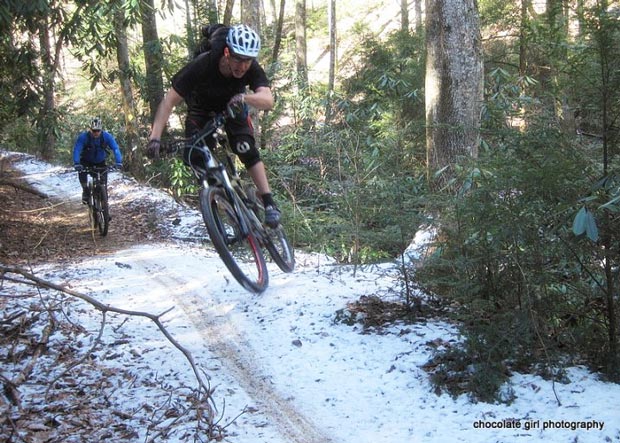
When you get headed downhill, the bike really comes alive for a 29er hardtail. I was able to take this bike off of drops, jumps and through technical downhills with ease. The vibration damping characteristics of the frame made it almost seem like there was an inch of rear wheel travel aiding during the run. Like I mentioned before, this did not come at the cost of lateral stiffness either. The bike tracked very well and was even comfortable in the air with flatter landings. This bike can really take a beating and I was not expecting that at all. Normally I hate running hardtails on DH runs but I slammed the seat down and shredded it. Was I as fast as my suspension bikes? No, but I wasn’t itching to get back to XC trail either.
This bike is obviously not for everyone. If you are looking for something truly unique that still can be pushed like a real mountain bike should, the Renovo Badash 29er is exactly that. As you can tell with my Wolfhound, I am a sucker for works of art that can also be ridden out on the trail. When you roll up with a Badash 29er, you get a lot of comments like “I wouldn’t even ride that it is so nice” and “Is that seriously made out of wood?!”. It truly is a unique piece of art that can take a beating on the trail. It will not be a race bike or a brillant climber, but it will be an incredibly fun bike that you can not see anywhere else.
Bikes are made to be ridden and I had a great time with the Badash 29er from Renovo during the period it graced our stable. It is truly the only wooden mountain bike I have ever ridden that I actually enjoyed riding as much as staring at it. The hardwoods do a great job of absorbing vibrations that rattle your teeth loose on aluminum frames and the bike is surprising capable on the downhills (as we had to record on video below as proof).
For more information on the Renovo Badash…check out RenovoBikes.com.

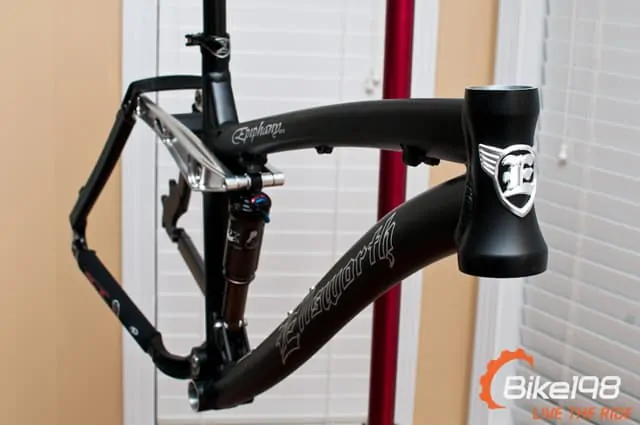
Just in to the Bike198 camp and next up for review is the Ellsworth Epiphany SST.2 frame in ago black. This 140mm (5.5″) rear travel mountain bike frame has been a staple of Ellsworth bikes for awhile and it is the flagship trail bike out of their range for that style of mountain biking.
As with all Ellsworth bikes, the Epiphany SST.2 gets their ICT (Instant Center Tracking) suspension design, but new to the Epiphany for this model year is the SST.2 tubing. The tubes are tapered, swaged and shaped to try to optimize strength and weight. This is also what gives the Epiphany its new, slightly curved top and down tubes look that is a change over the previous straight tube design. That brings this medium Epiphany down to 6.14 lbs. which is about 1/2 pound lighter than the previous generation.

One of the distinctive styles of Ellsworth frames are the long aluminum rockers through the ICT suspension design that end up being a large focal point of the frame. For 2011, Ellsworth now allows you to add custom color kits to make your frame unique that includes the rockers, head tube badge, derailleur hanger, bolts and seat tube collar. This particular frame is in the stock silver on black.

For suspension duties, you get the new Fox Racing Shox RP23 with the new Kashima coating adopted from their motocross program that provides for less stiction between the seals and shock shaft. While Ellsworth states that this rear shock is factory tuned, it does retain the ProPedal feature which used to be absent on Ellsworth frames.

To round out the frame, the Epiphany SST.2 features well structured welds and full US based fabrication and manufacturing as you can see on the asymmetrical, CNC machined chain stays.
All that is left now…
We need to build it up and get it dirty to see how the new SST.2 version of the classic Ellsworth Epiphany performs on the trail. Stay tuned for more…
Discuss the Ellsworth Epiphany by clicking here and for more information on Ellsworth and the technology behind their bikes…check out EllsworthBikes.com.
This past weekend, I was able to throw a leg over the new 2012 Trek Fuel EX 9.8 and Remedy 9.8 carbon mountain bikes. Here is a quick review of what I thought about the bikes that was backed up by a local test riding fanatic.

For 2012, the Trek Fuel EX (120mm of travel front and rear) gets several notable changes. The head tube angle is brought out slacker an additional 1 degree and you get the addition of the new Fox 32 Float with the new Trek DCRV air spring bringing their rear suspension valving technology to the front of the bike. The idea is to give the rider of the Fuel EX a more stable descender while not taking away from the pedaling and climbing ability that the buyers of the Fuel EX lineup love. The 9.8 is a full carbon version of the EX that is kitted out with Shimano’s latest 3×10 XT component group and XTR rear derailleur.
The first thing you really notice about the Fuel EX 9.8 is its small bump compliance. While you ride, the smaller roots and rocks seem to disappear under the bike as the ABP (Active Braking Pivot) and DCRV rear shock go to work. Even over longer rock gardens at medium speed, the bike stays completely level while the suspension does its job. Trek has done a great job of dialing in this bike for that kind of riding.
While this year’s Trek Fuel EX is slightly plusher than the previous model, you still do ramp up some in the suspension curve as you use the bike’s 120mm of rear travel. The DCRV rear shock helps to keep it linear given the XC travel spec, but when you hit bigger drops and obstacles, you will prevent hard bottom out due to this slight ramping at the end of the stroke.
The DCRV Fox 32 Float is an improvement over the stock Fox. Fox front forks have been known to have a ramping curve and the DCRV valving does a great job at flattening that out and creating a more linear, plush fork. On some DCRV rear shocks, the bike actually feels like it has more usable travel than spec’ed. I was hoping this would translate to the front fork, but all it really did was make it as plush as the RockShox forks we have been testing as of late. While it doesn’t give us that “added travel” feel, it is an upgrade over the stock setup.
Overall the Fuel EX 9.8 from Trek fro 2012 is a solid trail bike for riders looking to keep a fast climber that is still trail riding capable. The slightly slacker head tube angle helped on steeper descents, but it also made the bike turn a little bit slower over last year’s model. This is a reasonable tradeoff in my opinion, but it will take some adjustment if you are used to the other setup. Where the Fuel EX 9.8 really shines is with its small bump compliance. Everything just seems to disappear under the bike when you are just pedaling along.

Next, we threw a leg over the new 2012 Trek Remedy 9.8. Just like the Fuel EX 9.8, the new Remedy gets a 1 degree slacker head tube angle over last year and gets the new DCRV valving in its 150mm travel Fox 32 Float. Also like the Fuel EX 9.8, this all carbon Remedy is spec’ed out with the latest 3×10 Shimano XT lineup with the XTR rear derailleur. Overall weight was around 28 pounds from what we could see on the test rig and that is pretty light for a 150mm travel frame and fork.
When you throw a leg over the Trek Remedy 9.8, it really feels like a bigger version of the Fuel. Although, some of that is probably mental as you can barely even tell a difference between the two when they are sitting side by side with the same component spec and color scheme. That is where most of the similarities end…
That same great small bump compliance that graced the Fuel EX is gone in the Remedy. With multiple runs over rock and root sections of trail, the Remedy didn’t keep that same flat bike, working suspension feeling…you get more feedback from the trail and the suspension setup is not as plush. After multiple air pressure changes in the tires and suspension, we still weren’t able to duplicate the plush Fuel EX feeling. The ride was harsh for a 150mm travel mountain bike.
The degree slacker head tube angle did help a little bit with downhill stability, but I felt it could have been let out even just a little bit more. This 150mm travel mountain bike is supposed to be the marriage between 140mm travel trail bikes and 160mm travel AM rigs…and it really just feels like a taller Fuel EX without the plushness. By slackening the HT out just a little bit more and bringing that small bump compliance back into the curve, the rider would feel like they were sitting in the bike instead of on top of it and it would be a more capable trail/AM setup. Maybe…if you throw a new Fox Talas 36 on the front…you could coerce this bike into that stance.
The build quality and overall looks of the bike are outstanding with well thought out cable routing for the seat post and components and I love the new black carbon/green color scheme. With the Remedy, I really just feel like Trek built a bike they knew they could sell instead of building this bike the way it really needs to be setup. This is an XC 150mm frame that I wouldn’t feel as comfortable on with big mountain runs. My guess is that most of the purchasers of this bike are riding more XC oriented type trails instead of ones that actually require 150mm of usable suspension travel.
(Note: From what I could tell on the Remedy test bike, it was in the 67.5 degree head tube angle setting. According to reports, the link is adjustable to lower the BB height 10mm and slacken the HT to 67 degrees)
Black is the new black for 2012. The new bikes from Trek are showing progression by continuing the trend of slacker geometry while keeping climbing abilities. The bike that really shines out of the lineup is the Fuel EX. That small bump absorption is fantastic and it creates a fast a flowy riding experience that translates very well onto more XC and trail type mountain bike trails.
The Remedy is supposed to be the bigger brother to the Fuel that is more capable for technical riding, but I just didn’t get that feeling out of the bike. The degree slacker head tube angle is a step in the right direction (67.5 degrees in the bikes current setting)…but I felt like 66.5 degres or even 66 degrees like the Stumpjumper EVO from Specialized (145mm of rear travel) would have really set this bike loose given a plusher suspension platform at 150mm of travel. If it was a 140mm travel mountain bike, the 67 degrees (adjustable to via link) would have probably fit in perfectly.
Discuss this article on the forums –> Trek 2012 Bikes

Hot on the heals of the new licorice black color scheme of the carbon Air 9, Niner Bikes releases the much anticipated Jet 9 RDO carbon full suspension 29er. When Niner released the Air 9 carbon, we knew the Jet 9 would eventually get the carbon treatment. It only seemed logical to bring the same technology to the 100mm full suspension platform. With bikes like the Santa Cruz Tallboy selling faster than demand, the market for lightweight, carbon 29er race bikes is one of the fastest growing in the industry.
From the looks of it, Niner Bikes really took their time with the Jet 9 carbon and released a bike that should keep the trademark Niner ride while providing a lighter platform for racers and XC enthusiasts. It is also arguably the best looking 29er full suspension bike released to date…especially in the black licorice color scheme.

Some specs on the new Niner Bikes Jet 9 RDO carbon 29er:
The Niner Jet 9 RDO uses the same, newly patented CVA suspension (U.S. Patent No. 7,934,739) that can be found on the rest of the full suspension lineup from Niner Bikes. The frame also comes with Niner’s C5 warranty giving the carbon a full 5 years of warranty from the factory.
With custom forged linkage and proven design, the carbon frame of the Niner Jet 9 RDO also promises to be a very stiff setup for serious speed on the trail. At a retail of $2,599, the Jet 9 RDO is not going to be in everyone’s budget, but it will certainly be grabbing the eyes of everyone at the trailhead when one pulls through. It will be interesting to see how this bike rides in comparison to the regular aluminum Jet 9 that is still one of the fastest 29ers Bike198 has tested to date.
For more info, check out NinerBikes.com.
Diamondback Bicycles is one of those names that has been cemented in the mountain bike industry almost since the beginning. I can remember back in the early 90′s drooling over some of their offerings that graced the covers of industry rags everywhere. With their newer Knuckle Box suspension design, Diamondback Bicycles is looking to bring back that glory and offer bikes that appeal to beginners to experts alike with a solid suspension design.
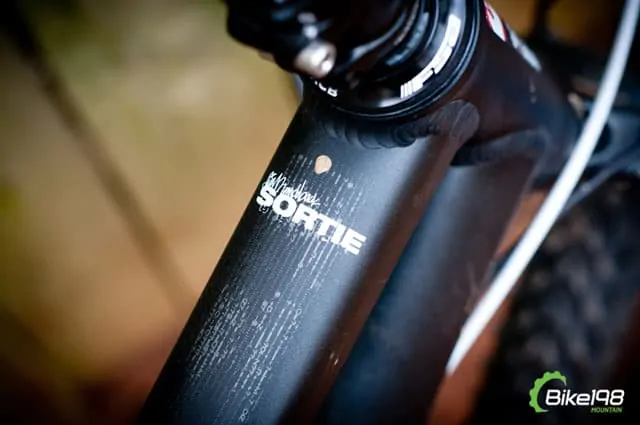
The Diamondback Sortie Black is the top of the line 130mm travel xc/trail bike from DB. Equipped with the complete 3×10 Shimano XTR component group, the Sortie Black looks to capture the inner gear head while providing a capable platform for getting up and over your local hill.

The Sortie mountain bike uses the same suspension setup as the previously reviewed Diamondback Mission. With a pivoting box in the lower section of the main triangle, the rear suspension rotates around the Knuckle pushing up on the Fox RP23 rear air shock. This is a unique angle on traditional four bar suspension models that keeps the weight of the rear lower towards the bottom bracket.

The overall construction of the Sortie Black is great with even welds and a durable black anodized finish. I am actually partial to the “black” look of this frame with matching black components. It appeals to the clean, simplicity side of mountain biking without too much color or flare. There is just enough bend in the tubes to set this frame apart from typical straight tube frames without going overboard. It ends up being a nice touch that complements the overall look of the bike.
You can see the rest of the component spec and geometry numbers at Diamondback.com.

By the geometry numbers, we were expecting a really well handling mountain bike for tight and twisty single track…and that is exactly what we got. With the 70 degree head tube angle and 73 degree seat tube angle, the Sortie Black puts your body in attack mode making quick turns between trail obstacles and tight trail easy. When you combined that with the low center of gravity and bottom bracket height, you get a bike that just wants to keep on railing.

Diamondback’s Knuckle Box suspension design does a great job of handling small bumps keeping the bike plush without robbing you of power transfer when you go to drop the hammer. Like most four bar suspension designs, you will probably want to flip the ProPedal on the RP23 for forest service roads, but for normal trail riding…the suspension stays control and provides a lot of grip. Even during long single track climbs, I never really felt the need to lock the rear end out…just point, climb and let the rear end provide the grip.
The asymmetrical stays and solid box design make the rear end incredibly stiff, but that comes at the price of weight as the bike tips the scales at over 28 pounds with the full XTR component group. As you can imagine, that weight is only going to go up as you move down the Sortie lineup. Since this is a 130mm travel platform, potential buyers of the Sortie Black are going to be more weight conscious than most…especially given this component group and price point. To be really competitive, Diamondback is going to have to find a way to get this bike down in the low 27′s to mid 26 pound range.

When things got pointed down, the Sortie Black did a great job of handling hard hits and smoothing out the smaller bumps. Square edge hits were handled incredibly well due to the stiffness of the rear end and the suspension design. More serious downhill riders (not dedicated DH…just more AM types) might feel the Sortie is too steep making it sketchier on steep tech, but that is not what this mountain bike was really built for. It can handle the rough terrain…just don’t expect to be hucking off of drops anytime soon with the steeper geometry angles.
On tight, twisty, rolling single track, the Sortie Black really shines. It is a blast to rail this bike around the corners as it barely loses any momentum as you look to the next tight switchback or S turn. If you live in an area like the southeast US where every trail is under tight tree cover, you will love the way this bike handles through the turns.
For our local trail systems, the Sortie Black was a great bike. It handled the tight, twisty trails with ease and pedaled well given the bike’s weight. However, for this price point and travel range, the bike is too heavy. On a long day of riding following fit riders on 26 to 27 pound mountain bikes in the same category, the weight starts to add up. If the Sortie weighed in at about 26.5 pounds, it would be a monster on the trail.
Diamondback is doing a great job with the Knuckle Box suspension design…with a little bit more performance tuning…it is going to be a bike to contend with.
If you are looking for a bike that performs great in the forest, the Diamondback Sortie is worth a look. Luckily, they have other models that are more budget centered, so check them out as well.

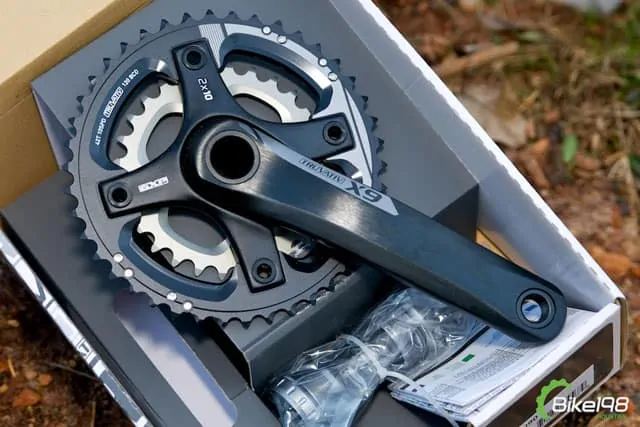
2010 was the year of 10 speed mountain bike components so to get the ’10 season wrapped up and to get hammering on ’11…we are reviewing the new X9 group from SRAM. With multiple color options and gearing combinations, this best seller from SRAM mountain bike components promises to fill the need of many OEM’s and aftermarket customers as SRAM takes a big step forward in solidifying their lineups with unified branding. This particular X9 group features the harder geared 28/42 tooth crank matched with the large 12-36T rear 10 speed cassette in a gray that perfectly matches our Turner 5.Spot test bike.
From SRAM:
Performance Trail Technology No matter what you throw at it, SRAM X9 keeps coming back for more. The all new X9 family puts the SRAM 2X10 unrivaled shift speed and smoothness within easy reach of racers and experienced enthusiasts alike. Add Avid Elixir CR brakes with TaperBore™ Technology and you have performance trail technology you can trust to smoothly and quickly get you there and back again, no matter where “there” may be.
The SRAM X9 group has been a favorite amongst many trail and recreational mountain bikers for its X.0 like performance at a budget that is easier on the pockets. For sometime now, the crew at Bike198 has been running the speed counterpart for its durability and cost savings that does not sacrifice performance. We are excited to get this new group on the trail to see if it holds up to the same standard set by SRAM’s previous X9 group as we bash it into rock and fill the cassette with tree limbs and mud.
Available options:
The only products not included in our testing group are the new X9 hubs and front derailleur. Stay tuned as we get this component group dirty during some of the roughest conditions of the year.
![]() SRAM X.9 10 SPEED CRANKSET |
![]() SRAM X.9 10 SPEED CRANKSET FOR BB30 |
![]() SRAM X.9 10 SPEED REAR DERAILLEUR ’11 |
![]() SRAM X.9 10 SPEED TRIGGER SHIFTER SET |

Back in the day, Diamondback bikes were one of those mountain bikes that you lusted over while starring at the covers of MBA issues as they graced your mailbox. I have found memories of walking through local bike shops seeing the latest and greatest on names like Diamondback, Specialized, Schwinn and others, so the push by Diamondback to have a serious offering for the all mountain crowd spec’ed out with some of the best components the industry has to offer brings a huge smile to my face. With the introduction of the Knuckle Box suspension setup and the latest lineup of bikes centered around this design, Diamondback is making a run at your high-end wants and needs in the mountain biking world.
Diamondback has invested a lot of time, money and technology into this new design, so let’s take a look at how it performed on the new Mission 4 all mountain rig.
From Diamondback.com:
Note: The 2011 frame pictured will come stock with a SRAM X.0 10 speed drivetrain and the new X.0 hydraulic disc brakes.

The Knuckle Box suspension design from Diamondback is a variation on the 4 bar linkages we are used to seeing on other rides. This low slung suspension has a rear triangle pivot located above the axle and the rocker (the Knuckle Box in this case) rotates off a forward axis pushing into the shock upward through the stroke.
From KnuckleBox.com:

The Diamondback Mission 4 is designed to tackle all aspects of the mountain with 6″ of rear wheel travel and a component spec that features parts like the Hammerschmidt and the WTB Prowler 2.5 front tire. With high-end, durable parts like this bolted to a sturdy all aluminum frame, we were ready to hit the biggest trail obstacles and features that this bike would allow.
Out of the box, the Diamondback Mission 4 is a sturdy bike. At a little bit over 33 pounds, the Mission 4 is on the heavier end of the spectrum for 6″ travel mountain bikes these days, but you could drop a pound or two by swapping out several components (most notably the Hammerschmidt). However, bikes in this category are not meant to race to the top of the hill, so being in the 30-34 pound range is acceptable and we would always rather have stiffness and durability over weight-loss on a 6 inch travel bike.
The green ano design of the frame with the subtle graphics package looks great on the trail and should appeal to a wide variety of riders. The Knuckle Box suspension design keeps that clean look on the frame and doesn’t appear to be an overly complicated system that will break down or flex while riding. Everything is nicely laid out with function in mind.
With everything built up and an impressive component set, we were ready to hit the trail.
Obviously, the Diamondback Mission 4 is not a weightweenie race bike so we were not expecting this bike to rocket up the hill. With bikes in the 6″ to 7″ travel range, we would expect it to be a great technical climber that allows the rider to get to the top of the hill with enough energy to bomb down the other side.
The Knuckle Box suspension design does a great job of keeping grip during the climbs without too much power robbing pedal induced motion (pedal bob). Rocks, roots and other obstacles are taken easily and traction is kept while sitting and spinning in granny and while gearing down a couple to stand and hammer (although the suspension does move noticeably while standing…but that is to be expected out of a bike in this travel range). The only time I really felt like the ProPedal on the RP23 was needed was during forest service road hammers to the next section of single track.
Even with the large 160mm Talas, the Mission 4 front end stayed straight and tracked very well on steeper climbs and longer ascents. The steeper 67 degree head angle really played a part in keeping that large travel front end stable and there wasn’t as much energy lost trying to keep it straight over long periods of climbing. Over the entire testing period, I never felt the need to lower the fork to keep the bike on track.
While blasting through more groomed sections of trail that required a lot of pedaling, the Mission 4 did start to show its AM upbringings as the larger tires and heavier overall weight started to play against forward motion. That is to be expected, but there are some other bikes in this category on the lighter side that take flatter pedaling sections with more ease. Given the Diamondback Mission’s weight and component spec, I would place this mountain bike on the rougher, more AM/FR side of the all mountain bike market. You are not going to be the first to the top of the hill with the weight and tires, but it will get you there ready to blast down the other side.

While ripping through technical, steep trail on the Mission 4, the first thing you really notice is the stiffness of this frame. The compact Knuckle Box suspension design and hydro-formed aluminum and butted/formed frame stays on track through rough trail and there was no noticeable flex from the rear end. Diamondback did an incredible job of making sure you will not get thrown offline due to the frame flexing as the bike is a rock on the trail.
Square edge hits and multiple hits in succession are sucked up beautifully with the Knuckle Box suspension design. Diamondback did a great job engineering this suspension to act just like you would want it to on the trail…basically not feeling it at all. Without any noticeable hard bottom outs on medium sized drops and smooth runs over root and rock gardens, the suspension just performed as I continued to try to find its limits and it stayed plush throughout the entire travel range. Through fast cornering sections, berms and off camber turns, the rear end kept me pointed in the correct direction as I was able to really push out of the corner and drop the hammer for the next section of trail. The low slung suspension design really help to keep this bike railing through the turns by keeping the feeling that you are in the bike instead of riding on top of it. My riding style really plays well to low slung bikes like the Mission, so it was a lot of fun really pushing down into the suspension and riding low through the tech and turns.
However, it wasn’t all ripping through the woods on the Mission 4. There is one area of this bike that would drastically improve its handling on steep, technical downhill runs and that is the head tube angle. At 67 degrees, the Mission 4 is on the steeper end of the range for 6″ travel mountain bikes. When you get into steeper sections (especially technical ones) the bike wants to get a little bit twitchy and your weight bias is a little bit too far forward on the fork. With a head tube angle closer to 66.5 or 66 degrees, the bike would absolutely rip up steeper sections of technical trail and allow the rider to really weight the rear end and let the very capable Fox 36 eat up the trail. If there was one thing I could change about this bike…it would be that geometry measurement to give it more downhill stability.

The Mission 4 from Diamondback is a step in the right direction for the brand. With a solid suspension design, stiff main frame and mind blowing component spec, the Mission 4 should be able to bring the Diamondback name into the realm of high end mountain bikes. The four bar Knuckle Box suspension is a great performer on the trail and the low center of gravity design makes it an excellent carver through tight, twisty, technical trail. Given the weight and component spec, this bike is great for riders looking for an all mountain rig that will pedal to the top of the hill and can handle technical riding over rough terrain heading back down.
The Diamondback Mission 4 with the Knuckle Box suspension design is a huge step forward for Diamondback’s full suspension offerings. With a little tweak to the geometry, this bike will be an AM monster but even with that…it was an impressive ride and great to see out of a brand that has been around since the beginning. Check out Diamondback.com for more info and other models.
Check out prices on other Diamondback Mission models by clicking here.
When Santa Cruz Bicycles set out to make their first production 29er, they dropped a bomb on the industry with arguably the lightest full suspension 29er frame on the market with the all carbon Tallboy. With lightweight and big wheels, the Santa Cruz Tallboy became a must have frame in the industry for those looking for the bigger wheel platform but were frustrated with the high 20′s, low 30′s build weights. Finally, it looked like there was a full suspension 29er bike that could actually be raced.

From SantaCruzBicycles.com:
Combining the acclaimed performance and durability of the latest VPP suspension with a sophisticated carbon fiber chassis and a set of big 29” wheels, we present the Tallboy. The curvaceous carbon fiber frame is more than just a pretty face: it offers amazing stiffness and strength while keeping weight feathery light. That, plus 100mm of rear wheel travel paired with fast rolling large diameter wheels spells out one thing: Long Haul Trucker.
The Santa Cruz Tallboy uses the same VPP suspension design that you find on the Blur, Nomad and their signature DH bike…the V10. This multi-link design uses two small links at the bottom bracket and seat tube to create a wide variety of suspension rates for varying needs. On the bottom of the lower link, you will also find grease ports for easy servicing. The weight as tested came in around 27 pounds overall. However, I have seen builds easily get under this number with lighter components and wheels.

The Tallboy was kept at it’s original build spec for most of the riding during this review process. During that time, only the seat post and tires were switched depending on trail conditions.
When you first throw a leg over the Tallboy and begin your assent up the hill, the first thing I noticed was how efficient this bike was climbing. The VPP suspension on the Tallboy is tuned to create minimal pedal induced feedback while turning over the cranks (also referred to as bob), so the use of the ProPedal function on the Fox Racing Shox RP23 was ignored in favor of extra traction up singletrack. For forest service road climbing, I could hit the ProPedal on 3 and almost feel like I was riding a hard tail. On long, semi-technical climbs, the Tallboy picks it’s way up the hill almost effortlessly and you are left with a ton of energy at the top as you prepare for your trip back down.
As with most 29ers, the big wheels help tame rocks and roots during the climb and the momentum works in your favor as you keep the wheels spooled up and moving forward, but you will have to take some extra effort in tight switchbacks as the bigger wheels can be harder to maneuver in tighter situations.
In comparison with some of the other 4 – 5 inch travel 29ers on the market, the Tallboy is a rocket uphill. The more XC styled suspension setup and geometry really let this bike motor up the hill even with the 120mm travel F29 from Fox up front. I would imagine that it does even better dialed down to 100mm for a balanced 4″ front and rear.
The same efficiency that came through while climbing on the Tallboy also translates to speed on smooth, groomed, rolling singletrack. When the trail flattens out and you have to drop the hammer to keep up with faster riders, the Tallboy rolls forward with ease. The efficient suspension allows for out of the saddle sprints and high cadence, big ring hammers when the trail allows. Once the big wheels have gained momentum, this lightweight, full suspension 29er needs something big in the trail or a tight turn to slow it down.
When the trail starts to get rough and more technical with rocks and roots, the Tallboy starts to show its XC design. The stiffer suspension setup has a harder time taking in hard hits and fast bumps in series. The Tallboy is only a 4″ travel bike…so some of this is to be expected…but I would classify the suspension as more stiff than plush. If you are looking for a 29er that is going to roll over nasty lines easily, the Tallboy is probably not that bike as the efficiency that you find in climbing and pedaling on smoother trail translates into a harsher ride on rougher dirt.

The Tallboy really shines going downhill on groomed singletrack with slightly sweeping turns. The lightweight of the bike and the bigger wheels can get up to speed and stay there with the stability of the larger platform as you blow through trail. The bike loves to stretch it’s legs on this kind of singletrack and that is what you will find on most race courses out west. The all carbon design is stiff enough to handle a wide variety of trail and I didn’t feel any noticeable flex that would take away from the riding characteristics when riding.
When the trail gets technical, just like with the rolling technical sections the Tallboy starts to get hung up with the stiffer suspension curve. Through rock gardens and heavy root sections, you get reminded quickly that this is a purpose built XC bike. The 120mm Fox up front helps lessen the blow to the rear, but you are still dealing with a XC suspension design.
In the southeast US, our trails are characterized by really tight sections in massive tree cover. This usually means we are dodging bark at every turn as we try to squeeze speed out of our downhills. That said, the Tallboy corners like a west coast bike. The Tallboy performs its best in turns where you can really lay the bike down and sweep it in and out of turns with your upper body. For our trails, that runs into issues where pin point turning is required in a lot of sections. I felt like I was having to muscle the Tallboy around turns more than some other bikes in this same category just to get it to stay on line.
Also, the 160mm rotor up front is undersized for most riding on a 29er. I ended up cooking the front on extended downhills which didn’t help the corning situation at speed. At a minimum, 29ers should have a 180mm up front to handle the larger wheel diameter and keep braking consistent throughout the ride.
The Santa Cruz Tallboy is an efficient, lightweight, 29er that is ideally setup for XC riding on the west coast where you have more open trail to hammer out a long ride. The bike really excels at climbing and fast pedaling sections and this will make it a weapon on the trail for endurance and xc races. The lightweight construction combined with the larger wheel size in the hands of experienced racers and cross country riders can be deadly.
Ideally, the Tallboy would setup the best with the new F29 Talas from Fox that has the ability to change from 120mm to 95mm of travel on the fly. This would slacken out the angles (geometry as tested) for the downhills but then you could dial the fork down to 95mm for climbing and faster turning through fast, rolling sections. If you mate that fork up with a 180mm front rotor, that would be the perfect setup for this bike.
The Santa Cruz Tallboy is a great option for XC oriented riders, XC racers and endurance racers looking to get on a full suspension 29er mountain bike. For more information, check out the Santa Cruz website.
The Ellsworth Glimpse is Ellsworth Bicycles first jump into the import frame market. With the complete build package coming in around $3,300, the Glimpse is much more affordable overall than its counter part in the Ellsworth lineup, the Epiphany which retails for around $2,400 for frame only. The idea on the Ellsworth Bikes side is to bring the Ellsworth suspension and name to a broader group of riders that would like to have a boutique name bike without getting up into the $5k range.

From EllsworthBikes.com:
A little less elusive then an Epiphany, the Glimpse is all packaged up, to be the most affordable, high performance, out of the box, Instant Center Tracking suspension trail bike you can own. If you thought you couldn’t afford the legendary and state of the art suspension experience of an Ellsworth ICT bike, think again. Ellsworth took time to qualify this project, using an international blend of efficient sourcing to put a package together that brings the performance and feel of an Ellsworth in a package that is affordable to everyone. With US certified drawn seamless Aluminum, Swaged, Shaped and Tapered tube set, and rockers Machined in Ellsworth’s high tech machine in Oregon, Customized US made Fox Suspension components, Easton’s top of the line Carbon Cockpit, and a PURE Shimano MTB component group, grounded on Ellsworth’s outstanding All Mountain Wheels, with 15mm Quick Release on the front. Topped off with a Genuine Leather Saddle– The efficiency of the Glimpse is more than how well it pedals. Tony carefully captured the performance of the state of the art builds, and put it efficiently in a box anyone can open and ride. Catch a Glimpse.
Bike Spec Highlights:
As a fully built package, the Ellsworth Glimpse come pretty well equipped. The Shimano SLX drivetrain is a solid performer backed with high end Easton components and Fox suspension. On the front end, you do get the lower of the Float lineup, so you are without a lockout or separate high/low speed compression adjustment. On the rear, you get the same Float R rear shock that Ellsworth specs on all of their rigs…which means you are without a lockout on the rear as well. For most riders that are looking at a bike in this travel range, the absence of a lockout is not that big of a deal, but…for some…it will be missed.

The frame comes in only one color combo as pictured in this review. Honestly, I like the subdued hard contrast of the Glimpse over some of the more complex finishes on the rest of the Ellsworth line. The simple banner type design mixed in with sharp lines looks great on the trail and should appeal to a wide variety of mountain bikers. I actually wish they would start using some of these types of designs in their ano finishes on more expensive frames.
When you take a look over the entire frame, it doesn’t have a cheap, import feel. The aluminum welds are thick and nicely laid out without any real inconsistencies or noticeable defects and the paint is evenly coated and durable. The rockers (machined in the US) lack the flare appeal of the other Ellsworth designs, but the simplicity matches the bike and they look very well made. All of the pivots and rest of the main frame is nicely laid out and clean.

However, there are two parts of the Ellsworth Glimpse frame that take away from the high quality appeal at a lower price.
Overall, the Ellsworth Glimpse is a great looking frame with incredible stand over clearance that should achieve the goal Ellsworth has set out…get more people riding Ellsworth Bikes that don’t want to shell out serious cash for a boutique frame.
Over the past couple of months, we have been thrashing the Ellsworth Glimpse on just about every bit of terrain we could find, so how did it fair on the trail and can it carry the Ellsworth name?

At 5.25 inches of rear wheel travel, the Glimpse should be an efficient climber and pedaling bike while still allowing enough plushness and travel for when gravity takes over on the downhills. Bikes in this category are built to try to bridge the gap between XC bikes and AM trail bikes and that is why they have become so popular for riders looking for a “do-it-all” bike.
The first thing I really noticed about the Glimpse while climbing and hammering through flat sections is that it rides lighter than the 29.58 lbs build weight suggests. With a 69 degree head angle (large tested) and 73.5 seat tube angle, the Ellsworth pedals and climbs efficiently without feeling like you are carrying a ton of weight around with you on the trail. On smoother, groomed climbs, the ICT suspension design had very little power robbing, pedal induced feedback making it an efficient bike in this travel range. On more technical, rock and rooty ascents, the bike had adequate grip in and out of the saddle. The only time I really missed having a lockout on the rear end was on forest service roads while trying to hammer out a section to get back to the cars or more singletrack. Given that I rarely ride FSR’s…it really didn’t become an issue as I would rather have traction than a hardtail.
The front end layout and cockpit also made for a stable climbing bike on straight sections of trail, but that same stability would sometimes work against the bike in really technical situations. The long top tube of the Glimpse (25.5″ on the large, about an inch longer than other large frames in this category) made it a little bit harder to turn in really tight, technical climbs where you have to muscle around switchbacks and still keep traction to move up and over.

I expect a mountain bike in this travel category to handle the downhills as well as it goes up. Mountain bikes in the 5-5.5″ travel range are not big, heavy plow bikes, but they are built to handle a wide variety of downhills and technical trail to carry you all the way to the top of the mountain to come blasting back down. The Ellsworth Glimpse handles the majority of singletrack downhill very well. The proven ICT suspension takes hard edge hits easily and there is enough plushness in the suspension and rear end stiffness to take multiple hits in succession without throwing you off your line.
As you can see in the video below, the suspension does a great job of staying controlled and the rear end is stiff enough to keep you pointed in the right direction. Even on some of the harder hits (that the bike is really not designed for), I didn’t notice any hard bottom outs and the suspension stayed controlled in harder G out situations without bucking you off the rear end. In the air, the Glimpse feels really light and it allows you to easily move it where you need it to be in anticipation of the landing.
On fast, pedaling, singletrack downhills, the Glimpse stays efficient out of the saddle even with the pedal induced suspension movement you are pushing to the ground. However, there were certain situations where the long top tube played against the bike on flatter, rough (ex. root and rock gardens) sections. It almost felt like I couldn’t get my weight back far enough to lighten up the front end and allow the rear to take the brunt of the impacts to keep the bike moving forward.
If this was my personal bike, I would get ride of the carbon post and shorten up the stem to give it more stability under landings and to prevent the scarring that slamming the post down for DH and then rising it for climbs ultimately brings to carbon posts.

When you take a look at the Ellsworth Glimpse as a complete package, you really have to take into consideration what the goals were for the Glimpse. Ellsworth wanted to bring his brand to a wider range of riders by offering an import frame, completely built with components at a lower cost than Ellsworth is traditionally known for. Given those requirements, I think he accomplished his goal. For $3,300, you get a solid performing bike with a list of components that not only perform well…but will last. The Glimpse really shines in more of the XC styled side of AM riding due to the efficient suspension platform and longer top tube setup. Even with the 29.58 lbs build weight, the Glimpse is an efficient pedalier and climber making it a great choice for riders that are looking to get into more travel and want something that isn’t from one of the “big box” brands. With a couple of small changes (head tube badge and rear tire clearance), there is very little to complain about with this bike…it just performs.
When you look at the Glimpse from a value perspective, you are going to naturally look toward the bigger names in the industry in terms of price comparison. Simliar price point offerings from the Trek (Fuel EX) and Specialized (Stumpjumper FSR) are actually going to give you about the same thing. From what I can tell, the Glimpse is going to offer better non-drivetrain parts (specifically the Easton components) while the Trek and Specialized bikes are going to throw in a higher end rear derailleur for around the same price point ($3,000 to $3,500). So while I wouldn’t necessarily call $3,300 “affordable” for all riders, I do think it is in line with bringing a boutique name to the “big box” price point.
If you lean towards the XC side of riding and are looking for a different option in the 5-5.5″ travel range of mountain bikes, I would recommend taking a look at the Ellsworth Glimpse. A couple of small changes would really put it over the top, but the Glimpse is a solid performer on the trail that will accomodate a wide range of riding ability.
For more information, hit up EllsworthBikes.com or your local Ellsworth dealer.
For the past 7 months, the Bike198 crew has been ripping up the Specialized Enduro SL Pro Carbon 160mm travel mountain bike around the southeast on trails ranging from cross country to light free ride. This sub 30 pound AM killer from Specialized was redesigned for the 2010 model year and brought many of the previous requests of Enduro owners to the trail. Let’s take a look at the changes and how the Enduro SL Pro Carbon performed when rubber hit dirt.

The Specialized Enduro SL Pro Carbon represents the near top of the line for Specialized. With the S-Works planted up top and two lower aluminum based models below (Expert and Comp), the $5,500 complete bike features a carbon front triangle, top end components and the latest from Specialized in suspension. The previous Enduro saw a more traditional rocker design with the 160mm dual crown Specialized fork. In 2010, Specialized dropped the dual crown (a great move on their part) and went to the FSR linkage you see in these pictures. The idea…make the bike light enough to take on all day mountain rides but capable enough when gravity set in to appeal to the more technical, fast downhill crowd.
From Specialized.com:
Where XC and DH collide, you’ll find the lightweight Enduro SL—the most capable All Mountain bike that lets you climb without crying and rail in the technical terrain. If you want to ride the whole mountain and really own it, the Enduro’s six-inch travel frame, adjustable travel fork, position-sensitive rear shock and remote-adjust seatpost give you the skills to get the job done (though you’ll need a little talent on your own).

Component and Frame Highlights:
At sub 30 pounds fully built, the Specialized Enduro SL Pro Carbon represents a growing trend in AM mountain bikes hitting the lighter end of the spectrum.
The Enduro SL Pro Carbon is a unique bike. When Specialized set out to design the new Enduro, they really strived to bring out the downhill abilities that riders in this category love, while realizing they were going to give up some on the climbing end. With the slack 66.5 degree head tube angle on the Enduro, you get the long wheelbase, stable ride that you come to expect out of this travel range and higher, but you also get the lightweight maneuverability of lighter rigs.

The initial setup process on the Enduro is just as easy as any other mountain bike. With an adjustable seat post from Specialized as a standard part in the build (Gravity Dropper pictured in some pictures), you can set the seat height and forget about it throughout the ride. On the non-drive side of the rocker, there is a sag indicator set at 25% and 33% to make pressure adjustments on the rear shock an easy process. To get to the 25% sag range, I found that I had to run higher pressures than I am used to on a RP23. At 185 lbs. riding weight, I was running 220 psi in the rear. For big mountain days, I lowered that down to 200-210 psi to get into the 33% sag range.
The outer shell of the main frame carbon is durable and holds up against rock hits, but you will want to use 3M tape or some other frame protectant on all contact points as scratches from cable rub show up pretty easily on the dull gray finish.
The Enduro is really most comfortable with long, technical ascents that are not a race to the top. With the slacker angles than you find on most 160mm frames, you end up sitting more back and upright which gives you a ton of traction at the sacrifice of climbing efficiency. I found that the super plush rear end of the Enduro really needed ProPedal engaged for smoother/rolling climbing, but if you are in rooty, rocky, technical climbing situations, the increased traction keeps the rear end planted without much pedal induced bob (uncontrollable suspension movement while pedaling). You sit low in the travel, but the bike stays controlled. Standing up and hammering isn’t really an option as weighting the rear end like that really starts to make it sink while climbing.
Your best bet, pick a little bit easier gear and get into a rhythm. You are not going to be the first rider to crest the peak, but you are going to want to be the first one headed down. The good news…while this bike is not a lightning climber, you do get the added benefit of it being pretty light so you are not pushing the bike like you would a typical 35-36 pound rig. Over the course of a long day in the saddle, that decreased weight does make a difference.
Over rolling terrain and flats, the Enduro is a little bit slower than most 160mm travel frames. With the plush suspension setup and slack layout, the Enduro is not the quickest accelerator without the aid of gravity to push you forward, so just like with climbing…just settle into a rhythm.

When talking with the Specialized engineers about the new Enduro, they specifically stated that they knew climbing efficiency was going to suffer some because they really wanted to open this bike up when gravity took over. When you get the Enduro pointed down, you get a chance to see exactly what those engineers had in mind.
The FSR suspension setup on the Enduro is SUPER plush. With a very linear feeling throughout the stroke, the rear end of the Enduro stays planted over big rocks and trail obstacles to the point that you feel like you can run over just about anything. The aluminum rear end mated to the carbon front is very stiff and holds a line incredibly well with the longer wheelbase and slack angles.
When navigating really tight switchbacks and turns, you do have to maneuver the bike a little bit harder than some other 160mm travel frames, but when things really open up…the bike just flat out flies. Every time I hit the brakes, you could almost feel the bike cringe and scream “No!” as it is best at high speed chop. Just let go of the brake levers and let her loose…you’ll be glad you did. It even got to the point that some of the guys riding behind me said, “I could tell when you just let go of the brakes. You were gone.”
Over bigger drops, jumps and stunts, the Enduro is very stable and more capable than most of the 160mm travel frames I have ridden. In certain cases, it actually feels like it has more travel than quoted with a bottomless feel over longer technical runs. The lightweight construction makes pickup and drop moves a lot easier if quick adjustments need to be made.
Under smooth, fast descents, the slow accelerating characteristics that you see on the flats and climbs is completely gone. Out of the saddle hammering when you have the front end pointed down is fast and responsive. I actually found myself manualing out of tight turns as the bike just wants to lung forward when the hammer is dropped. The 36T front 2×9 setup was perfect for accelerating hard out of turns and slow technical sections and I found it is probably the perfect 2×9 setup for 160mm travel rigs.

The Specialized Enduro SL Pro Carbon is one of those bikes that I do not want to send back. The changes Specialized made to this bike for 2010 are dead on with my personal riding style which includes long days in the saddle where climbing is just a means to and end…the trip back down. If you are a rider that is looking for an extremely capable downhill machine that will get you to the top of the hill without a shuttle, the Specialized Enduro is a great fit. The sub 30 pound weight is going to catch the eyes of some 5.5″ travel mountain bikers, but the reality is the weight loss is just to not tire out riders whose real joy comes from not keeping up with the fast climbers…but killing it on technical terrain on the way down.
Simply put…the Specialized Enduro is just a blast to ride.
If you are a rider that loves long climbs to long, fast descents…head to your local Specialized dealer and check out the Enduro. It should be on your short list of options.
Cannondale is completely revamping their mountain bike lineup for 2011. This new lineup from Cannondale bikes is the first complete redesign since the Doral buyout, so all eyes are on Cannondale to see if they can keep the “boutique” feel going with big box backing. As part of the new mountain bike lineup announcement, the big C brought back the Jekyll.
To bring back an old mountain bike legend like the Jekyll, Cannondale knew they couldn’t bring just another run of the mill trail bike to the trail. Instead, they brought a one of a kind pull shock (like the Scott Genius but a little bit different) and adjustable travel to the mix.
Cannondale wanted to bring a bike to the market that climbed like a cross country bike but downhilled like an all mountain monster. The result: a bike that is adjustable from 90mm to 150mm on the rear end with a unique pull shock that has completely separate damping, rebound and compression circuits for each travel level.
Check out this vid from BikeMag.com to find out more:
Now…Cannondale is not the first company to try a pull shock and definitely not the first to try out adjustable travel. Typically, bikes that try to do everything, end up riding some trail conditions ok, but they had to sacrifice too much to achieve the adjust-ability.
Personally, I can not see how a bike can change from 90mm to 150mm of rear wheel travel and do either really well. That is just too big of a switch. If the bike was 130mm to 160mm…maybe…but we live in a different mountain biking world today that we used to. We live in a dirt world where 100mm to 120mm is now the race preference outside of a hardtail for 26″ bikes, so why did Cannondale pick 90mm?
It will be interesting to see what comes of this unique ride over the coming months as more riders get a chance to throw a leg over this unique, carbon bike.
The Turner 5.Spot has been the go to trail bike out of the Turner Bikes lineup for mountain bikers looking for a do it all rig. For 2009, Turner Bikes made a huge change to the DW-Link suspension design and the 5.Spot was one of the first out of the assembly line to get the new treatment. With a completely new design for 2009 away from the traditional 4 bar, does the new 5.Spot still have that unique Turner feel? Let’s take a look…

From TurnerBikes.com
Travel: 5.5 inches { 140 millimeters }
Class: enduro trail / adventure xc
Specifications: Shock: Fox RP23 { 7.5×2 }
Front Derailleur: 34.9mm { traditional top-pull only }
Note: Dual pull will work with modification. see tech page for details.
Stock Colors: charcoal metallic grey • sangria • raw
The all new 140mm travel trail bike harmonizes the intuitive handling and incredible versatility of the older 5 Spot to a higher level with the addition of the dw-link for 2009. Turner revolutionized the trail bike class in 2003 and now, five years later, Turner’s newest trail bike continues to be the leader with world class Turner geometry and unparalleled quality.
Now riders can experience the incredible efficiency of dw-link rear suspension combined with Turners superior chassis integrity and award winning handling. Descending with the newest 5 Spot will give you the confidence to conquer almost any terrain with active braking and a perfectly engineered linkage ratio in the 140mm trail bike class.
Related Turner Links:
Interview with Dave Turner
History of Turner Bikes
During this review period, the Turner 5.Spot frame was used as a test mule for multiple products we were reviewing on Bike198.com…specifically forks, brakes and wheels.

Setting up a Turner 5.Spot out of the box is what you would expect out of building up a mountain bike. One thing that many riders may not be used to is having to use full length cable housing. There are no cable mounts for ferrules down the frame like you find on most conventional mountain bike frames. I actually like the full length housing as it provides for better protection of the shifting cables and more consistent shifting over time.
I actually ended up running the rear derailleur cable/housing differently than the suggested way by Turner Bikes. By wrapping that cable with my cheap chainstay protector (an old tube and electrical tape), I was able to run the RD cable under the front derailleur and completely out of the way as you can see in the picture.
I already had a dual pull derailleur in stock, so I had to make the slight modification that Turner Bikes mentions in the specs. Basically, the rear triangle can hit cable retaining arm of these style front derailleurs, so you have to cut off that arm of the FD. Not that big of a deal really as I never used that arm in the past. It just requires a slight modification to make sure there is adequate clearance during suspension movement.
The rear brake setup is moved to a post mount design on the new 5.Spot. This is where the industry has already headed for the fork market, so it is nice to see the same on the rear end of the Turner. I expect to see more frame and bike manufacturers make this switch in the near future.
All of the pivots on Turner frames are bushings, so if you are used to bearings…the maintenance process is a little bit different. Each of the pivot locations have a grease fitting for easy lubing, but the pivots are also pretty easy to get apart and maintenance if you are a “do-it-yourself” wrench.
The rear tire clearance on the Turner 5.Spot is enough to fit a 2.4 Schwalbe Big Betty with room for mud and debris. On a 5.5″ mountain bike frame, I do not see anyone running a bigger tire than that…so there is adequate room to fit just about any tire you need to in the DW-Link styled rear triangle.
Overall weight on my builds were tipping the scales at the 30 lbs range. Keep in mind…I run heavier tires and a Gravity Dropper, so my weights are typically heavier than the average. I would expect that most weights on 5.Spot builds are closer to the 27-29 pound range with typical XC/AM styled components and rubber.

Having been the previous owner of a Turner with the TNT, 4 bar design and having ridden a dozen or so Turners in the past, I was really interested to get my leg over the new DW-Link 5.Spot to see if that genuine Turner feel was still there. For those that have never pedaled a Turner on the trail before, the Turner bike lineup has a unique feel to it that I do not get on other sleds.
Descending on the Turner 5.Spot was two different animals. With a 160mm fork bolted up, the bike was an AM monster that was ready to soak up technical trail and steep descents with ease. The unified rear triangle and short links provided and extremely stiff rear end that tracked straight every time. The new DW-Link suspension design handled sharp, bigger hits much better than the previous TNT as I didn’t notice any real bucking action of the rear suspension. These sudden, larger hits were just soaked up as you continued to traverse rough terrain.
The suspension is plush, but not so plush that you are blowing through travel. It seems its most comfortable about mid travel without an uncontrolled wallowing effect. You are able to using the mid travel of the suspension to press into the trail and use the bikes traction and stiffness.
With a 140mm fork bolted up, the Turner 5.Spot gets a racier feel with quick turning. This is to be expected when changing the geometry with different fork lengths. The turning on the Turner 5.Spot was not twitchy but controlled. Even with the 140mm fork, your body weight is more centered on the bike which makes it easy to get your weight back in descending situations.
Medium drops and jumps were handled easily with no harsh bottom outs. The stiff rear end on the Turner keeps landings straight and smooth…even when you get your rear wheel off track and land slightly sideways. With the 160mm fork, the 5.Spot is really capable of taking larger hits…so much so…that it was actually reminding me of some of the 6″ bikes I have owned in the past.
Under hard braking at speed, the suspension did not stiffen up like you find on single pivots and other suspension designs. You are able to control your traction ans speed accurately with the DW-Link suspension, and this makes descending more controlled and faster over the long haul.
With your weight more centered over the frame on the 5.Spot, it is easy to tackle technical climbing. Front end lifts and front weight shifting is accomplished effortlessly and technical climbing is really where this bike calls home. On faster, less rough conditions, I found the 5.Spot to be a little bit slower than some of the racier 5.5″ trail bikes on the market. The increased weight and more upright climbing position leans itself more towards an AM feel than a lightweight, racer with your weight biased towards the front of the bike.
Pedal induced suspension bob was virtually unnoticeable. The suspension was active during climbing providing adequate grip for changing trail conditions, but I never felt like the suspension was robbing me of any extra energy due to unneeded motion. The plush platform with efficient suspension control allowed me to just leave the ProPedal on the Fox RP23 off unless we were on long forest service roads. When you stand up to hammer, the suspension semi-squats to allow for traction without completely sucking down and robbing energy.
The Turner 5.Spot was an efficient climber in technical riding situations, but not a race to the top bike. It really is better an general riding and super tech than being a weight-weenie 5.5″ bike.

Turner Bikes stepped it up again with the new 5.Spot. The versatility of this frame is going to make it perfect for the rider that needs a 5.5″ frame but likes to take it to the technical end of riding…or wants to extend their riding ability to include that type of riding. As with all Turners, there is very little flash. You get basic stickers, a durable powder coating job and above and beyond customer service and build quality. The frame is a little bit heavier than the typical 5.5″ travel frame being released today, but…for that weight increase…you get an extremely durable and capable 5.5″ frame.
I actually enjoyed this bike so much…that I bought one. I need a 5.5″ frame that is capable in a wide range of riding conditions and I am not an XC racer. Even when I jump out and try to hang with the sprinters or endurance guys…I get on a short travel 29er like the Jet 9 from Niner. For my everyday riding, it does not get much better than the Turner 5.Spot.
In Comparison With Other DW-Links: It is natural to compare this bike to the other DW-Link 5.5″ suspensions on the market. Here are my thoughts. The Turner is not quite as plush as the Ibis Mojo, but it is much stiffer in technical riding. While it might not be as plush, the suspension does feel more controlled mid travel, so what you give up in the slight amount of plushness decrease you gain in suspension control and stiffness. The Pivot Mach 5 is just about (or the same) as stiff, but the suspension design has a racier feel with stiffer initial and mid stroke.
© 2012. All Rights Reserved. oneninety8, LLC