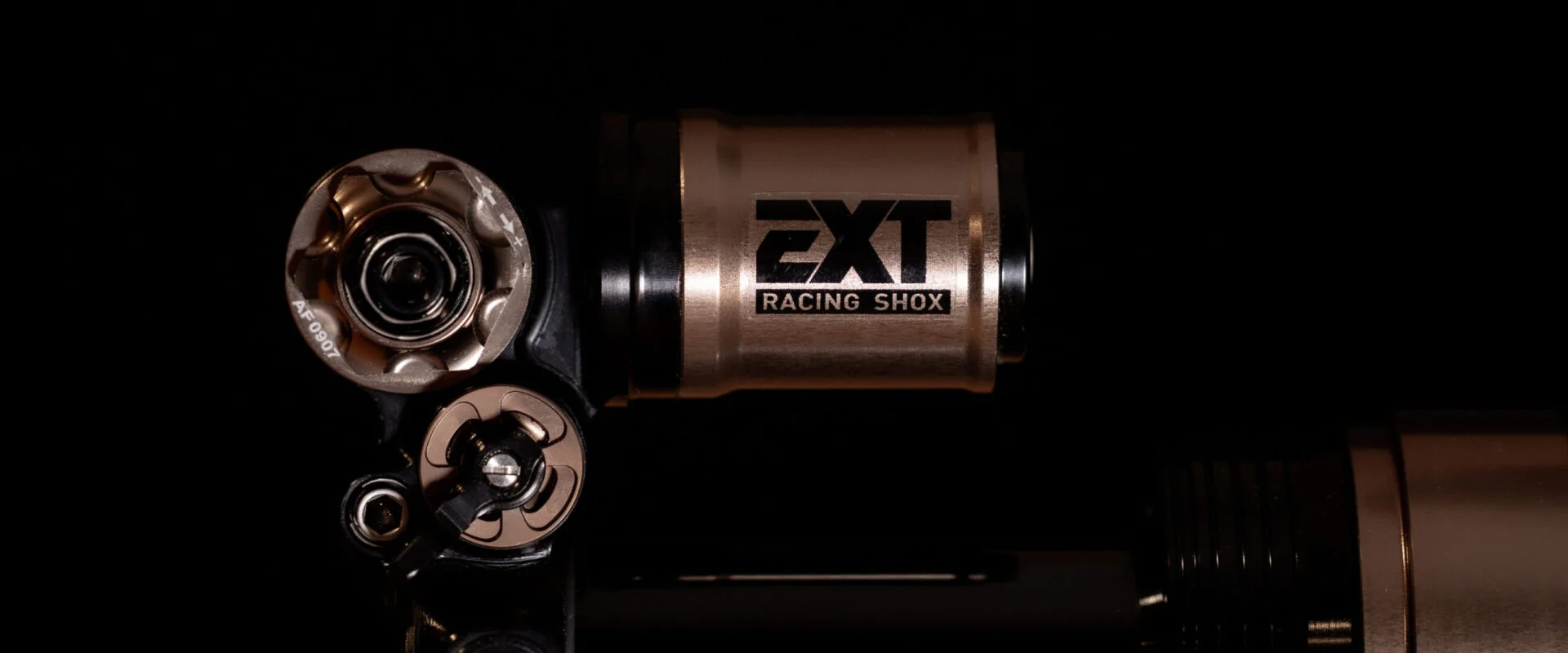
You’re looking at another “air shock that rides like a coil” launch and wondering if this is marketing copy or an actual architecture change. Fair. The industry has spent a decade bolting volume tokens into air cans and calling it progress. EXT’s Aria V2 — and the new gravity-focused Aria V2 DH — are aimed at a different question: what if you could shape support where you want it, keep the first part of the stroke plush, and stop pretending plastic spacers are the only way to tune progression?
EXT dropped the embargoed Aria V2 and Aria V2 DH release for September 23, 2026 (3:00 pm CET). This piece unpacks what changed, how AS3 dual-positive chambers work, who each shock is for, and what I’d want to know before spending €1100 / $1200 on either.
This is a research write-up from EXT’s press materials, not a trail test. Specs and claims below come from EXT’s September 2026 press release. Ride feel notes are reasoned expectations until we get time on the bike.
Quick take
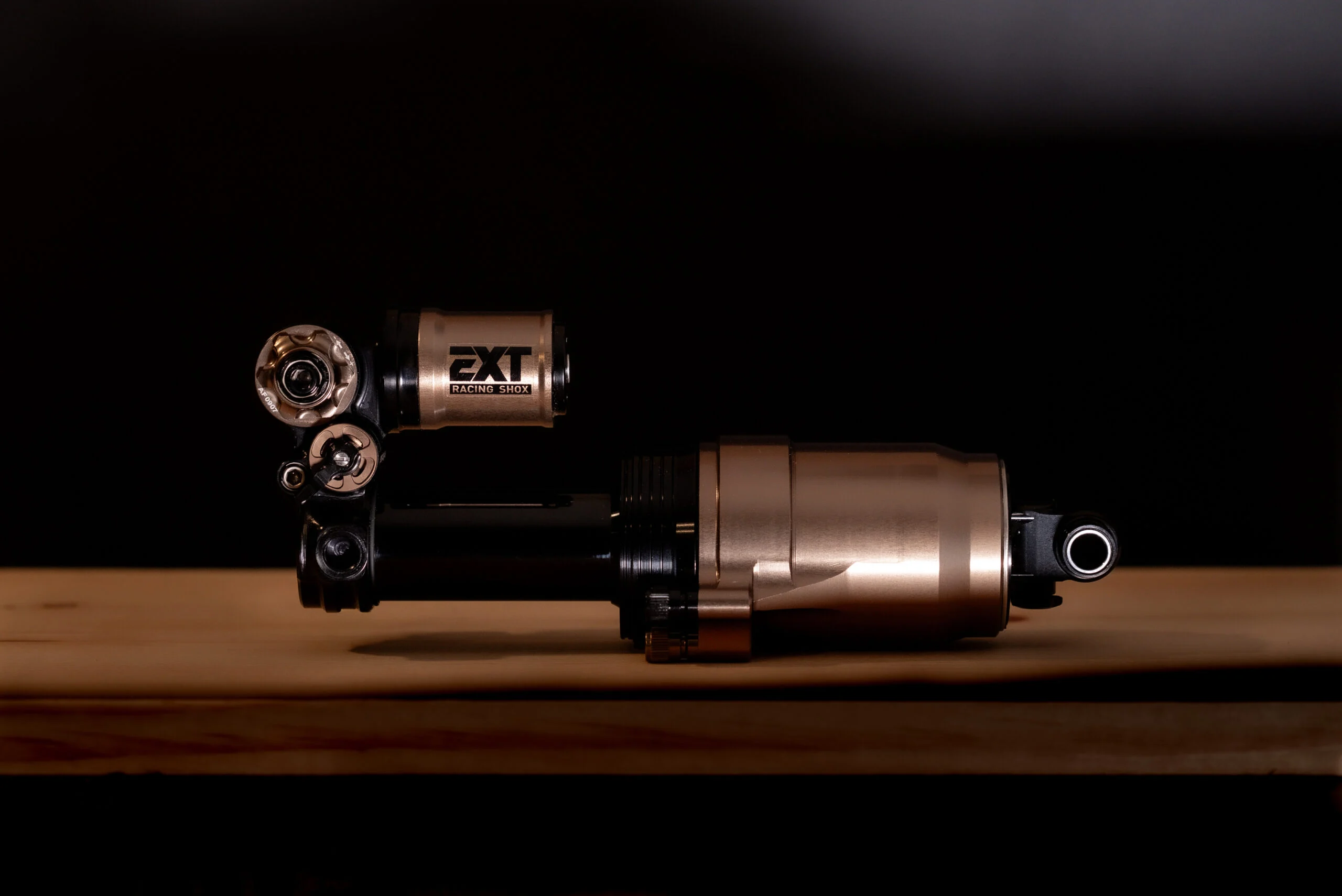
- Aria V2 — trail / enduro / e-bike air shock on EXT’s patented AS3 dual-positive platform, with LOK 2.0, adjustable HBC, RideMaster setup integration, and a more compact piggyback layout.
- Aria V2 DH — longer-stroke / freeride-DH sibling: no LOK lever, DH-specific HBC claiming ~20% more end-stroke force, gravity-focused tune.
- Headline idea: progression via a second positive (++) air chamber instead of tokens — plus a big self-equalizing negative chamber for beginning-stroke sensitivity.
- Price: €1100 / $1200 for both models.
- Warranty: EXT #FIVEPLUS extension (2-year legal + 3-year additional coverage program, per EXT).
Why this launch matters
Most air shocks still trade the same compromises: great weight and travel range, then mid-stroke mush or a harsh ramp once tokens are stacked. Coil shocks win on small-bump feel and consistent support, then lose on weight, progressivity options, and packing for travel.
EXT’s pitch isn’t “we built a fake coil.” It’s that AS3 lets you dial where support builds — independently of how soft the first third of the stroke feels. If you’ve ridden RockShox’s GENIE-style dual-chamber ideas or wrestled with token stacks on Super Deluxe / Float X2 setups, Aria V2 is playing in that same conversation from the Italian race-shock side of the garage.
 From the Bike198 shopIs My Bike Ok?$26Shop
 AS3: two positives and a big negative
At the core is EXT’s patented AS3 layout: dual positive air chambers separated by only two seals, plus a large self-equalizing negative chamber.
- Positive (+) chamber: Sets dynamic sag and governs roughly the first ~60% of travel.
- Positive (++) chamber: Controls progressivity. More pressure = more mid/end support; less = more linear.
- Negative chamber: Sized for beginning-stroke comfort — the “coil-like” part of the marketing that actually maps to physics.
No tokens. Progression comes from the ++ chamber, which EXT says avoids the mid-stroke dive / harsh ramp combo that token stacks often create. Whether that feels better than a well-chosen token stack on your specific bike is the trail question — but as a tuning model, independent ++ pressure is cleaner than fishing for the right plastic spacer.
What’s new in the Aria V2 air spring
EXT lists three spring-side updates versus prior Aria:
- Redesigned air transfer between positive and negative chambers for a smoother transition and less mid-stroke feedback.
- Optimized airflow along the positive chamber’s inner tube for more predictable behavior under rapid compression.
- Packaging and sealing updates tied to the chassis redesign below.
Chassis, hydraulics, and the compact piggyback
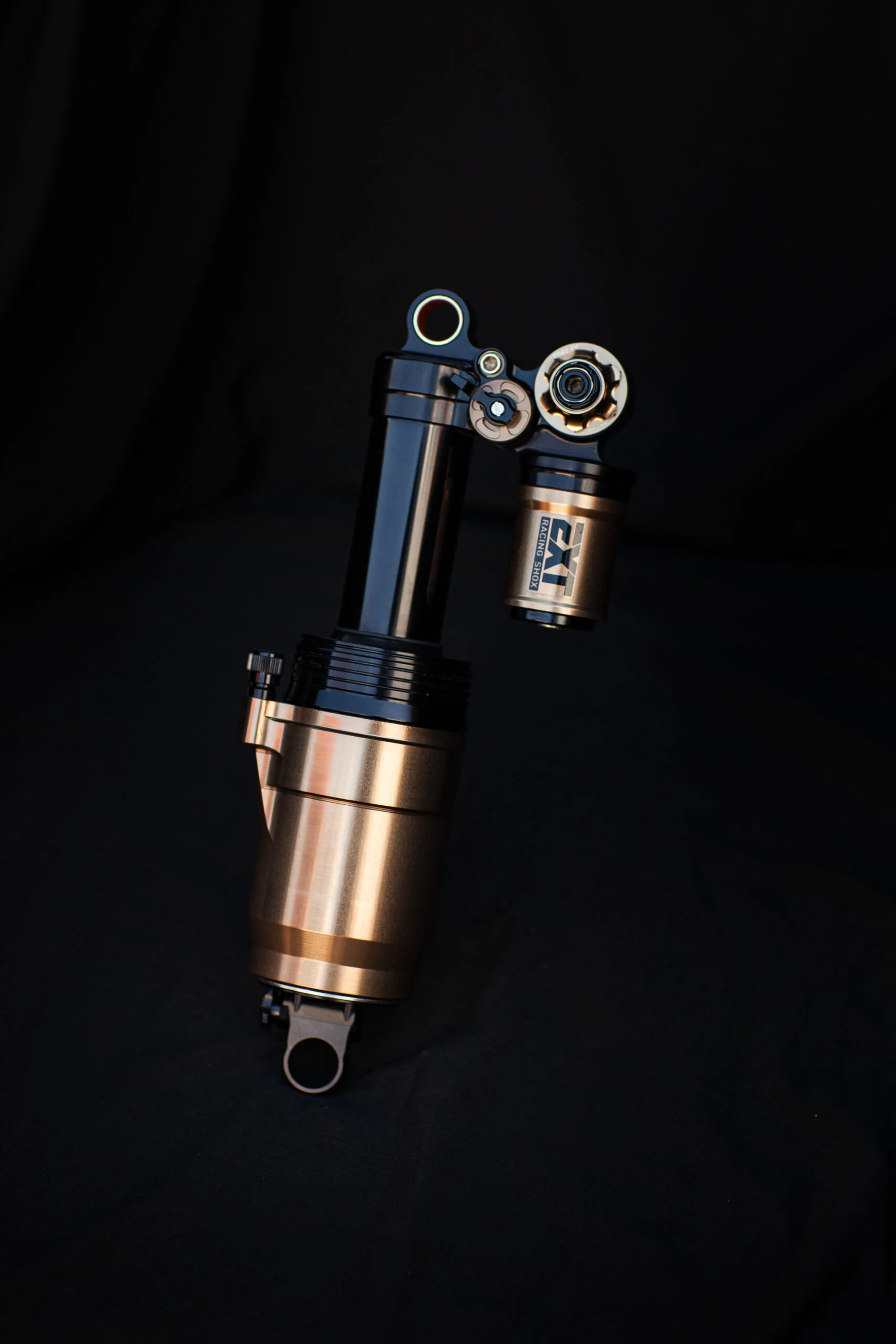
Beyond the spring, Aria V2 gets:
- Lower friction seals and an upper bushing now sitting internally in contact with damping oil.
- More compact architecture — vertical piggyback orientation and a smaller valve block for frame clearance.
- Hydraulic Bottom-Out Control (HBC) on the last ~15% of stroke via a secondary piston, without rewriting the air curve.
- EV2S “Super Thinner” fluid — EXT quotes a viscosity index with 2.3–5.4 cSt at 40°C/100°C, aimed at consistent feel as temps climb and less stick-slip.
- LOK 2.0 (Enduro / Aria V2 only): Independent preloaded shimmed lockout circuit for pedaling support while keeping some trail sensitivity when engaged.
On paper, the compact piggyback and clearance story matter as much as the spring curve. Modern enduro frames are crowded; shocks that “almost fit” waste launch hype.
Aria V2 DH: gravity without the climb switch
The DH / freeride version keeps AS3 but changes the mission:
- Dedicated longer-stroke / gravity tune
- No LOK 2.0 (better fit on some DH frames, less climb-oriented hardware)
- DH-specific HBC claiming ~20% more end-stroke force for heavy landings
- Slightly heavier: 667 g in 250 × 75 mm vs 622 g for Aria V2 in 210 × 55 mm
If you race DH or freeride and never touch a lockout on the trail, skipping LOK is the right call. If you’re on a long-travel enduro bike that still climbs fire roads, Aria V2 with LOK 2.0 is the more complete trail tool.
RideMaster: setup in the browser
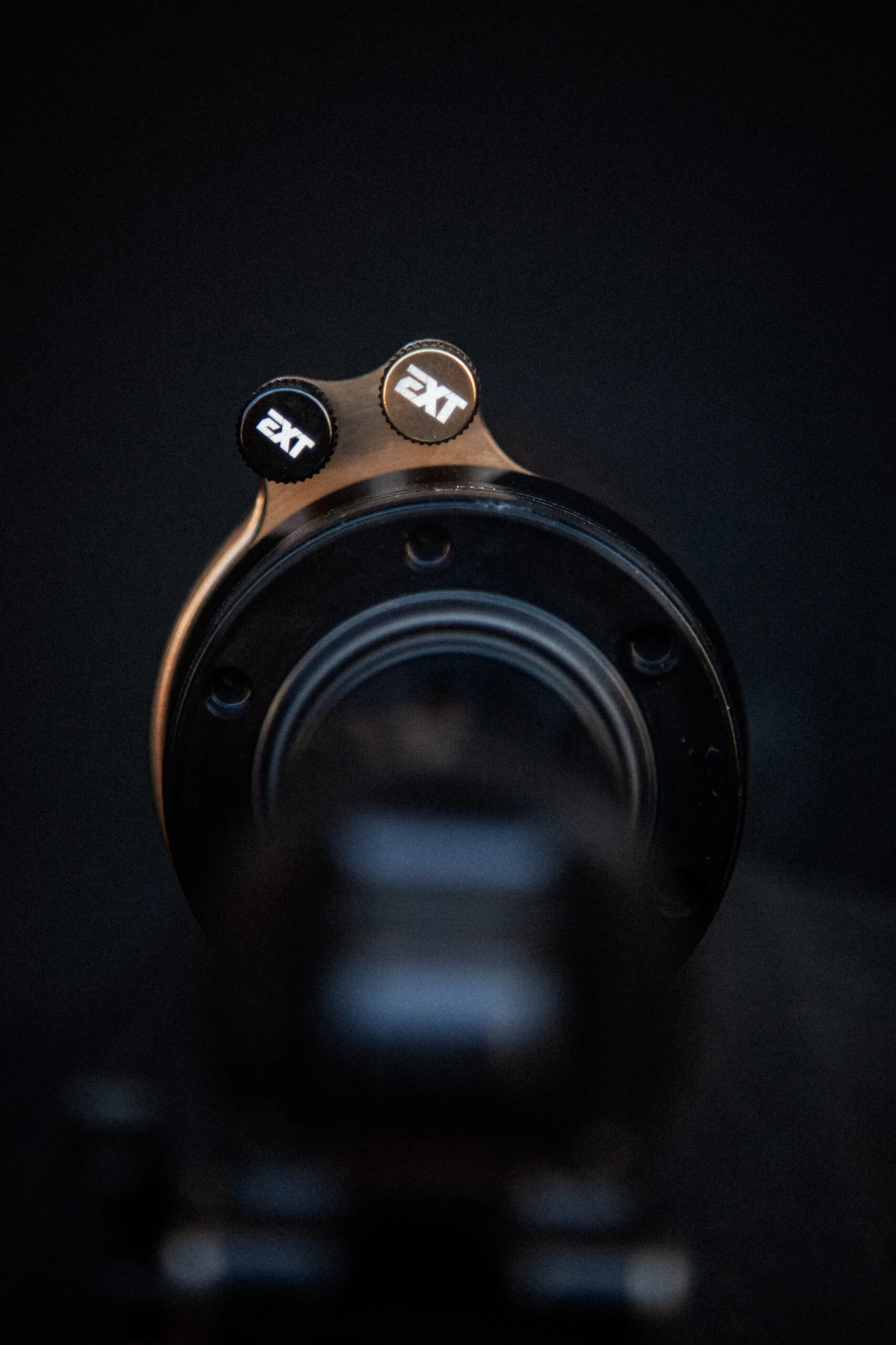
Aria V2 ties into RideMaster, EXT’s web setup platform (extremeshox.com/ridemaster). Enter bike, rider weight, travel, stroke, terrain, and level; get baseline damping, HBC, sag, and air pressures. EXT says more of the product range is coming into RideMaster.
That’s useful for shop techs and riders who don’t want to invent a ++ pressure from thin air. It’s also only as good as the model behind it — treat the output as a strong starting point, then confirm sag and support on your trails.
Specs at a glance
Aria V2 — Trail / Enduro / E-bike
- AS3 dual positive chambers, monotube
- HSC / LSC / rebound
- LOK 2.0 lockout
- Adjustable HBC
- V4 compression valve, Ø14 mm chromoly shaft
- EV2S fluid; bladder reservoir at 55 psi
- Weight: 622 g (210 × 55 mm)
- Metric standard and trunnion lengths from 185–250 eye-to-eye class (see press kit for full stroke matrix)
- Price: €1100 / $1200
Aria V2 DH — Downhill / Freeride
- AS3, monotube, HSC / LSC / rebound
- No LOK; DH HBC (+~20% end-stroke force claim)
- Ø14 mm shaft, EV2S, 55 psi bladder
- Weight: 667 g (250 × 75 mm)
- Longer stroke-focused metric standard and trunnion options
- Price: €1100 / $1200
Thoughts: who this is actually for
Buy Aria V2 if you want enduro/trail air with real mid-stroke shape control, you’re tired of token roulette, and you value a compact piggyback plus a climb switch. E-bike compatibility in EXT’s positioning is a bonus if you’re on a heavy chassis that already stresses air curves.
Buy Aria V2 DH if your bike is gravity-first, you need longer strokes, and you want more end-stroke hydraulic support without carrying climb-mode hardware.
Wait / compare if you already love a well-tuned coil on the same bike, or you’re deep in Fox / RockShox ecosystems where service networks and spare parts are easier locally. Premium Italian race shocks are excellent when they fit your frame and your mechanic’s workflow — and frustrating when they don’t.
I’d also watch real-world service intervals and seal life once Aria V2 is out in muddy enduro weeks. Lower friction and oil-bathed bushings sound great; the proof is a season of grit.
Bottom line
EXT Aria V2 and Aria V2 DH aren’t reinventing pedaling. They’re pushing air toward coil-like beginning-stroke manners while keeping air’s adjustable support curve — and they’re doing it with a second positive chamber instead of a pocket full of tokens. At €1100 / $1200 with a five-year warranty path via #FIVEPLUS, this is a serious aftermarket play, not a mid-pack refresh.
We’ll update this page when we get hands-on time. Until then, the smart move is sizing the metric length/stroke chart against your frame, running RideMaster for a baseline, and deciding whether you need LOK (V2) or DH HBC (V2 DH).
Source: EXT / Extreme Biomec press release, embargoed until September 23, 2026, 3:00 pm CET. Product images from EXT press kit. Links: extremeshox.com · RideMaster
Research write-up scheduled from embargoed press materials. Not a BIKE198 trail test.

I founded Bike198 back in 2008 and started riding bikes seriously in 1994. A lot has changed since that time and one of the greatest releases is still getting out on the bike and shredding trail or tearing up the road.